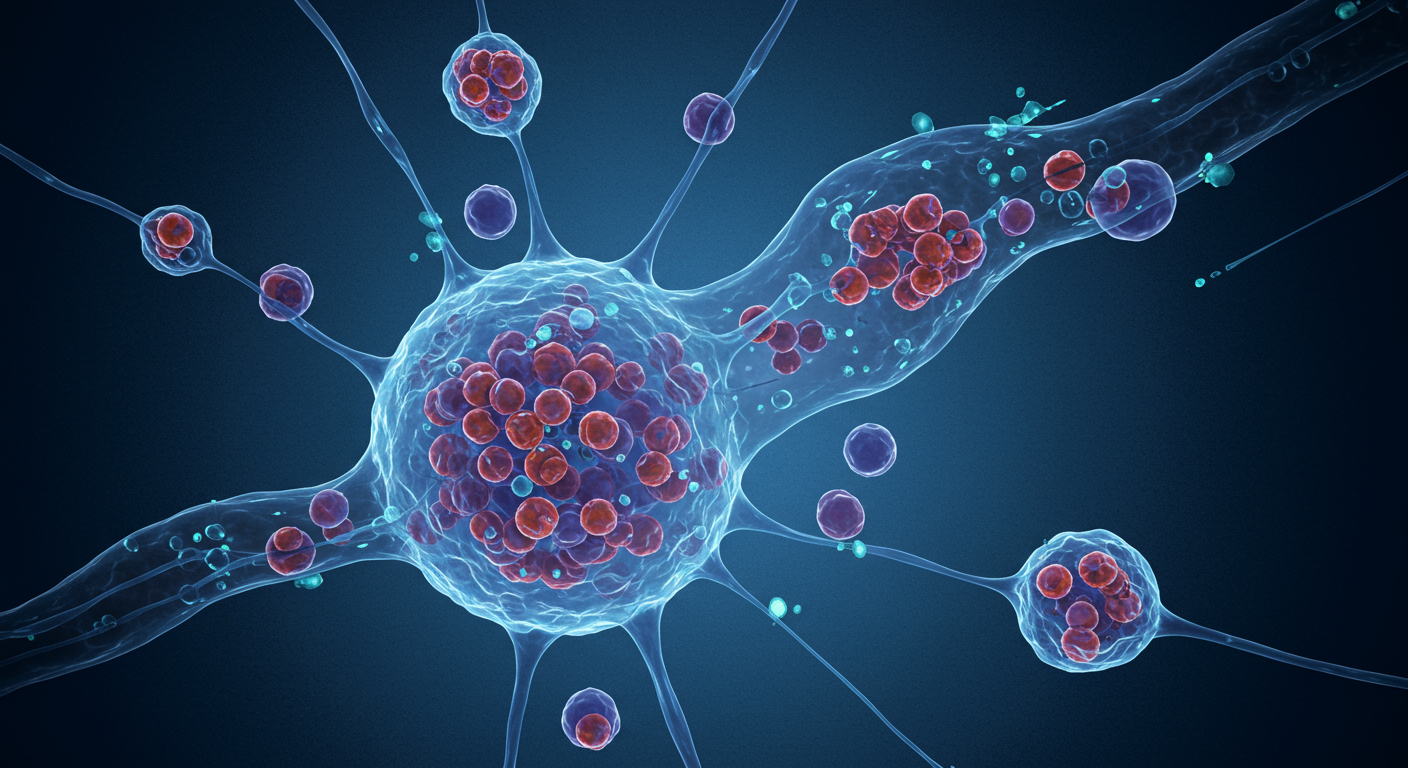
An international team of researchers has identified a new developmental disorder in children caused by variations in the UNC13A gene, which is crucial for communication between nerve cells. The discovery explains the genetic basis for a range of severe neurological impairments, including developmental delays, intellectual disabilities, and seizures, while also providing new insights into adult neurodegenerative diseases like amyotrophic lateral sclerosis (ALS).
The study, published in Nature Genetics, details how mutations in the UNC13A gene disrupt the function of synapses, the junctions where nerve cells, or neurons, exchange information. This process is fundamental to all brain activity. The research team, co-led by scientists Noa Lipstein and Nils Brose, analyzed the genetic information of 50 children with previously unexplained neurological symptoms and found that variations in UNC13A were the underlying cause. The findings establish a direct link between these specific genetic changes and the resulting neurological syndrome, opening potential avenues for future treatments.
A Breakdown in Neuronal Communication
The human brain contains approximately 100 billion neurons that communicate through synapses. At these junctions, chemical messengers called neurotransmitters are released from one neuron to signal the next. This process, known as synaptic transmission, is essential for every thought, feeling, and action. The UNC13A gene provides the instructions for making the Munc13-1 protein, which plays a critical role in preparing neurotransmitters for release. When the UNC13A gene is altered, the Munc13-1 protein cannot function correctly, leading to a breakdown in this vital communication pathway.
Researchers in the Department of Molecular Neurobiology have been studying the UNC13A protein for many years, laying the groundwork for this discovery. The new findings demonstrate that the brain is exquisitely sensitive to the amount and function of this protein. Even partial loss or altered function can have devastating consequences for neurological development. The study found that errors in synaptic communication caused by these genetic variants are a direct cause of the newly identified developmental disorder, leading to a wide spectrum of impairments.
Three Distinct Mechanisms of Disruption
The investigation revealed that not all UNC13A variations are the same. The researchers categorized the mutations into three distinct subtypes based on how they affect the Munc13-1 protein’s function: loss-of-function, gain-of-function, and dysregulation. This classification helps explain the wide range of symptoms and severity observed in the affected children.
Loss-of-Function Variants
In the most severe cases, children had loss-of-function mutations. These variants result in a significant reduction of the Munc13-1 protein or a version of the protein that does not work at all. This leads to a drastic decrease in neurotransmitter release, severely impairing communication between neurons. The clinical manifestations for these patients are profound, often including early-onset epilepsy, profound intellectual disability, and hypotonia, or low muscle tone. In some of the most tragic cases, these mutations can lead to death in early childhood.
Gain-of-Function Variants
Conversely, some children were found to have gain-of-function mutations. These changes, typically de novo missense variants in the protein’s regulatory region, cause the Munc13-1 protein to be overly active. This results in excessive neurotransmitter release and neuronal hyperexcitability. Patients with these variants often present with movement disorders like tremors and ataxia (impaired coordination), as well as refractory seizures that are difficult to control with medication.
Dysregulation Variants
The third subtype involves a dysregulation of the protein’s activity. In these cases, the Munc13-1 protein doesn’t respond correctly to the cellular signals that normally control its function. This leads to more subtle changes in synaptic transmission compared to the other two subtypes. Individuals with dysregulation variants tend to have milder symptoms, which can include learning difficulties and seizures that are more easily controlled.
Spectrum of Clinical Symptoms
The clinical picture for this new disorder is broad, reflecting the different ways the UNC13A gene can be altered. For many of the 50 families involved in the study, the diagnosis provided the first explanation for their children’s challenging conditions. The common symptoms across the different subtypes include delayed development, particularly in speech and motor skills. Many affected children have intellectual disabilities of varying degrees.
Movement disorders are also a prominent feature. Patients can experience muscle tremors, ataxia, and other dyskinetic movements. Epilepsy is another key symptom, with many children suffering from seizures. In some instances, these seizures are difficult to manage with standard anti-seizure medications, particularly in the gain-of-function subgroup. The consistent pattern of these symptoms across individuals with rare UNC13A variants allowed researchers to define this as a distinct neurological syndrome.
Broader Implications for Neurodegenerative Disease
This research extends beyond pediatric disorders, shedding new light on devastating adult-onset neurodegenerative diseases. Variants in the UNC13A gene have previously been identified as a significant risk factor for ALS and frontotemporal dementia (FTD). In those diseases, the issue is not typically a mutation in the gene itself but rather a problem with how the gene’s instructions are processed, leading to reduced production of the functional Munc13-1 protein.
The new study experimentally demonstrated that even a 30% reduction in UNC13A expression significantly impairs neurotransmission, providing a direct link between the protein’s function and the progression of these diseases. This finding highlights a shared molecular mechanism between the rare childhood disorder and these more common adult conditions. Understanding how different levels of UNC13A function affect neurons could pave the way for new therapeutic strategies. For example, restoring UNC13A expression to a certain level could be a potential treatment approach for ALS and FTD. The work underscores the importance of basic research in uncovering the fundamental biological processes that connect a wide range of brain disorders.