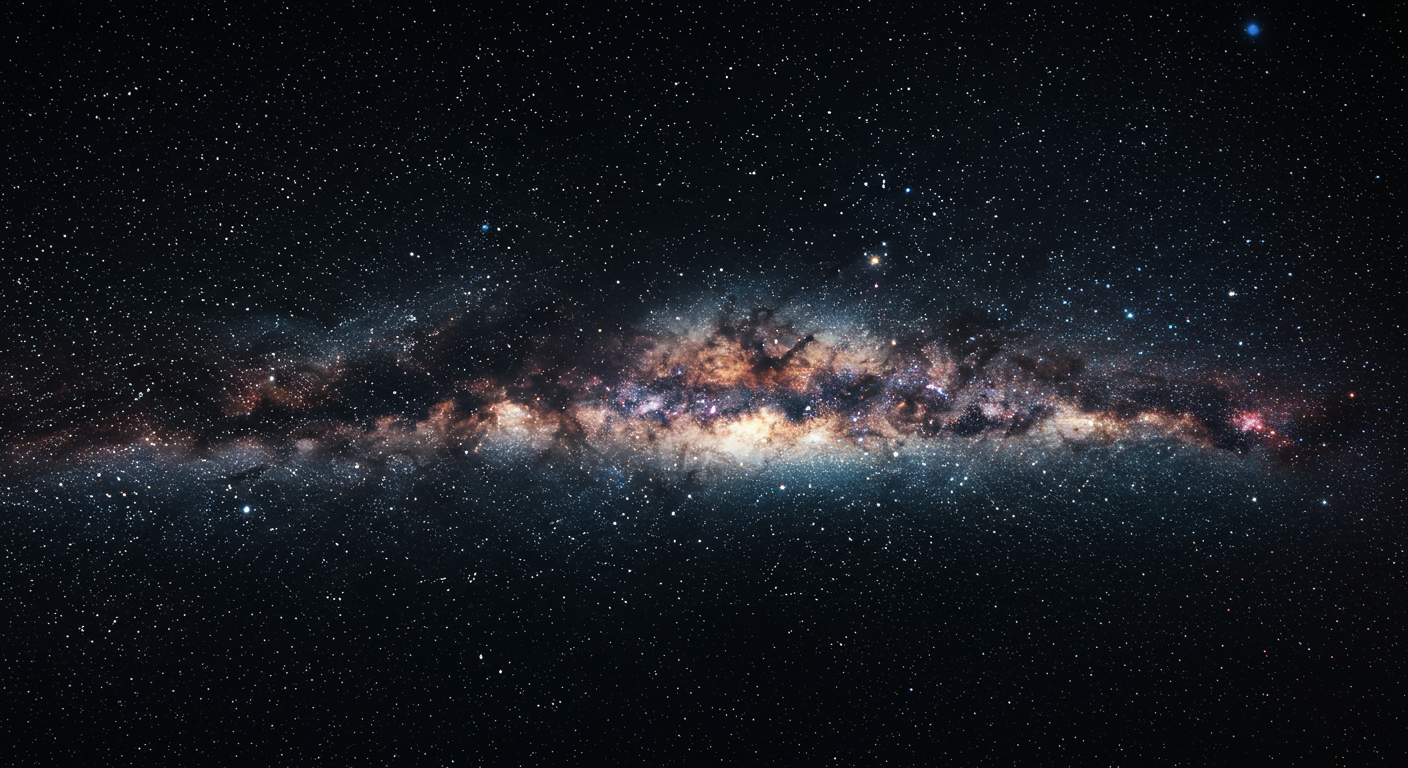
A distant stellar explosion first seen in April 2023 has revealed a complex and evolving X-ray signature, giving astronomers a detailed look into the chaotic aftermath of a classical nova. The event, known as Nova Scorpii 2023, underwent a dramatic transformation months after its initial outburst, entering a phase of intense soft X-ray emission that flickered and pulsed in ways that suggest multiple physical processes are at work. The long-term monitoring of this nova is providing new clues about the nature of the dense stellar remnant at its heart and the turbulent shell of ejected material expanding into space.
Coordinated observations using a trio of space-based observatories, including NASA’s Swift spacecraft, the Neutron Star Interior Composition Explorer (NICER) on the International Space Station, and the Chandra X-ray Observatory, have mapped the nova’s X-ray behavior in unprecedented detail. The data reveal two distinct types of variability occurring simultaneously: a rapid, stable pulse tied to the rotation of the central star and a much slower, irregular fluctuation in brightness. This dual behavior challenges astronomers to refine their models of post-nova environments and offers a unique laboratory for studying the physics of accretion, ejection, and stellar remnants.
An International Observation Campaign
The study of Nova Scorpii 2023, also cataloged as V1716 Sco, relied on the combined strengths of several key instruments in X-ray astronomy. Initial detection and long-term monitoring were primarily conducted by the Swift X-ray Telescope (XRT). Swift’s ability to rapidly slew and repeatedly observe targets made it ideal for tracking the nova’s overall brightness evolution, capturing its transition into and out of different emission states over hundreds of days. The spacecraft followed the nova’s journey from its initial eruption, through a period where it was obscured by the Sun, and into its later phases of X-ray brightness.
To understand the rapid changes in the X-ray light, astronomers utilized NICER, an instrument prized for its exquisite timing capabilities. Mounted on the exterior of the ISS, NICER can measure the arrival of X-ray photons with microsecond precision, allowing it to detect extremely fast periodic signals. Its observations were crucial in isolating the stable 77.9-second modulation from the nova’s more chaotic fluctuations. For the highest spatial and spectral resolution, the team directed the Chandra X-ray Observatory to perform long, uninterrupted observations. Chandra’s data provided a clean, high-fidelity look at the signal, confirming that the short-period modulation was stable over time and not an artifact of observational methods. This multi-observatory approach provided a complete picture of the nova’s behavior across different timescales.
The Luminous Supersoft Phase
Approximately 93 days after the initial optical outburst, Nova Scorpii 2023 entered a critical stage in its evolution known as the supersoft X-ray source (SSS) phase. This phase begins after the opaque, expanding fireball of ejected gas thins out enough to reveal the incredibly hot surface of the white dwarf below. A nova occurs when a white dwarf in a binary system siphons hydrogen-rich material from a companion star. This material accumulates on the surface until it reaches a critical pressure and temperature, ignoiting a runaway thermonuclear reaction. While this explosion blasts a shell of material into space, the white dwarf itself remains intact, its surface heated to extreme temperatures.
During the SSS phase, this superheated surface, with temperatures estimated between 750,000 and 780,000 Kelvin, glows intensely in low-energy, or “soft,” X-rays. This period of sustained nuclear burning on the white dwarf’s surface is expected to last until the freshly accreted fuel is consumed. In the case of Nova Scorpii 2023, this luminous phase was observed to last for more than two months before the star’s proximity to the Sun temporarily halted observations. When observations resumed, the SSS emission was found to be decaying rapidly, constraining the total duration of its constant energy output phase to approximately nine months.
Two Distinct Patterns of Variability
The most significant finding from the observation campaign was the detection of two coexisting but apparently unrelated patterns of change in the X-ray brightness during the SSS phase. This discovery provides a powerful tool for disentangling the complex physical components of the post-nova environment: the white dwarf itself, its immediate surroundings, and the expanding shell of debris.
Irregular Long-Term Fluctuations
Over timescales of days, the nova’s soft X-ray flux exhibited large, unpredictable variations. Between August and October 2023, for instance, astronomers measured a nearly threefold increase in its brightness. These slow, erratic changes are believed to originate in the complex and clumpy environment surrounding the white dwarf. One leading hypothesis suggests that these fluctuations are caused by instabilities in the expanding shell of ejected material or by interactions between the ejecta and pre-existing circumstellar gas. Such interactions could create dense knots or filaments of gas that intermittently absorb or re-radiate X-rays, causing the observed brightness to vary without a clear pattern. The amplitude of these irregular variations was observed to decrease over time as the SSS phase progressed.
A Stable Periodic Pulse
Embedded within the slower variations was a much faster and remarkably stable signal. Analysis of both NICER and Chandra data revealed a consistent modulation in the X-ray flux with a period of 77.9 seconds. This periodicity was maintained across numerous observations, and scientists have concluded it is the signature of the white dwarf’s rotation. As the star spins, hotter or brighter regions on its surface—perhaps associated with its magnetic poles, where accretion can be funneled—rotate into and out of our line of sight, producing a clock-like pulse. The fact that this rapid modulation does not correlate with the slower, irregular variability strongly suggests the two phenomena have different origins. The rotation provides a direct probe of the stellar remnant, while the irregular changes trace the dynamics of the ejected material.
Probing the White Dwarf’s Nature
The detailed X-ray data allowed astronomers to infer key properties of the white dwarf at the center of the nova system. The duration of the SSS phase and the effective temperature of the surface are both closely linked to the mass of the white dwarf. More massive white dwarfs have stronger gravitational fields, which allows them to sustain higher temperatures and burn through their accreted fuel layer more quickly. Based on established nova evolutionary models, the observed characteristics of Nova Scorpii 2023 point to a particularly massive white dwarf, estimated to be around 1.2 times the mass of the Sun—approaching the theoretical maximum mass for such an object.
Superimposed on the X-ray signal from the white dwarf’s hot surface were emission lines. These spectral features are attributed to the surrounding gas that was violently ejected during the outburst. This gas, now shocked and heated by its rapid expansion, glows at specific X-ray energies, providing information about its composition and physical state. The combination of a direct view of the stellar surface via the SSS emission and the spectral signatures from the ejecta offers a comprehensive picture of the nova system.
Unraveling Post-Outburst Mysteries
The discovery of decoupled short-term periodic and long-term irregular variability in Nova Scorpii 2023 represents a significant step forward in understanding these powerful stellar events. It allows scientists to separately analyze the behavior of the central engine—the spinning white dwarf—and the complex, evolving debris field it has created. The stable 77.9-second period acts as a reference clock, against which the chaotic evolution of the ejecta can be measured.
Researchers speculate that the varying amplitude of the rotational pulse could offer further insights. One possibility is that our view of the white dwarf’s polar regions is not always clear. Changes in the intervening ejected material could periodically obscure one or both poles, causing the strength of the pulsed signal to change over time. By continuing to monitor novae like this one, astronomers aim to build three-dimensional models of the explosions, mapping the interplay between the stellar remnant and the expanding nebula it illuminates. This work deepens our understanding of the cosmic cycle of matter, where material is exchanged between stars, processed by nuclear reactions, and violently returned to the interstellar medium.