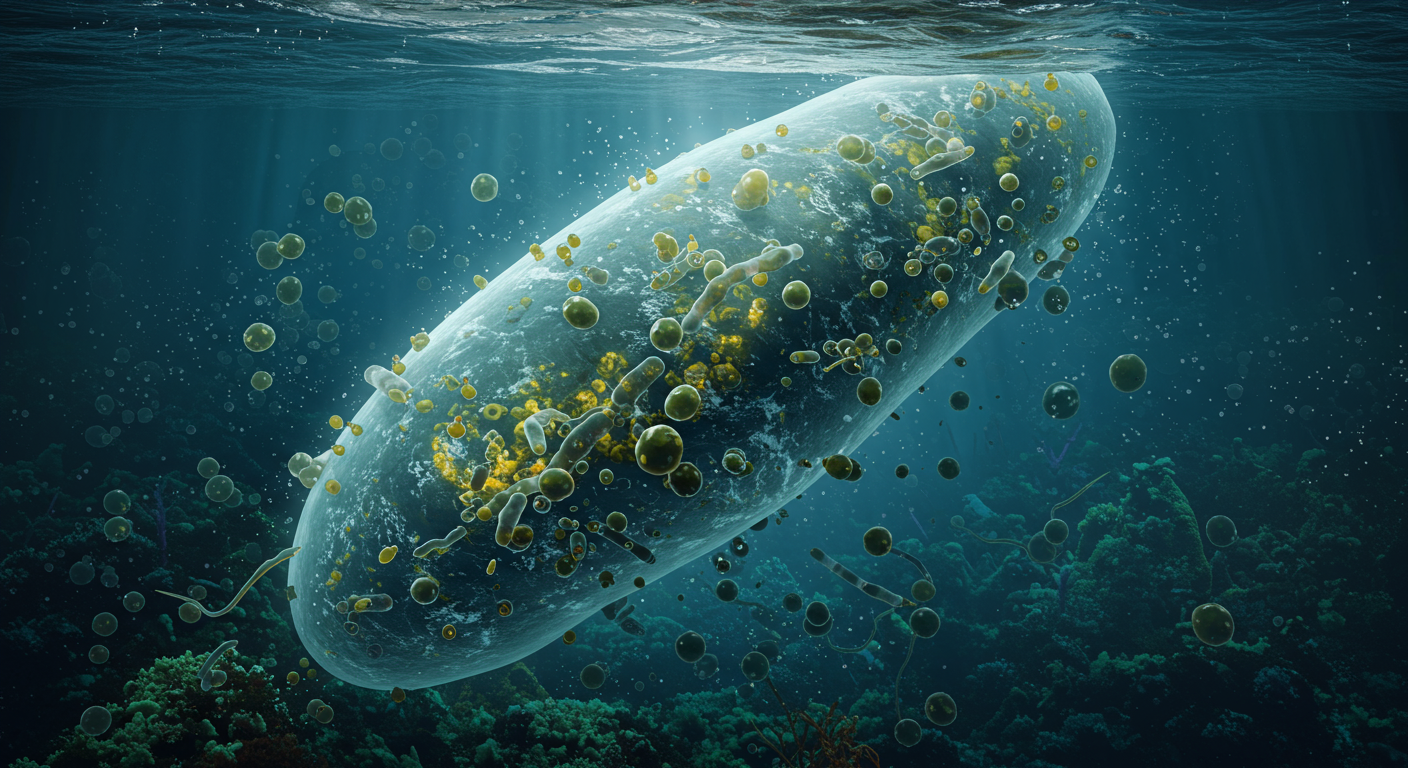
For decades, scientists have observed a strange and frenetic dance inside the deadliest malaria parasite, Plasmodium falciparum. Microscopic iron-based crystals within the single-celled organism continuously spin, jolt, and ricochet inside their containment bubbles, a chaotic motion that ceases only when the parasite dies. The reason for this mysterious activity has long been a puzzle, but researchers have now uncovered the engine driving this biological machinery.
A new study reveals that these crystals, known as hemozoin, are self-propelled nanomotors powered by a potent chemical reaction. They act as catalysts to break down hydrogen peroxide, a toxic byproduct of the parasite’s metabolism, into water and oxygen. The energy released from this decomposition provides a powerful kick that drives the crystals’ wild, constant motion. This discovery not only solves a long-standing biological mystery but also exposes a new potential vulnerability in the parasite that could be exploited to develop novel antimalarial therapies.
A Parasite’s Toxic Meal
The life cycle of the malaria parasite involves a crucial stage within human red blood cells. After infecting a cell, the parasite consumes the hemoglobin contained within, using it as a source of nutrients for its growth and replication. However, the digestion of hemoglobin releases a toxic substance called heme, the iron-containing compound that transports oxygen in the blood. If left unchecked, free heme would generate reactive oxygen species that would quickly kill the parasite.
To protect itself, the parasite has evolved a sophisticated detoxification system. It rapidly converts the toxic heme molecules into an inert, crystalline form called hemozoin—the very crystals observed to be in motion. This process sequesters the dangerous iron, preventing it from wreaking havoc inside the parasite. For many years, this crystallization process has been a primary target for antimalarial drugs like chloroquine, which works by blocking hemozoin formation and allowing toxic heme to accumulate to lethal levels.
Uncovering a Biological Engine
While the formation of hemozoin was understood as a detoxification method, the reason for its subsequent spinning remained unexplained. The movement was too fast and chaotic to be tracked by conventional microscopy. Researchers at the University of Utah Health, whose findings were published in the journal PNAS, used advanced techniques to investigate this phenomenon. They discovered that the crystals were not just passive waste products but active participants in the parasite’s survival.
Chemical Propulsion Mechanism
The team determined that the hemozoin crystals function as catalysts. The iron within their structure facilitates the breakdown of hydrogen peroxide, another toxic molecule that accumulates during the parasite’s metabolic processes. This chemical reaction is similar to the one used in some rocket propulsion systems, earning it the nickname “biological rocket fuel.” The decomposition of peroxide into water and oxygen gas releases a significant amount of energy, which is transferred to the crystals as kinetic energy, causing them to spin and dart around within their vacuole.
The First Known Metallic Nanomotor
This discovery marks the identification of the first known metallic nanomotor in a biological system. Unlike other cellular movements driven by complex protein machinery, the motion of the hemozoin crystals is powered by a direct, inorganic chemical reaction catalyzed by a biomineral. This unique mechanism highlights an elegant evolutionary solution to multiple challenges the parasite faces living inside a red blood cell.
A Dual-Purpose Survival Strategy
The researchers propose two primary benefits that the parasite derives from keeping the hemozoin crystals in constant motion. Both functions are critical for its ability to thrive in the hostile environment it creates for itself. The constant agitation serves as a defense mechanism and an efficiency booster for its waste-management system.
Neutralizing Cellular Threats
The first major advantage is the efficient destruction of toxic peroxide. By acting as catalysts, the spinning crystals actively “burn off” this harmful chemical, preventing it from building up and causing oxidative damage to the parasite’s vital components. The motion ensures that the crystals are constantly encountering new peroxide molecules within the vacuole, making the detoxification process highly effective and continuous.
Ensuring Efficient Waste Storage
According to Paul Sigala, a lead researcher on the study, the motion also plays a crucial role in the primary function of hemozoin: sequestering heme. If the crystals were stationary, they would likely begin to clump together or aggregate. Such clumping would reduce the available surface area for new heme molecules to bind to and crystallize. By constantly moving and ricocheting, the crystals remain separated, ensuring their surfaces are maximally exposed and ready to bind more toxic heme as it is produced. This keeps the detoxification assembly line running smoothly and efficiently.
New Vulnerabilities in a Deadly Disease
Understanding the mechanism behind the spinning crystals opens a new front in the fight against malaria. The disease claims hundreds of thousands of lives annually, and the parasite has developed resistance to many existing drugs. Most therapies that target the hemozoin pathway, such as chloroquine, focus on preventing the initial formation of the crystals. The new findings reveal a different process that could be targeted: the motor function itself.
A new class of antimalarial drugs could be designed to specifically inhibit the catalytic activity of the hemozoin. If a drug could block the site on the crystal that breaks down hydrogen peroxide, it would halt the motion. This could lead to a buildup of toxic peroxide, killing the parasite. Furthermore, without the constant agitation, the crystals might aggregate, impairing the parasite’s ability to detoxify heme and making it more susceptible to its own metabolic waste. This presents a promising strategy for developing drugs that could be effective against strains of malaria that are resistant to current treatments.
Future Research Directions
The next steps for researchers will involve exploring the precise atomic structure of the hemozoin crystal surface to identify the exact site of catalysis. Understanding this will be key to designing molecules that can bind to the crystal and block its motor function. Scientists will likely begin screening for compounds that can inhibit this newly discovered process, with the ultimate goal of developing a novel therapeutic agent.
This work fundamentally changes the scientific view of hemozoin from a passive waste product to a dynamic and functional nanomachine. It underscores the remarkable and often unexpected ways that organisms evolve to survive, turning the byproducts of a toxic meal into a sophisticated tool for self-preservation. This deeper knowledge of the parasite’s inner workings provides renewed hope for creating more effective tools to combat a devastating global disease.