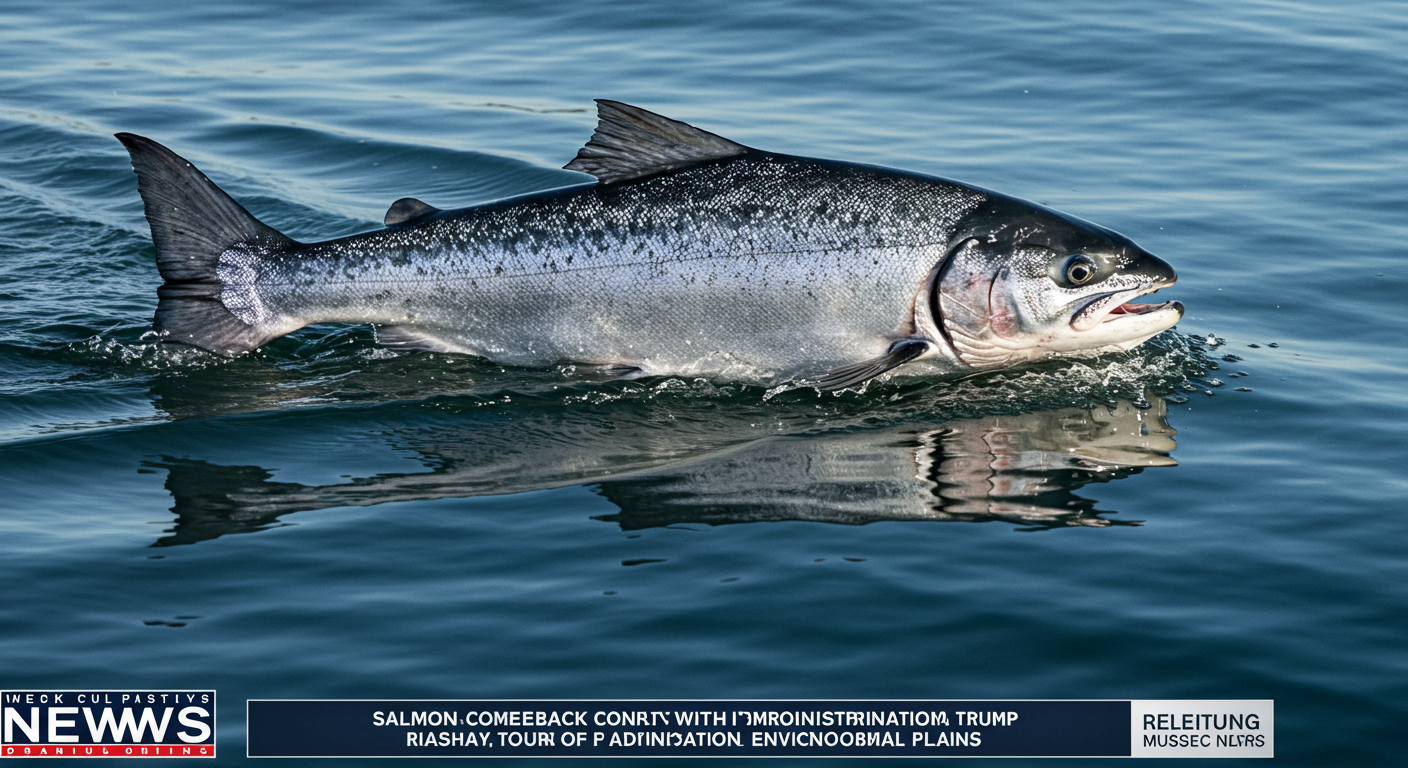
A remarkable, hard-won comeback for salmon in the American West is on a collision course with shifting national policy, as the Trump administration unwinds a major restoration agreement in the Pacific Northwest and signals it will divert water from fish in the Klamath River basin. These actions threaten to reverse decades of progress and halt the recovery of an iconic species just as it begins to rebound, creating uncertainty for the ecosystems, tribal nations, and economies that depend on the fish.
The conflict crystalized in June 2025 when President Donald Trump formally pulled the United States out of the Resilient Columbia Basin Agreement, a landmark collaboration intended to restore salmon populations in the Columbia and Snake rivers. At the same time, the administration has moved to deprioritize water flows legally required for salmon survival in California’s Klamath River, where fish have just begun returning to their native spawning grounds after the largest dam removal project in history. These moves pit federal priorities for energy and agriculture directly against state, tribal, and scientific efforts to save the fish from extinction.
A Landmark Agreement Reversed
The Trump administration’s most decisive action was its withdrawal from the Resilient Columbia Basin Agreement, which it derided as “radical environmentalism.” Reached in late 2023, the historic deal was brokered by the Biden administration with the states of Washington and Oregon and four Native American tribes. It paused decades of contentious litigation over the federal government’s operation of hydroelectric dams that have decimated fish populations.
The agreement had committed more than $1 billion in federal funding over the next decade to help restore depleted salmon runs. A central component was the government’s commitment to help develop enough new clean energy sources in the Pacific Northwest to potentially replace the power generated by four controversial dams on the Lower Snake River, paving the way for their possible removal. In its memorandum rescinding the deal, the White House stated it was prioritizing the nation’s energy infrastructure and lowering living costs over what it termed “speculative climate change concerns.”
The Four Dams at the Center of the Controversy
At the heart of the Columbia Basin conflict are four federal hydroelectric dams on the Lower Snake River: Ice Harbor, Little Goose, Lower Monumental, and Lower Granite. For decades, tribes and conservation groups have argued that these dams are the primary obstacle to recovering once-abundant salmon and steelhead populations, many of which are now listed under the Endangered Species Act. The dams impede the migration of both adult salmon swimming upstream to spawn and young smolts trying to reach the ocean.
Scientific consensus has increasingly pointed toward dam removal as the most effective solution. In 2021, a group of 68 leading fisheries scientists wrote to policymakers stating that the survival of various salmon species “cannot be solved without removing four dams on the Lower Snake River.” They concluded that breaching the dams was necessary not just to avoid extinction but to restore the fish to abundance. The now-canceled agreement represented the first collaborative federal effort to seriously study and plan for that possibility, a move that is now off the table.
Voices from the River
The administration’s decision sent shockwaves through the region, drawing immediate condemnation from the parties who had negotiated the paused agreement. Environmental groups and scientific advocates criticized the move as a rejection of established facts and a return to endless, zero-sum legal battles.
Tribal Sovereignty and Broken Promises
For the tribal nations involved, the reversal was seen as another chapter in a long history of failed treaty commitments by the U.S. government. “The Administration’s decision to terminate these commitments echoes the federal government’s historic pattern of broken promises to tribes,” said Yakama Nation Tribal Council Chairman Gerald Lewis in a statement. Tribes hold treaty rights to fish in these waters, and the collapse of salmon runs has had devastating cultural and economic impacts. The agreement was viewed as a step toward honoring those treaties and restoring a vital resource.
Scientific and Environmental Concerns
Conservation groups echoed the tribes’ frustration. Amanda Goodin, a senior attorney for Earthjustice, which represents fishing and conservation organizations in court, called the decision “shortsighted” and the latest in a series of “anti-government and anti-science actions coming from the Trump administration.” Experts who have spent their careers on this issue warned of dire, immediate consequences. Mary Lou Soscia, a former Columbia River coordinator for the Environmental Protection Agency with over 30 years of experience, said the dismantling of recovery programs was tantamount to “cutting off your nose to spite your face.” She predicted that without fish managers and restoration funding, “more fish will die.”
A Second Front on the Klamath River
While the conflict over the Columbia Basin grabbed headlines, a similar struggle is playing out on the Klamath River along the Oregon-California border. There, salmon have been spotted in Upper Klamath Lake for the first time in a century, an immediate and hopeful result of recent dam removals. Hundreds of returning salmon have been counted, invigorating the local ecosystem as eagles, otters, and trout feed on their eggs and carcasses.
This nascent recovery, however, is being undermined by federal actions. The Trump administration has cut funding for the very programs needed to monitor the returning fish and restore the river, and has decimated the regional staff of the agencies responsible for the work. More critically, in May 2025, the administration issued a memo indicating it does not intend to follow Endangered Species Act provisions that require leaving enough water in the river for salmon to survive during drought years. Instead, it signaled it would prioritize full water allocations for upper-basin farmers, a move that could devastate the fish. This policy raises the risk of another catastrophic fish die-off, like the one that left tens of thousands of dead salmon on the river’s shores in 2002.
The Future of Western Water and Wildlife
The administration’s actions in both the Columbia and Klamath basins reveal a consistent policy of prioritizing energy production and agricultural water use over species protection and ecosystem restoration. By canceling a collaborative agreement and challenging the bedrock principles of the Endangered Species Act, the federal government has chosen a path of confrontation over cooperation, effectively ending a fragile truce in the West’s long-running water wars.
The decision to halt a government-wide initiative on the Columbia River and defund restoration on the Klamath returns the issue to the courts, where judges have repeatedly intervened to protect endangered fish. For the salmon, whose ancient life cycles are measured in seasons, not legal briefs, the outcome of these policy reversals remains uncertain. Their brief comeback now faces a powerful current of political opposition, leaving the future of one of nature’s most resilient creatures in doubt.
