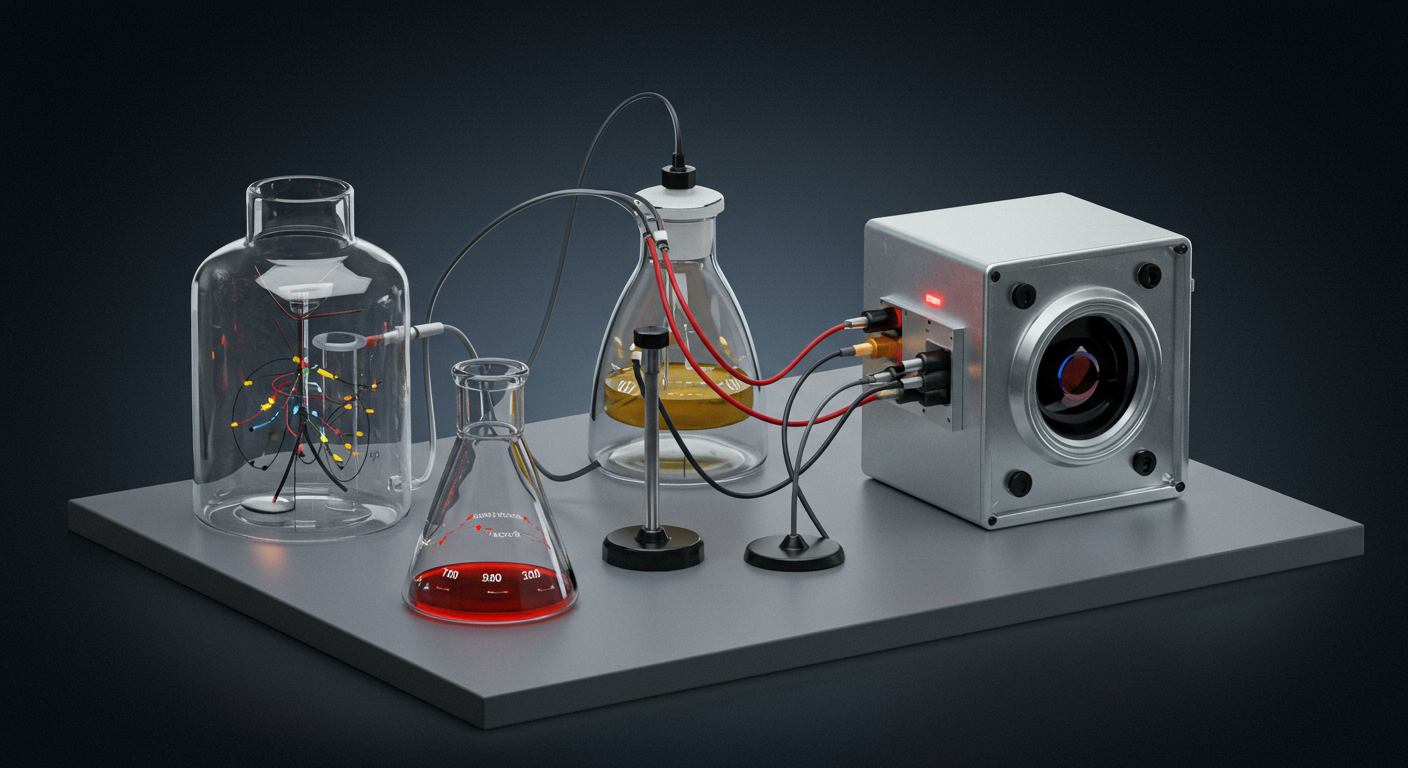
Researchers have developed a new catalyst that transforms carbon dioxide into ethylene, a valuable chemical feedstock, with unprecedented efficiency and stability. This breakthrough addresses two of the largest obstacles to commercially viable CO₂ recycling: the high energy cost and the short lifespan of the catalytic materials. The novel strategy could accelerate the deployment of carbon capture and utilization technologies, creating a pathway to convert greenhouse gas emissions into essential products using renewable electricity.
The new method centers on a highly engineered material that selectively drives the difficult electrochemical reaction that converts CO₂ into ethylene, which is a foundational component for producing plastics, solvents, and other essential industrial chemicals. Previous attempts have been hampered by catalysts that either required immense amounts of energy, produced a low-purity mixture of various chemicals, or degraded after only a few hours of operation. By overcoming these limitations, this new approach represents a critical advancement in the effort to create a circular carbon economy, where waste CO₂ becomes a resource for sustainable manufacturing.
The Challenge of Carbon Conversion
The electrochemical reduction of CO₂ is a promising technology for storing intermittent renewable energy in the form of chemical bonds. The process uses electricity to power a reaction that converts stable CO₂ molecules into more reactive and valuable substances. However, the chemical inertness of CO₂ makes this conversion notoriously difficult and energy-intensive. For the process to be practical, a catalyst is required to lower the energy barrier and direct the reaction toward a single, desired product. Without a highly effective catalyst, the process can be wasteful, with electricity splitting water to produce hydrogen gas instead of converting CO₂.
Historically, catalysts made from noble metals like gold and silver have shown some success but are prohibitively expensive for large-scale use. Copper has emerged as the most promising alternative, as it is the only elemental metal known to catalyze the formation of more complex multi-carbon products like ethylene and ethanol. Yet, even copper-based catalysts have faced persistent problems. They often suffer from poor selectivity, yielding a mixture of gases and liquids that require costly separation, and they tend to lose their catalytic activity relatively quickly, sometimes in under 100 hours.
A Novel Catalyst Design
The new strategy employs a sophisticated, nanostructured copper-based catalyst designed to maximize active sites and stabilize the reaction environment. While many previous designs used simple copper foils or nanoparticles, this approach involves synthesizing highly structured materials where the geometry and chemical state of the copper atoms are precisely controlled. By creating specific surface structures at the nanoscale, the researchers were able to enhance the catalyst’s ability to perform the crucial step of carbon-carbon (C-C) coupling, which is necessary to form two-carbon products like ethylene from one-carbon CO₂ molecules.
This advanced design often involves supporting the copper on other materials or modifying it with secondary components, such as oxides or other metals. Such modifications can alter the electronic properties of the copper, making it more effective at binding and activating CO₂ molecules. Furthermore, the physical structure of these composite catalysts can create a favorable microenvironment that concentrates CO₂ near the active sites, improving reaction rates and preventing the catalyst from degrading or reconstructing during the intense electrochemical process.
Mechanism of Enhanced Performance
The improved performance stems from the catalyst’s ability to synergistically manage both the chemical reaction and the physical transport of molecules. The enhanced surface of the nanostructured copper provides a greater number of defects and specific crystal facets that are highly active for CO₂ reduction. These sites are believed to stabilize key intermediate molecules, guiding them down the chemical pathway that leads to ethylene rather than less desirable products like carbon monoxide or methane.
The stability of the catalyst is also a direct result of its innovative architecture. In many systems, the copper surface physically changes during the reaction, causing active sites to be lost. The new design helps lock the copper atoms in place, preventing them from clumping together or dissolving into the electrolyte solution. This structural integrity ensures that the catalyst can maintain its high performance for extended periods, a critical requirement for any industrial process where catalysts must operate continuously for thousands of hours to be economically viable.
New Benchmarks in Efficiency
The newly developed catalyst has demonstrated significant improvements in two key metrics: Faradaic efficiency and current density. Faradaic efficiency measures the percentage of electrical current that goes into producing the desired chemical. In this case, the catalyst achieved a Faradaic efficiency for ethylene of over 80%, meaning the vast majority of the renewable electricity was used directly to create the target product. This high selectivity dramatically simplifies the purification process, a major cost driver in chemical manufacturing.
Simultaneously, the catalyst operates at high current densities, which translates to a faster rate of production. High current densities are essential for reducing the physical footprint and capital cost of the electrolyzer systems needed for industrial-scale operations. The ability to produce a high-purity product at a rapid rate represents a dual breakthrough that moves the technology much closer to practical application. The system also demonstrated stable performance for hundreds of hours of continuous operation, far exceeding the lifespan of many earlier-generation copper catalysts.
Implications for a Circular Economy
This advancement in catalyst technology has significant implications for building a more sustainable industrial future. By providing an efficient and robust method for converting waste CO₂ into a valuable chemical, it offers a pathway to decarbonize heavy industries, such as cement and steel manufacturing, which release vast quantities of CO₂. Instead of being treated as a waste product to be sequestered, CO₂ could become a primary feedstock for the chemical industry, powered by surplus wind and solar energy.
A successful CO₂ electroreduction technology could reduce the world’s reliance on fossil fuels for producing plastics and other essential materials. Ethylene is currently produced almost exclusively from petrochemical sources. Creating it from recycled CO₂ would not only mitigate greenhouse gas emissions but also close the carbon loop, leading to a more circular and sustainable economy. While further research is needed to scale this technology from the laboratory to industrial plants, this breakthrough provides a clear and promising direction for the future of carbon utilization.