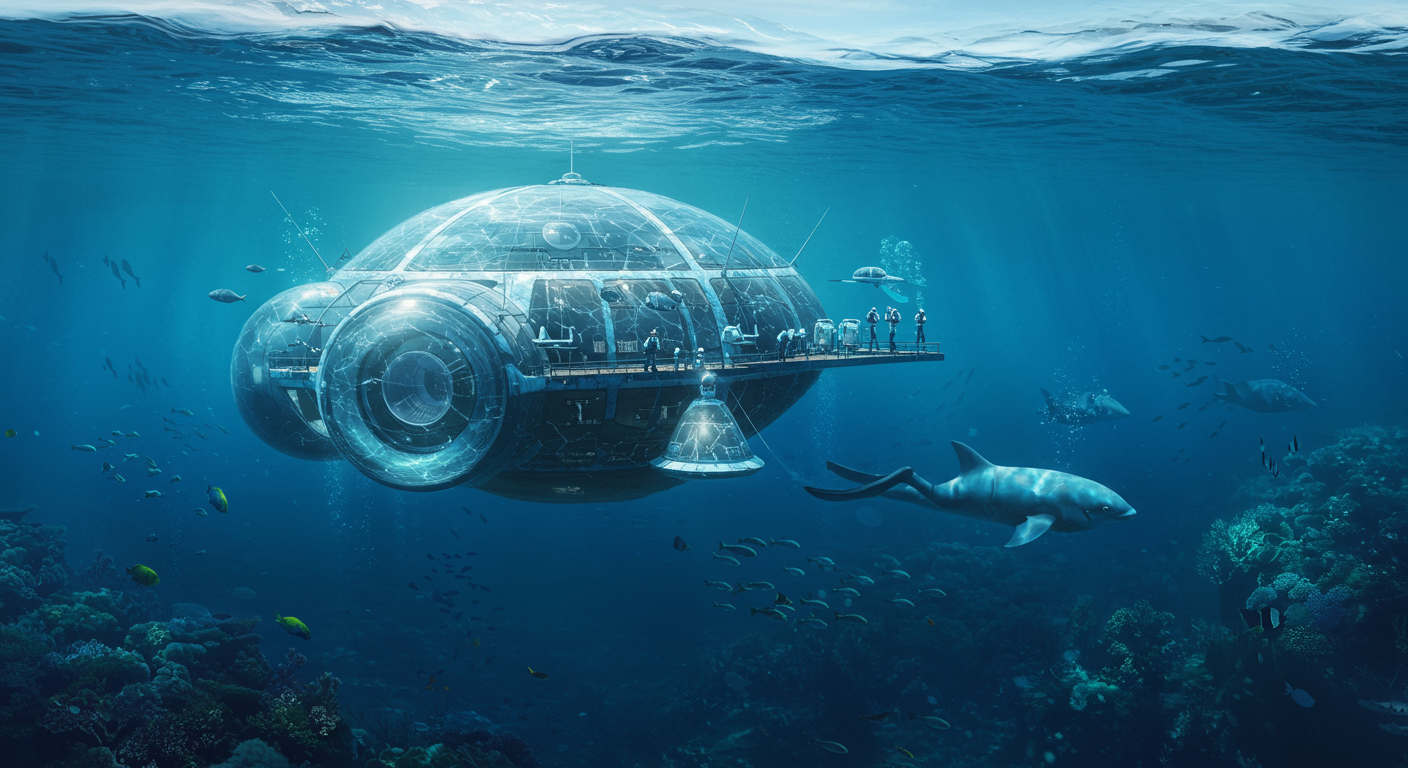
A new generation of underwater habitat is poised to open the ocean’s twilight zone to unprecedented scientific access, allowing researchers to live and work for weeks at a time hundreds of feet beneath the surface. The UK-based ocean technology company DEEP has unveiled a system of subsea stations that will provide a permanent human presence on the ocean floor, starting with a prototype habitat now being tested.
This initiative aims to overcome the severe limitations of surface-based diving, which typically restricts underwater research to just a few hours. By establishing a base on the continental shelf, scientists can conduct long-term studies of marine ecosystems, perform experiments in situ, and explore vast, poorly understood regions of the ocean. The effort promises to accelerate our understanding of marine biodiversity, climate change impacts, and the potential for new discoveries in medicine and materials science.
A Modular Undersea Residence
The core of the initiative is the Sentinel system, a modular and scalable habitat designed for deployment on the world’s continental shelves. DEEP’s vision, announced in early 2024, is to establish a permanent human presence under the oceans by 2027. Unlike previous underwater facilities that were often temporary and fixed in location, the Sentinel is designed to be recoverable, re-configurable, and re-deployable for various missions. The habitat features individual bedroom suites with private bathrooms, configurable workspaces, and communal areas for dining and collaboration. This design will allow scientists to live and work underwater for up to 28 days at a time.
The Vanguard Prototype
As a first step, DEEP unveiled its prototype, named Vanguard, in Miami in late October 2025. This initial habitat is engineered to allow up to four scientists to live and conduct research for at least a week. The vessel consists of three main sections: a 12-meter-long living chamber where the crew will eat, sleep, and work; a diving center; and a base anchored to the seabed for stability against waves and storms. A floating structure on the surface provides compressed air, power, and a communications link to the outside world. The first deployment of Vanguard is scheduled for the coming weeks off the coast of Florida.
Expanding the Frontiers of Ocean Science
The primary mission of these habitats is to grant scientists extended access to the epipelagic zone, the region down to 200 meters (about 650 feet) where most marine life is found. While the initial Vanguard tests will be at a depth of 20 meters (65 feet), DEEP is developing prototypes to reach the full 200-meter depth. “There are zones in oceans around the world that are unexplored at those depths, and making them available and accessible by divers will open up a whole new realm of science,” said Norman Smith, DEEP’s Chief Technology Officer. Researchers will be able to undertake long-term conservation projects, such as monitoring coral reef restoration, with a continuity that was previously impossible.
The Advantage of In-Situ Research
A significant scientific advantage of living underwater is the ability to conduct experiments in their natural environment. Sean Wolpert, President of DEEP, noted that this eliminates the need to bring samples to the surface. The process of decompression can alter the chemical and molecular makeup of marine organisms, compromising research results. The Sentinel system will function as a “single subsea classroom,” allowing for a more seamless and accurate process of research, experimentation, and discovery.
A Long-Term Vision for Ocean Exploration
DEEP’s ambition extends far beyond a single habitat, aiming to “Make Humans Aquatic.” The company’s long-term mission is to fundamentally change humanity’s ability to operate sustainably in the ocean. This includes establishing the DEEP Institute, a training center to prepare scientists and divers for extended missions covering topics from technical diving to ocean data collection. By making the subsea environment more accessible, the company hopes to foster a greater understanding of the ocean’s critical role as the “heart and lungs of our planet.” This new era of exploration will provide vital data and insights needed to protect and preserve marine ecosystems for future generations.