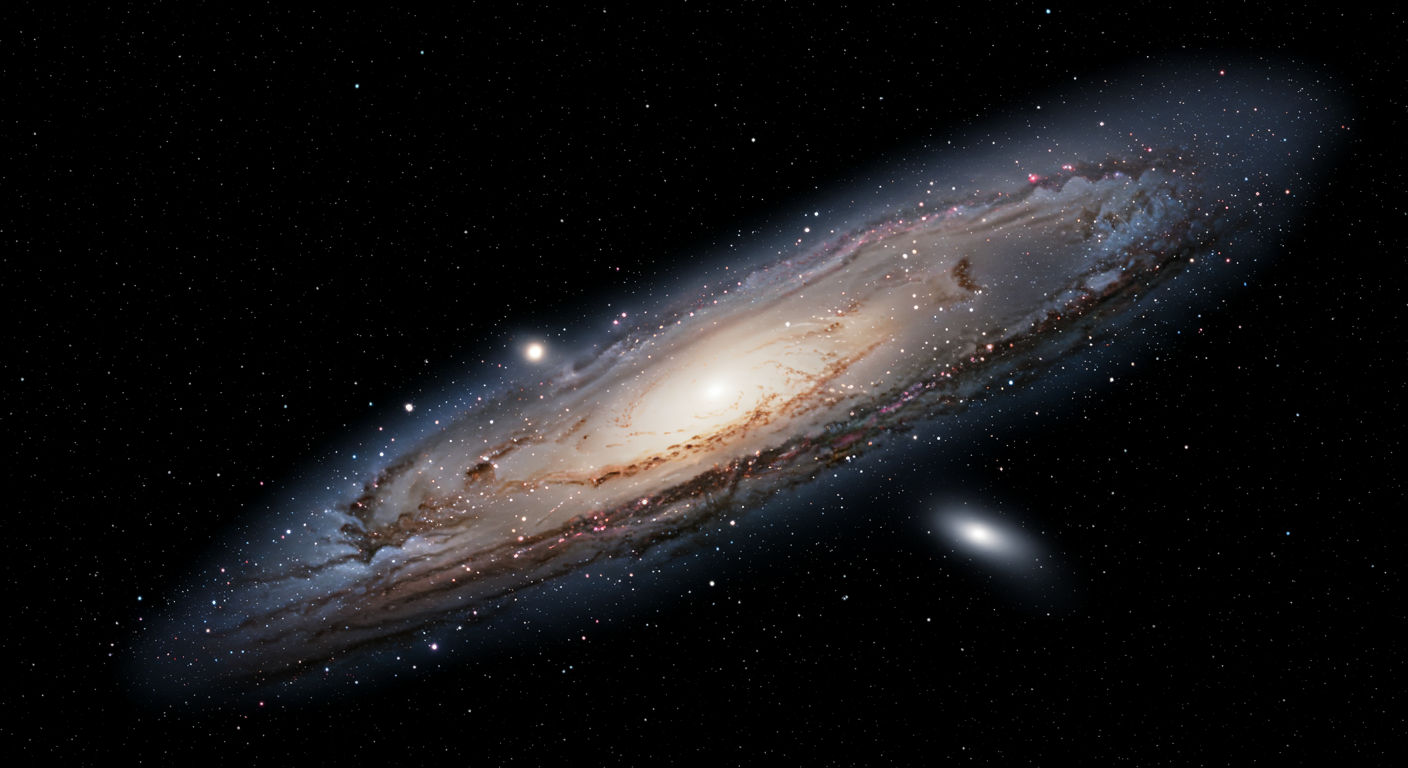
A landmark search for the violent cosmic events that could be the source of the universe’s most energetic particles has yielded a surprising and powerful result: nothing. By finding no visible explosions like supernovae corresponding to a rare burst of cosmic neutrinos, researchers have placed the tightest constraints ever on the nature of these mysterious particle accelerators, significantly narrowing the field of possibilities.
This paradoxical finding, which resulted from the first systematic hunt for an optical counterpart to a high-energy “neutrino multiplet,” challenges long-held theories about the origins of cosmic rays. A team led by researchers from Tohoku University in Japan used data from the IceCube Neutrino Observatory in Antarctica to guide their search. The absence of a visible source, such as a star being torn apart by a black hole, allows scientists to rule out a wide range of scenarios, demonstrating that even a null result can be a profound discovery in astrophysics.
The Elusive Origins of Cosmic Particles
For more than a century, scientists have sought to understand the origin of high-energy cosmic particles, including protons and electrons, that constantly bombard Earth from space. These particles carry immense energy, far beyond what can be achieved in human-made accelerators, suggesting they are forged in the most extreme environments in the universe. A leading hypothesis has pointed to cataclysmic events, often called explosive transients. These include supernovae, the final, brilliant explosions of massive stars, and tidal disruption events, which occur when a star wanders too close to a supermassive black hole and is shredded by its immense gravity. These events were considered prime candidates for accelerating particles to near the speed of light, producing high-energy neutrinos in the process.
IceCube’s Window to the Neutrino Sky
The key to testing this hypothesis lies with neutrinos, ghostly subatomic particles that travel through the cosmos nearly unimpeded. The IceCube Neutrino Observatory, a massive detector buried a mile deep in the Antarctic ice, is designed to catch the faint flashes of light produced when these high-energy neutrinos occasionally interact with atoms. By encasing a cubic kilometer of ice with over 5,000 optical sensors, IceCube can determine the direction and energy of incoming neutrinos, providing astronomers with a new way to see the universe.
What Is a Neutrino Multiplet?
While IceCube detects a steady stream of neutrinos, the observatory occasionally spots a “multiplet.” This is a rare and tantalizing event where two or more high-energy neutrinos are detected arriving from the same point in the sky over a relatively short period, such as a few weeks or months. Such a cluster strongly suggests a common, powerful origin point—a cosmic accelerator working overtime. These multiplet events provide the ideal opportunity to hunt for the source, as they give astronomers a specific direction and a timeframe to investigate.
A Search for a Visible Counterpart
The research team, led by graduate student Seiji Toshikage, conducted the first-ever systematic search for a visible counterpart to a month-time scale neutrino multiplet detected by IceCube. Using the specific coordinates and time window provided by the neutrino detection, the scientists scoured wide-field optical survey data, essentially looking for any new, bright object that appeared in that patch of sky at the right time. They were hunting for the tell-tale signature of a supernova or a tidal disruption event that would coincide with the neutrino burst.
An Eloquent Silence
Despite a thorough analysis, the team found nothing. The wide-field optical images revealed no new flashes, no exploding stars, and no evidence of a cosmic cataclysm at the location pinpointed by the neutrinos. This non-detection was not a failure but the central finding of the study. If a highly energetic event like a supernova had produced this burst of neutrinos, it should have been visible to optical telescopes. The fact that it was not seen provides a crucial piece of information.
Implications of a Null Result
The absence of an optical counterpart allows scientists to set stringent new limits on the properties of potential neutrino sources. The findings, published in The Astrophysical Journal, establish that any explosive event producing a neutrino multiplet must be significantly dimmer or have a much shorter duration than many popular models predict. This result effectively rules out a large portion of the previously considered possibilities and forces astrophysicists to refine their theories. It suggests that the engines driving cosmic particle acceleration might be hidden from view, perhaps shrouded in dense dust or involving different physical processes altogether.
This work demonstrates the power of multi-messenger astronomy, which combines observations from different cosmic “messengers” like light and neutrinos to get a more complete picture of an event. As Seiji Toshikage noted, even non-detections provide powerful insights that help refine models and guide future searches for the true sources of high-energy neutrinos.
The Path Forward
Armed with the robust analysis methods developed for this study, the research team plans to be on standby. Their goal is to conduct rapid optical follow-up observations as soon as the IceCube Collaboration reports new neutrino multiplet events. This quick-response strategy will maximize the chances of catching a potential visible counterpart, should one exist. By continuing to narrow the parameters, researchers are moving closer to finally identifying the astrophysical engines responsible for generating the most energetic particles in the cosmos, solving one of the most enduring mysteries in science.