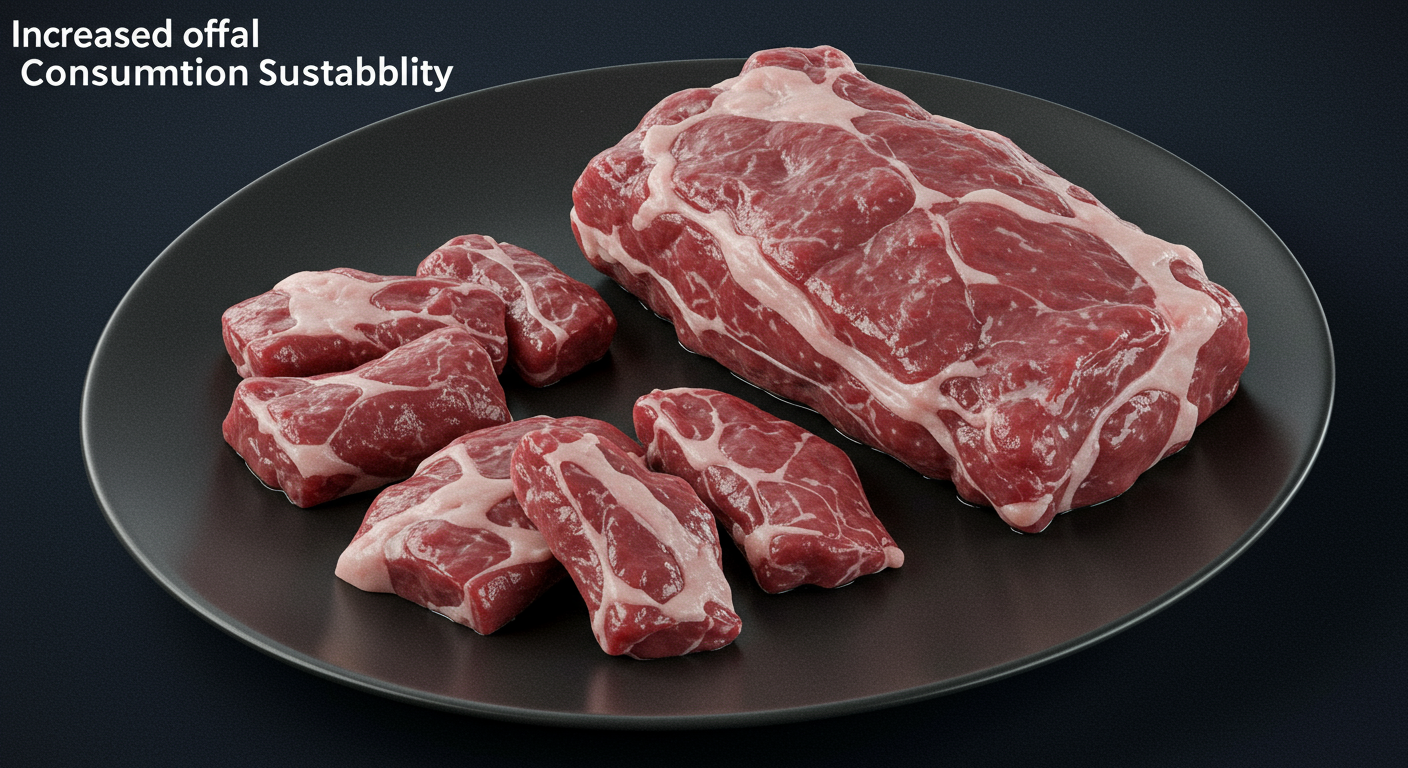
A growing body of research suggests that incorporating more offal, the edible organs and entrails of butchered animals, into our diets could significantly contribute to planetary sustainability. This dietary shift, which harks back to more traditional eating habits, presents a viable strategy for reducing the environmental impact of livestock farming, a major contributor to global greenhouse gas emissions. By embracing “nose-to-tail” eating, consumers can help diminish food waste and lessen the overall demand for resource-intensive muscle meats.
The core of the argument lies in efficiency and waste reduction. A 2019 study focusing on the German meat industry revealed that a 50% increase in offal consumption could lead to a 14% reduction in the country’s livestock emissions. This is because utilizing more of each animal reduces the total number of animals that need to be raised to meet consumer demand. While halving overall meat consumption would have a more substantial impact—a 32% emissions reduction in the same German study—the promotion of offal offers a complementary and perhaps more palatable approach for many consumers to contribute to a more sustainable food system. The findings are considered relevant to other developed nations, including the United States.
Nutritional Profile of Organ Meats
Beyond the environmental benefits, offal is nutritionally dense, often exceeding the vitamin and mineral content of more commonly consumed muscle meats. Public health advocates point to the rich nutritional profiles of various organ meats as a key reason for their reintroduction into modern diets. For instance, beef liver is an exceptional source of preformed vitamin A (retinol), essential for immune health, and vitamin B12. A single 100-gram portion of beef liver can provide nearly a week’s worth of these vital nutrients.
Other organs offer a diverse range of health-promoting compounds. Heart is particularly rich in CoQ10, a powerful antioxidant, as well as selenium, iron, and zinc. Kidney is another excellent source of selenium. Furthermore, tissues like tripe (stomach) and oxtails are abundant in collagen, a protein crucial for joint and skin health. This makes a compelling case for offal as a superfood that has been largely overlooked in recent decades.
Decline and Revival of Offal Consumption
In many Western countries, the consumption of organ meats has seen a steep decline over the past several decades. In the United Kingdom, for example, the average person’s weekly consumption of organ meat plummeted from 50 grams in 1974 to just 5 grams in 2014. This shift has led to a significant increase in food waste, as many nutritious parts of livestock are either discarded or diverted to low-value uses like animal feed.
However, there are signs of a potential resurgence. Movements like “Organuary,” a campaign encouraging people to eat organ meats twice a week, are working to reintroduce these foods to the public. Proponents of such initiatives emphasize that re-embracing offal is not just about reducing waste but also about honoring the life of the animal by utilizing it in its entirety. This philosophy of whole-animal eating is gaining traction among environmentally conscious consumers and chefs alike.
Environmental Impact of Livestock
Greenhouse Gas Emissions
The livestock sector is a significant contributor to global greenhouse gas emissions, accounting for an estimated 14.5% of the total. Beef production is a primary driver of these emissions. By increasing the consumption of offal, the overall demand for meat could be satisfied with fewer animals, thereby reducing the carbon footprint of the meat industry. This approach is one of several strategies that can be employed to mitigate the environmental impact of meat production, alongside reducing overall consumption and choosing less resource-intensive meats like chicken.
Waste Reduction and Economic Implications
Increased offal consumption is a direct route to reducing food waste within the meat production chain. Edible by-products can be used directly for human consumption or valorized as ingredients in other food products. This not only enhances the sustainability of the system but also has economic benefits. Offal is typically much cheaper than muscle meats, making it an affordable source of high-quality protein and nutrients, particularly for low-income households. Supporting local butchers who practice whole-animal butchery can also contribute to a more sustainable and resilient local food system.
Challenges and Considerations
Despite the clear benefits, there are challenges to increasing offal consumption. One of the main hurdles is cultural perception and taste preferences. In many Western societies, offal is viewed as less desirable than prime cuts of meat. Overcoming this perception will require education and a willingness on the part of consumers to explore new foods and cooking methods.
There are also some health considerations. While offal is nutrient-dense, some experts caution that it can also be high in saturated fats. However, the consensus is that moderate consumption, such as once or twice a week, can be a healthy and sustainable dietary choice. As with any dietary change, balance and moderation are key.
A Path Toward Sustainable Diets
The conversation around sustainable eating often focuses on plant-based diets. While reducing meat consumption is a valid and effective strategy, the promotion of offal offers a complementary path for those who choose to continue eating meat. It represents a shift towards a more mindful and efficient way of consuming animal products, one that is rooted in tradition and offers significant benefits for both human health and the environment. By embracing the full spectrum of edible products from livestock, we can take a meaningful step toward a more sustainable and less wasteful food future.