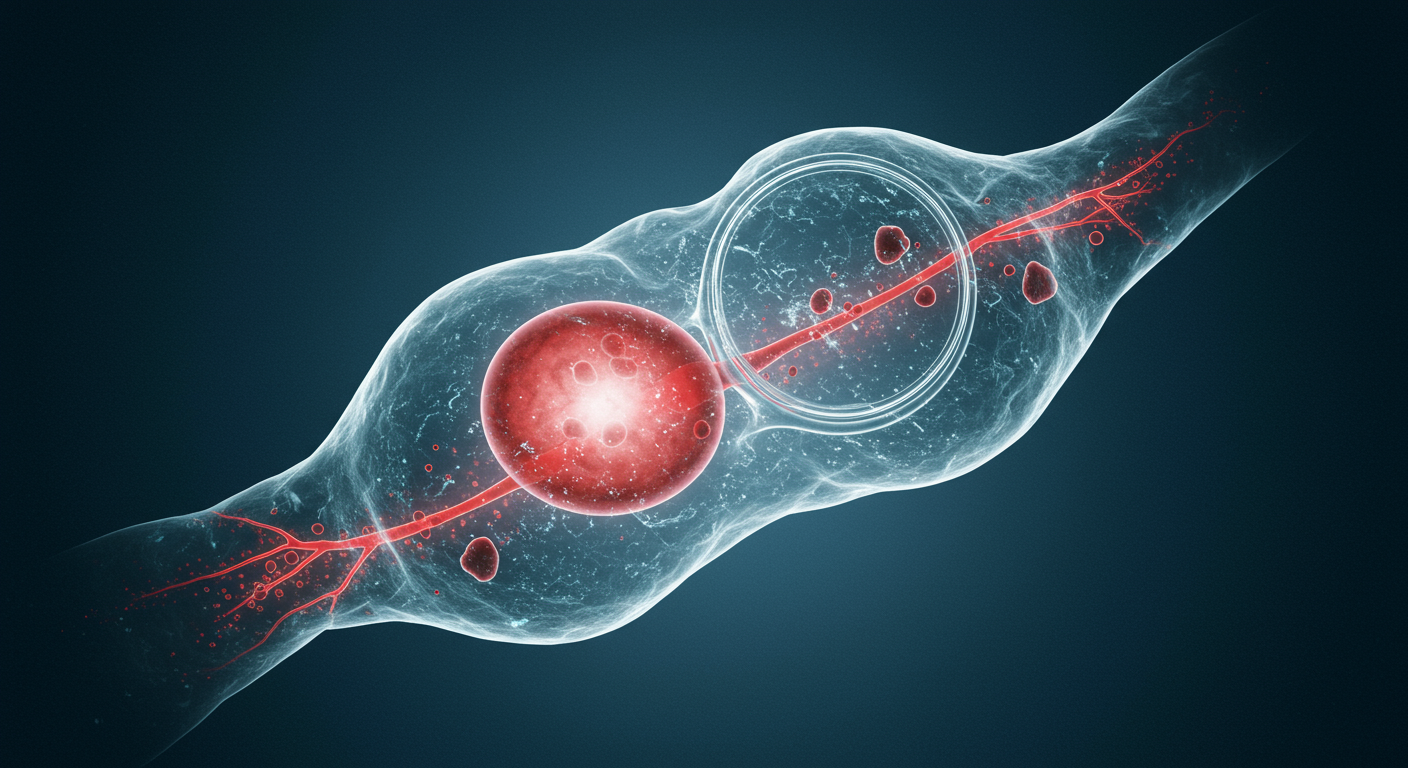
Researchers at Massachusetts General Hospital and Harvard Medical School have developed a novel, dissolvable wafer designed to be implanted in the brain after surgery to remove a glioblastoma tumor. This device, nicknamed CANDI, releases a combination of drugs that stimulate the patient’s own immune system to attack and eliminate any remaining cancer cells, a strategy that has shown significant promise in preventing the cancer’s recurrence in preclinical studies.
Glioblastoma is the most common and aggressive form of brain cancer, and it almost invariably returns after initial treatment. The standard of care involves surgically removing as much of the tumor as possible, followed by radiation and chemotherapy. Despite these measures, residual cancer cells are often left behind, leading to a high rate of recurrence. The CANDI (cyclodextrin-based nano-immunotherapy) wafer aims to solve this problem by delivering a sustained, localized immunotherapy directly to the tumor site, reprogramming the postsurgical environment from one that is hospitable to cancer regrowth to one that actively fights it.
Addressing a Stubborn Cancer
Glioblastoma’s resilience is largely due to its local environment in the brain. The tumor is typically infiltrated by a high concentration of immune cells called myeloid cells. In a healthy person, these cells would attack foreign invaders, but glioblastoma co-opts them. The cancer cells effectively put the myeloid cells to sleep, creating a microenvironment that suppresses the immune system and allows the tumor to grow unchecked. This immunosuppressive shield makes it extremely difficult for the body’s natural defenses, or even conventional immunotherapies, to work against the cancer. This is why there is currently no FDA-approved immunotherapy for glioblastoma, a significant gap in treatment for a cancer that has defied decades of research.
Engineering an Immunostimulatory Implant
To overcome this challenge, the research team engineered a biodegradable wafer made from cyclodextrin, a sugar-based polymer. This material is designed to be placed directly into the cavity left in the brain after a glioblastoma tumor is surgically excised. Once in place, the wafer slowly dissolves, releasing a potent cocktail of immune-modulating drugs directly to the surrounding tissue, where residual cancer cells are most likely to be hiding. The targeted, localized delivery system is a key feature of the design, as it maximizes the impact on the cancer cells while minimizing the potential for systemic toxicity and side effects that can accompany other forms of cancer treatment.
Reprogramming the Immune System
The drugs released by the CANDI wafer are specifically chosen to target the myeloid cells in the tumor’s microenvironment. Instead of killing cancer cells directly, these agents “wake up” the suppressed immune cells, particularly a type known as tumor-associated macrophages. Once activated, these macrophages begin to produce powerful immune-stimulating molecules, including interleukin-12. This action effectively reprograms the local immune environment, turning it from a cancer-friendly zone into a hostile one. The newly activated cells then recruit T cells—the body’s primary cancer-killing immune cells—to the site to seek out and destroy any remaining glioblastoma cells.
Promising Preclinical Results
The novel approach was tested in mice that had undergone surgery to remove glioblastoma tumors. The results, published in Nature Biomedical Engineering, were striking. In the mice that received the CANDI wafer implant after their surgery, more than 50% remained tumor-free for the long term. This represents a significant improvement over control groups and demonstrates the potential of this localized immunotherapy to prevent the cancer from returning. Immune profiling of the treated areas confirmed that the wafer had successfully transformed the local environment into an immunostimulatory one, with an increased presence of activated T cells.
From Animal Models to Human Tissue
To bridge the gap between animal studies and potential human application, the researchers also tested the wafer’s effectiveness on fresh human glioblastoma tissue samples. These samples were harvested from patients immediately after surgery and treated with the wafer in the lab. The results mirrored what was seen in the animal models, with the wafer inducing similar immune activation within the human tumor tissue. This finding is a critical step, suggesting that the CANDI wafer could be similarly effective in human patients.
The Future of Glioblastoma Treatment
While the preclinical results are highly encouraging, the journey to clinical use is just beginning. The research team is now focused on refining the wafer’s design to ensure a controlled and predictable release of the drugs in preparation for human clinical trials. If the CANDI wafer proves safe and effective in humans, it could represent a paradigm shift in the way glioblastoma is treated. Rather than relying solely on external treatments like radiation and chemotherapy after surgery, surgeons could proactively implant this device to enlist the patient’s own immune system in the fight against cancer. This approach has the potential to be used in concert with existing therapies to provide a more comprehensive and durable solution to one of the most challenging cancers known to medicine.