Centuries before satellites began monitoring Earth’s oceans, mariners aboard naval vessels, whaling ships, and merchant schooners were diligently recording weather and sea conditions in their daily logbooks. Today, scientists are digitally converting these vast archives of handwritten entries into a treasure trove of climate data, offering an unprecedented view into how the world’s oceans have changed over hundreds of years. This painstaking work of digitizing millions of historical observations is filling critical gaps in the climate record, providing a new baseline for understanding long-term trends in sea ice, wind patterns, and storm activity.
These historical records are crucial because the modern, comprehensive satellite record of global ocean conditions only dates back to 1979. By rescuing weather data logged by sailors—often in hourly increments—researchers can reconstruct past climate variability and better distinguish natural cycles from human-driven changes. Projects involving citizen scientists and international collaboration are converting data on barometric pressure, air temperature, and ice sightings into computer-readable formats, feeding massive climate models and reanalysis systems. This newfound knowledge helps refine future climate projections and provides a richer context for the dramatic environmental shifts being observed today.
A Global Data Rescue Mission
The effort to unlock climate data from ship logs is a global enterprise, relying on national archives, university researchers, and thousands of volunteers. A prominent citizen-science project, known as Old Weather, has been instrumental in transcribing observations from the logbooks of 19th and early 20th-century ships. These records, stored in places like the U.S. National Archives, contain a wealth of information. Federal vessels in the United States, for instance, were required to document and archive all ship operations, resulting in thousands of preserved logbooks. In Germany, the German Marine Observatory began providing standardized meteorological journals to merchant ships in 1868 to create charts of weather and currents.
The sheer volume of this untapped data is immense. The U.S. National Archives alone holds an estimated 22,700 logbooks from between 1801 and 1941, which could contain more than 75 million individual weather records. Similar efforts in Germany have already digitized about 15 million observations from a collection estimated to hold at least 23 million total. The process involves carefully scanning the delicate, often handwritten pages and then having volunteers or researchers transcribe the entries into digital databases. This work essentially creates a weather time machine, allowing scientists to see what conditions were like on any given day as far back as the 1830s.
Reconstructing the Arctic Past
Much of the research has focused on the Arctic, a region experiencing rapid warming where historical data is particularly scarce. Before this initiative, scientists relied almost entirely on satellite images for sea ice data, a record that only began in 1979. Dr. Kevin Wood, a climatologist at the University of Washington and a former merchant mariner, recognized the potential of these old records to extend the timeline of Arctic sea ice history significantly. Using data from U.S. Navy, Coast Guard, and survey vessels, his team has been able to estimate Arctic sea ice volume back to 1901.
These historical logs provide a much longer perspective on ice behavior. The data has revealed that while the Arctic experienced a significant decline in sea ice during the 1920s and 1930s, the ice later recovered. However, the current decline is the most considerable in over a century, a trend made clear only by comparing it to the extended historical baseline. The logbook of the USS *Jeannette*, which set off for the North Pole in 1879 and became trapped in the ice for nearly two years, provides a vivid snapshot of how much conditions have changed. The location where the *Jeannette* first encountered heavy sea ice is now open water for much of the year, illustrating the dramatic retreat of the ice pack over the last century and a half.
New Insights from Southern Oceans
Historical ship logs are also transforming our understanding of the Southern Ocean surrounding Antarctica, another remote region with limited pre-satellite data. Logbooks from the intense period of whaling in the early 20th century have proven to be a particularly rich source of information. Dozens of Norwegian factory ships and whaling vessels were active in the Antarctic each year during the 1930s, and their logs contain detailed notes on weather and, crucially, sea ice conditions.
Researchers at the Norwegian Polar Institute have begun analyzing these records. A preliminary analysis of logs from seven factory ships and one research vessel from the 1930s yielded thousands of observations of air temperature, wind, and sea state. Among these were about 1,300 specific observations of sea ice or open water conditions. This data is helping to reconstruct past sea ice extent in the Antarctic, providing a vital check on climate models for the region. Early findings suggest that the sea ice edge in some areas during the 1930s extended 2–3 degrees farther north than the modern average, though it largely remained within the bounds of natural variability observed in the satellite era. This work helps fill critical knowledge gaps about climate variability in the Southern Hemisphere.
Whalers as Unwitting Climatologists
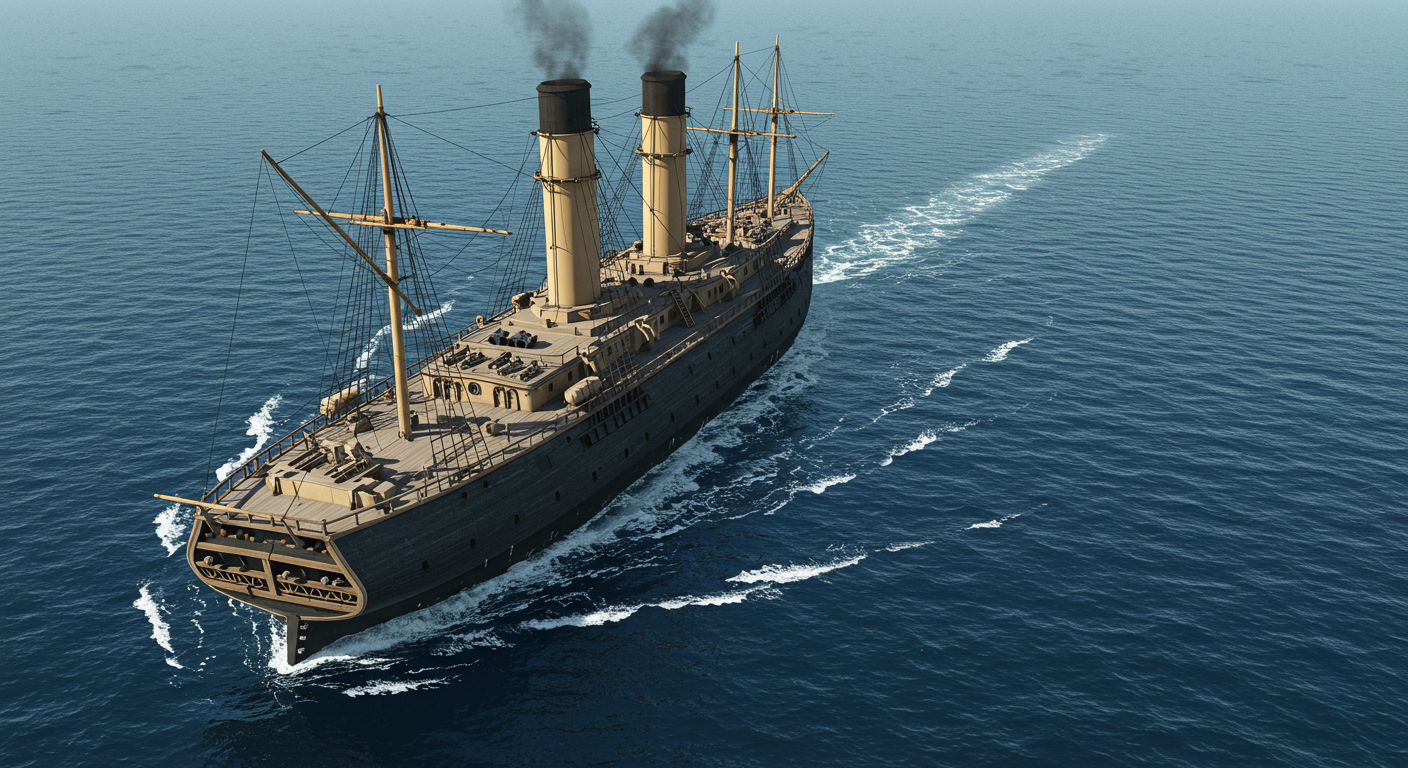
Among the most valuable records are those from whaling ships, which spent extended periods in remote, data-sparse regions of the world’s oceans. Marine historians and climate scientists have teamed up to extract weather data from the logbooks of American whaling vessels, such as the *Charles W. Morgan*, the last surviving wooden whaling ship from a fleet that once numbered nearly 3,000. These ships, on their multi-year voyages, meticulously recorded wind speed, wind direction, and other conditions multiple times a day.
Timothy Walker, a marine historian at UMass Dartmouth, initiated a project to determine if this weather data could be systematically extracted to inform climate science. The answer was a resounding yes. This information is now being used to understand how wind and pressure patterns over the oceans are shifting, which has a direct impact on rainfall, droughts, and extreme weather events on land. By turning the qualitative descriptions and quantitative measurements from these 19th-century logs into usable scientific data, researchers are painting a more complete picture of the ocean’s role in global climate variability, leveraging the careful record-keeping of mariners who could not have imagined their work would be used for such a purpose hundreds of years later.