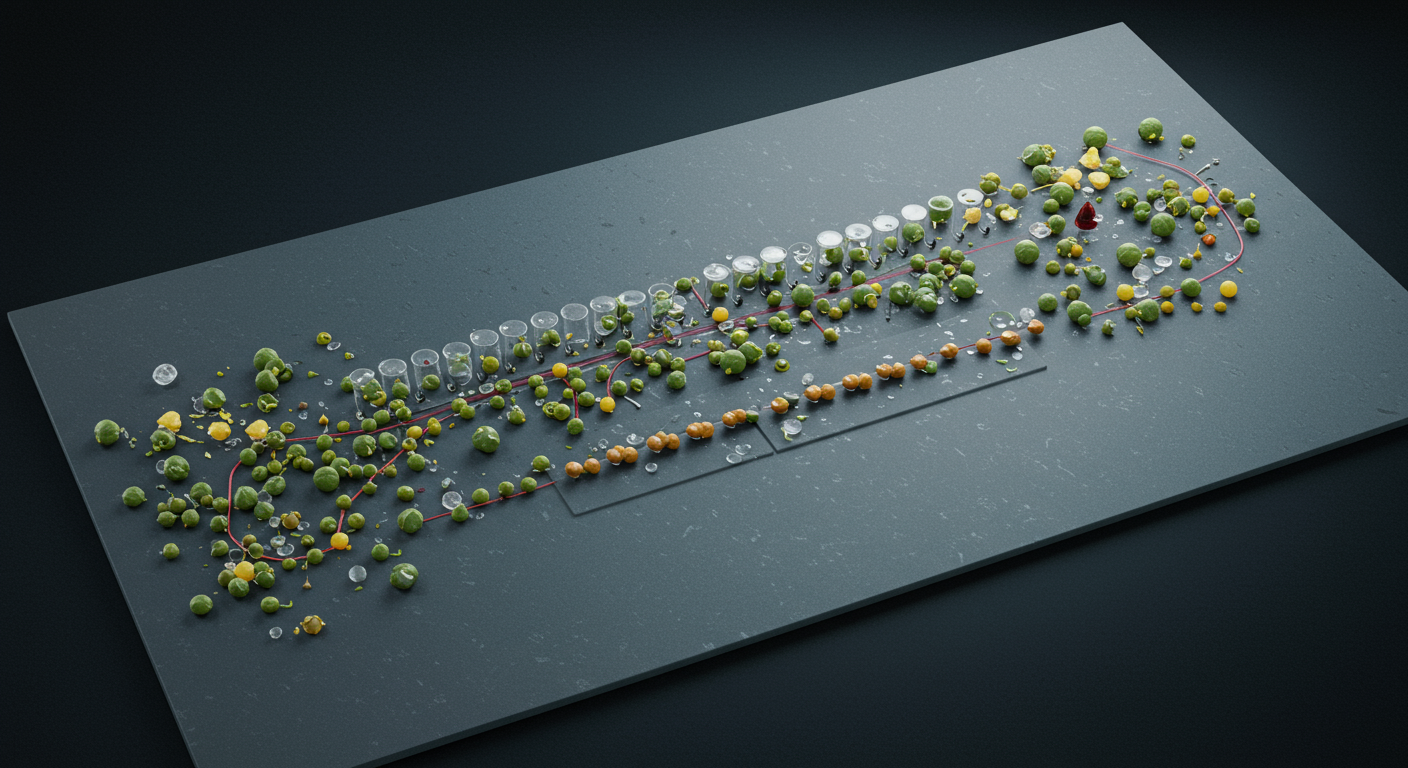
Scientists have developed a reusable and universally applicable method for powering nanoscale machines using heat, a breakthrough that could accelerate the development of molecular computers and smart materials. Researchers at Caltech created a system where machines made of synthetic DNA can perform complex tasks repeatedly, recharging through brief pulses of heat. This innovation addresses a primary obstacle in the field of molecular programming: the lack of a sustainable and clean power source for machines operating at the billionth-of-a-meter scale.
The new technique, detailed in the journal Nature, provides a versatile energy solution for a range of DNA-based devices, from robots that sort molecular cargo to circuits that process information. Unlike conventional chemical fuels used at this scale, which produce waste and can only be used once, the heat-recharging method is clean and sustainable. By harnessing heat, an abundant and universal energy source, the system can be reset and reused multiple times, allowing the molecular machines to sustain their activity and interact with their environment over extended periods.
A Universal Fuel for Molecular Work
The quest to build complex molecular machines has been hampered by the need for a reliable power source. Living cells use a universal energy currency called ATP, but creating a synthetic equivalent has been a persistent challenge. Early DNA-based machines were often single-use, relying on the energy released from the binding of DNA strands, which could not be easily reversed. Subsequent designs used chemical fuels, but these inputs were specific to each machine and generated waste products that could interfere with operations.
The Caltech team, led by Professor Lulu Qian, recognized that heat is a ubiquitous and readily available energy source that could offer a more general solution. “Unlike specialized fuels, heat is everywhere and easy to access,” Qian stated. The key was to design a system that could store potential energy and then have its state restored by a simple temperature change. This approach allows the same power mechanism to be applied to different types of molecular machines, regardless of their specific function. The recharge process is also clean, leaving behind no waste beyond the remnants of the input signals, which can be naturally recycled.
Harnessing the Power of Kinetic Traps
The heat-rechargeable system is built upon a physical phenomenon known as a kinetic trap. A compressed spring is a macroscopic example of a kinetic trap; it holds stored energy that is released when the trap is sprung. At the molecular level, the researchers designed DNA structures that function as “springs,” storing energy in their configuration. These DNA-based kinetic traps are programmed to remain in a high-energy, compressed state at room temperature, allowing the molecular machine to perform its designated task.
Once the machine has completed its work and expended the stored energy, the entire system can be recharged. This is accomplished by briefly heating the environment. The pulse of heat provides the energy needed to “re-compress” the molecular springs, returning them to their high-energy state. The system is then cooled back down to room temperature, where it is ready to receive new inputs and perform its function again. This cycle of work followed by a heat-based reset makes the machines reusable and capable of sustained operation.
Designing the DNA Circuits
The research was conducted by Qian and former postdoctoral scholar Tianqi Song. They used the unique chemical bonding properties of synthetic DNA to build circuits that can process signals similar to miniature computers. These DNA strands are engineered to self-assemble into specific structures that act as gates, switches, and pathways for molecular information. The energy stored in the kinetic traps drives the interactions within these circuits, allowing them to perform logical operations or even mimic the behavior of a neural network.
From Logic Gates to Neural Networks
To demonstrate the versatility of their heat-rechargeable design, the researchers applied it to two fundamentally different types of molecular systems: a logic circuit and a neural network. Logic circuits are the foundation of modern computing, performing calculations based on simple “true/false” inputs. The team successfully built a DNA-based logic circuit that could be used, recharged with heat, and then used again with new inputs.
They also applied the power source to a more complex molecular device: a neural network designed to recognize patterns. This network, made entirely of DNA, can be “trained” to identify molecular patterns in a way that is analogous to how artificial intelligence learns to recognize images. The researchers showed that their heat-rechargeable system could power the network through multiple cycles of pattern recognition, demonstrating its applicability to more sophisticated computational tasks. This success suggests the method is robust enough to power a wide array of future nanotechnologies.
Implications for Nanotechnology and Medicine
The ability to sustainably power nanoscale machines opens the door to numerous applications in materials science and medicine. In the future, “smart” materials could be developed that change their properties on demand, powered by these rechargeable DNA circuits. For example, a material could be programmed to become more or less rigid in response to specific molecular signals, with its function sustained over time through heat recharging.
In medicine, DNA robots powered by this technology could one day perform complex tasks inside the human body. These machines could be designed to detect disease markers, deliver drugs directly to cancer cells, or even perform repairs at the cellular level. The use of heat as a power source is particularly advantageous in this context, as controlled temperature changes are already used in various medical procedures. Because the system is waste-free, it is less likely to cause harmful side effects, a major concern for any internally administered nanotechnology.