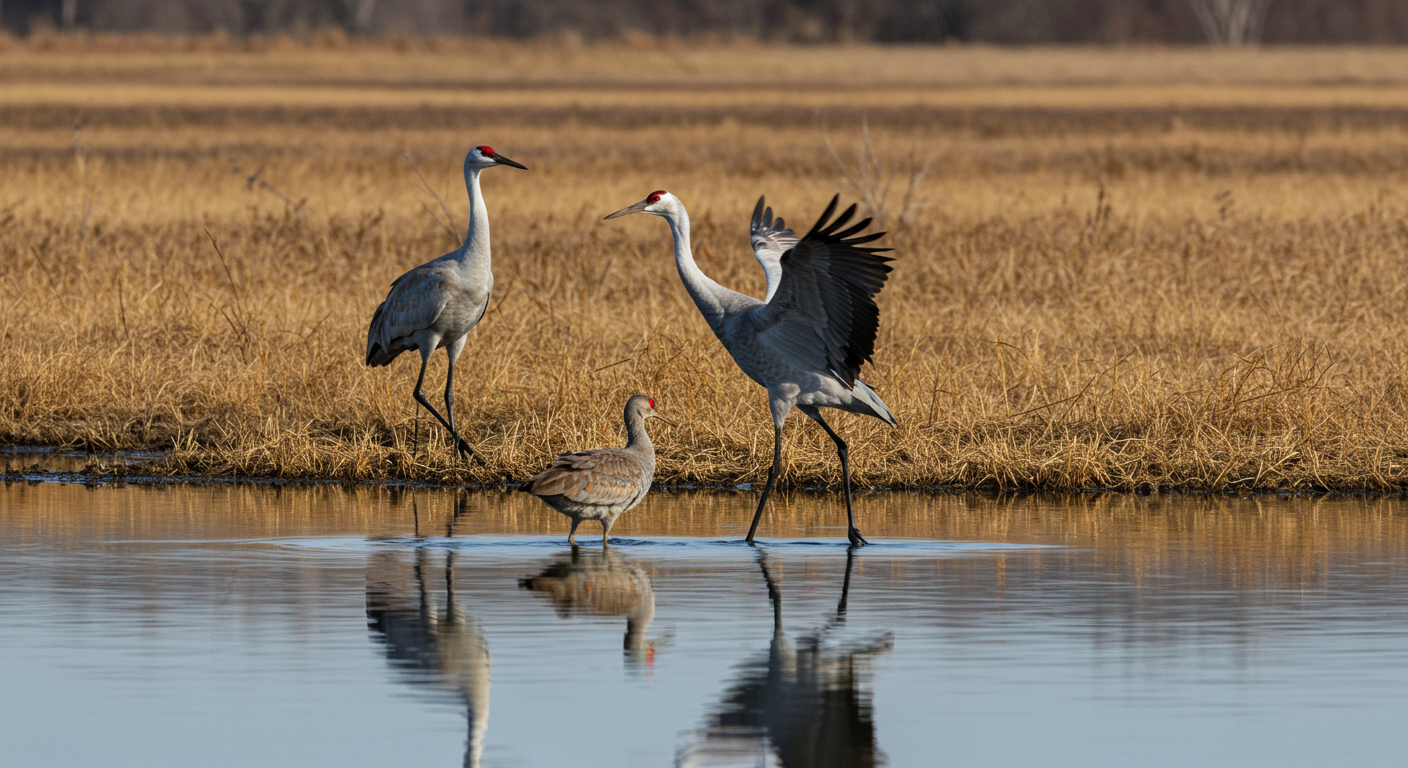
Thousands of sandhill cranes arriving in California’s Central Valley for their annual winter migration are facing an immediate threat as a federal government shutdown has furloughed the wildlife managers responsible for maintaining their habitat. The birds, including the state-threatened Greater Sandhill Crane, are now finding their sanctuary unprepared for their arrival, lacking the specific conditions needed for them to safely feed and rest for the winter.
This crisis stems from the suspension of routine but critical habitat management tasks at national wildlife refuges in the Sacramento Valley, a primary wintering ground for these birds. With the majority of U.S. Fish and Wildlife Service staff not at work, key preparations, most notably the seasonal flooding of fields to create safe nighttime roosting ponds, have been halted. This leaves the vast flocks of cranes vulnerable to predators and ecological stress at the very start of their stay, creating an uncertain future for a migration pattern that has endured for millions of years.
A Precarious Seasonal Arrival
Each fall, the skies above the Sacramento Valley fill with the sights and sounds of sandhill cranes completing their long migration from northern breeding grounds in Alaska, Canada, and the Pacific Northwest. These large, elegant birds, with wingspans that can exceed seven feet, travel along the Pacific Flyway, one of North America’s four major migratory routes. The Central Valley serves as a vital wintering destination, offering the open grasslands, freshwater marshes, and agricultural fields the cranes need to survive. Two subspecies, the Lesser and Greater Sandhill Crane, congregate here, with a population of 5,000 to 6,000 of the Greater subspecies wintering in the region.
The cranes’ survival is deeply intertwined with a combination of private farmlands and a network of state and federal wildlife preserves, such as the Cosumnes River Preserve. They forage for waste grains in corn, rice, and wheat fields, which provide essential energy. This dependence on managed lands makes them particularly susceptible to disruptions in human activity. The Greater Sandhill Crane is already listed as a threatened species under the California Endangered Species Act due to the ongoing loss of its habitat, making any new threat a significant concern for its long-term viability.
Essential Management Halted by Shutdown
The government shutdown has resulted in the furlough of thousands of federal employees, including the vast majority of the U.S. Fish and Wildlife Service staff who oversee the national wildlife refuge system. While law enforcement and other emergency functions may continue on a minimal basis, the daily, hands-on conservation work that sustains these habitats has ceased. For the sandhill cranes, the most critical suspended task is water management.
Wildlife managers typically flood specific fields and impoundments with water to a shallow depth, creating the protected roosting sites cranes require. These shallow ponds allow the birds to stand together in the water during the night, providing an effective defense against predators like coyotes. Without federal staff to operate water controls and manage these seasonal wetlands, the cranes are left without these essential safe havens. This forces the birds to either congregate in less-safe areas or expend critical energy searching for suitable alternatives, increasing their stress and vulnerability.
Ecological and Biological Consequences
The lack of properly managed roosting sites poses the most immediate danger, but the shutdown’s effects cascade through the ecosystem. Sandhill cranes are creatures of habit, often returning to the same sites year after year. The abrupt unavailability of their traditional sanctuaries can cause significant disruption. Forced to find new locations, they may settle in areas with higher predation risk or closer to human disturbances, which can negatively impact their health and breeding success in the following season.
Furthermore, the absence of refuge staff compromises the overall integrity of the preserve. With no one to monitor conditions, the risk of vandalism, pollution, and other illicit activities increases, posing a threat to the entire habitat. For a species like the Greater Sandhill Crane, already struggling against the conversion of agricultural lands to orchards and housing developments, this added layer of disruption is a severe blow. The shutdown effectively cripples the primary tool—active habitat management—used to protect these vulnerable populations.
A System Already Under Strain
Conservation advocates note that the government shutdown is exacerbating long-standing issues within the national wildlife refuge system. Even before the current furlough, the system has been described as struggling due to years of budget cuts and staffing reductions that have diminished its capacity for conservation work. According to the National Wildlife Refuge Association, staff levels have been declining for over a decade, leaving many refuges with minimal on-site presence even during normal operations.
Beyond the critical failure to manage habitats, the shutdown halts all other public-facing and scientific activities. Educational programs, guided bird-watching tours, and seasonal events like the Lodi Sandhill Crane Festival, which rely on access to federal lands and personnel, are canceled. This not only cuts off a valuable source of revenue for nonprofit partners who support the refuges but also severs a key connection between the public and the wildlife these preserves are meant to protect. The full impact on wildlife populations may not be understood for several years, long after the political impasse in Washington has ended.
Uncertain Future for Wintering Flocks
As more sandhill cranes arrive in the Sacramento Valley daily, they enter a landscape where their protected winter home is failing to provide for their most basic needs. The absence of federal workers has turned these sanctuaries into zones of uncertainty and risk. The immediate challenge for the birds will be to adapt to the lack of safe, managed roosting ponds, a cornerstone of their winter survival strategy.
The situation highlights a stark reality: decisions made hundreds of miles away have profound and immediate consequences for wildlife. While the cranes follow an ancient migratory pattern, their continued success depends on modern conservation efforts. The government shutdown has severed that vital link, leaving the fate of one of California’s most iconic winter visitors hanging in the balance. The silence of furloughed federal employees is directly matched by the growing peril faced by the birds they are tasked to protect.