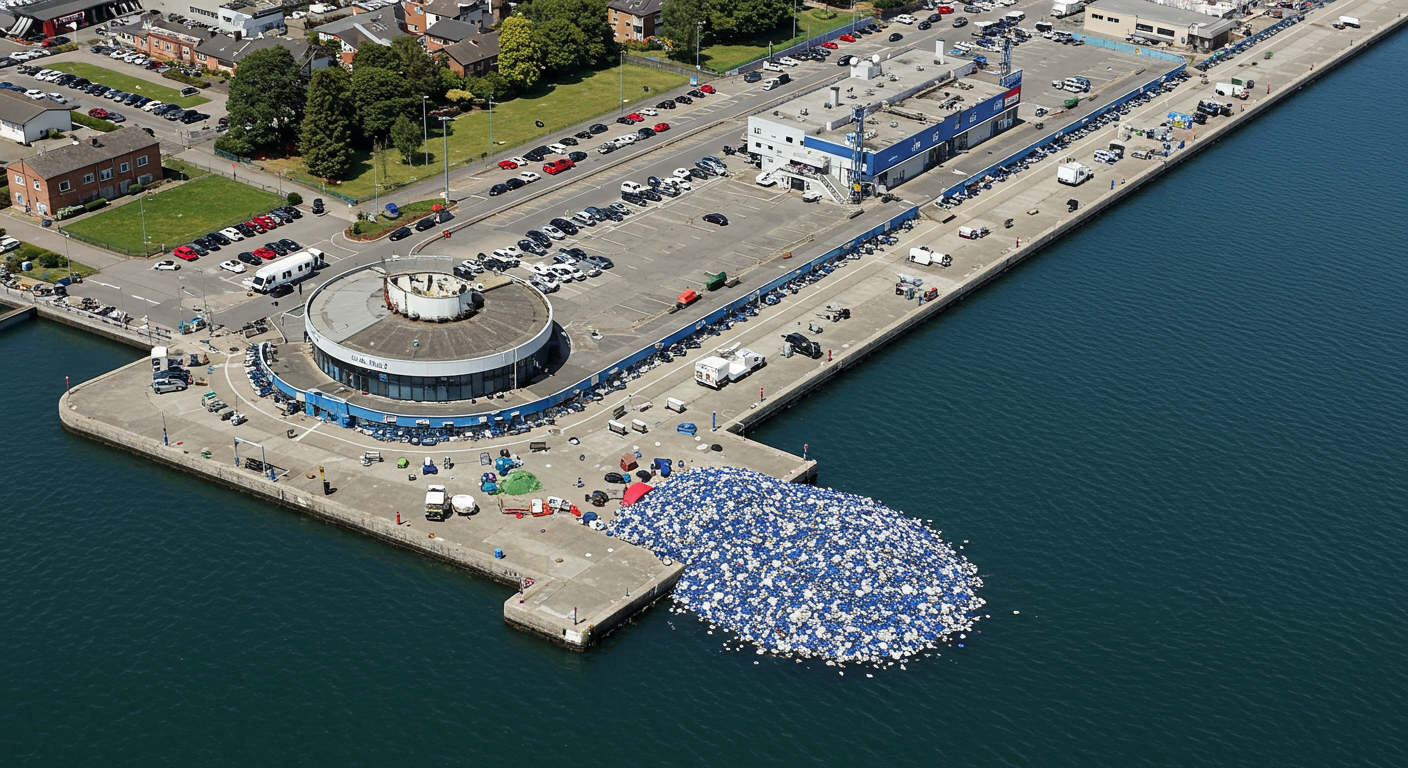
The European Union has formally adopted a landmark regulation aimed at preventing the widespread pollution caused by plastic pellets, the small granules that serve as the raw material for nearly all plastic products. The new rules establish a comprehensive legal framework that holds businesses accountable for pellet losses across the entire supply chain, from manufacturing facilities to transport vehicles. This legislation marks a significant shift from voluntary industry initiatives to legally binding requirements for all operators handling substantial quantities of pellets within the EU.
Responding to growing public pressure and several high-profile environmental disasters, the regulation compels companies to prevent, contain, and clean up spills of these lentil-sized plastic beads, often called nurdles. According to data from the European Commission, accidental spills and mishandling lead to the release of up to 180,000 tonnes of pellets into the European environment each year, making them a major source of microplastic pollution. The new law seeks to drastically reduce this figure by enforcing strict handling, transport, and reporting protocols on land and at sea.
A New Framework of Accountability
The core of the new regulation is the principle of accountability throughout the supply chain. Previously, the dispersed nature of pellet loss made it difficult to assign responsibility, but the law now establishes clear obligations for manufacturers, processors, and logistics companies. Under the new rules, economic operators are legally responsible for any pellets spilled into the environment. Socialist lawmaker Cesar Luena, who guided the legislation through parliament, stated that companies can no longer deflect blame, emphasizing, “We are holding them responsible—it is up to them to alert the authorities.” This framework requires all firms involved in the pellet supply chain to perform thorough risk assessments to identify and mitigate potential spill points. They must then implement preventative measures based on these assessments. The law sets a clear objective of zero pellet loss, prioritizing prevention first, followed by containment of spills, and finally, cleanup as a last resort.
The rules apply to all companies handling more than five tonnes of plastic pellets annually within the EU, regardless of whether the firms are based in the bloc. For larger operators, the requirements are more stringent. Businesses that handle over 1,500 tonnes of pellets per year at a single installation will be required to obtain a certificate of compliance issued by an independent third party. To ease the burden on smaller enterprises, the regulation includes lighter obligations for small and medium-sized companies that handle more than this 1,500-tonne threshold, such as requiring a one-off certification. This tiered approach aims to balance robust environmental protection with the administrative capacities of different-sized companies.
Confronting a Persistent Pollutant
Plastic pellets are a foundational component of the modern economy, used to create everything from car parts to food containers. However, their small size and light weight make them notoriously difficult to manage, and they frequently escape into ecosystems during production and transport. The European Commission estimates that the annual loss is equivalent to as many as 20 truckloads of pellets entering the environment every day. Once in nature, these pellets do not biodegrade. They accumulate on beaches, in rivers, and in the ocean, where they can persist for centuries.
These nurdles pose a significant threat to wildlife. Marine animals, birds, and fish often mistake the floating pellets for food, leading to internal injury, starvation, and death. Furthermore, the pellets act like sponges for other toxic pollutants in the water, concentrating harmful chemicals on their surface. When ingested by wildlife, these toxins can move up the food chain, raising concerns about potential impacts on human health. Recent environmental incidents, such as the December 2023 pellet spill off the coast of Galicia and another spill off the English coast, have highlighted the catastrophic consequences of pellet loss at sea and galvanized public and political support for binding rules.
Mandatory Protocols for Operators
The regulation codifies a specific set of actions that companies must take to prevent and respond to spills. Prevention is the primary objective, with requirements for appropriate packaging, secure loading and unloading equipment, and comprehensive staff training. Every installation handling pellets must prepare a detailed risk management plan outlining its preventative measures.
Spill Response and Reporting
In the event of a spill, the legislation mandates immediate action. Companies must act quickly to contain the leak and initiate cleanup procedures. A crucial element of the new law is its transparency requirement. Operators are obligated to report significant pellet losses to the relevant authorities without delay. Within 30 days of a spill, the responsible company must provide an official estimate of the quantity and type of plastic that entered the environment, detail the circumstances of the incident, and describe the cleanup measures taken. This mandatory reporting will create a baseline for tracking compliance and understanding the scale of pellet loss across the EU.
Enforcement Timelines
The regulation provides a transitional period for companies to adapt to the new requirements. Land-based operators and freight companies will have two years to achieve full compliance with the rules. Maritime freight operators, who face a more complex set of challenges, will be given a three-year window to implement the necessary changes. This phased approach acknowledges the logistical adjustments required to adhere to the new standards across different sectors.
Inclusion of Maritime Transport
A significant victory for environmental advocates was the inclusion of sea-based transport within the regulation’s scope. Some EU member states had initially pushed for the maritime sector to be excluded, but a series of major spills from container ships created undeniable momentum for its inclusion. The final agreement establishes specific obligations for the maritime transport of plastic pellets in freight containers. These rules, developed in alignment with International Maritime Organisation guidelines, mandate the use of high-quality packaging designed to prevent tears and leaks during transit. Furthermore, cargo containing plastic pellets must now be clearly labeled as such, ensuring that handlers are aware of the potential environmental risk.
The law also extends accountability to non-EU carriers. Any shipping company transporting pellets in EU waters, regardless of its country of registration, will be required to designate an authorized representative within the EU. This provision ensures that a responsible party is always reachable and can be held accountable for compliance and any spills that occur. While environmental groups praised the inclusion of maritime transport, some expressed disappointment with the three-year delay before these specific rules come into force, viewing it as an unnecessary postponement of critical protections.
A Step Forward with Caveats
The passage of the regulation has been widely described as a landmark moment in the EU’s fight against microplastic pollution and a key component of the European Green Deal. Environmental organizations have lauded it as a “huge relief” and a strong foundation for transparency across the supply chain. The shift from voluntary guidelines to binding, pan-European rules is seen as essential for ensuring that plastic pellets are treated as the hazardous pollutants they are. The comprehensive supply-chain approach ensures that prevention and cleanup measures are implemented uniformly from production to final use.
However, some experts and advocacy groups have raised concerns about potential loopholes that could undermine the regulation’s overall impact. The exemption for operators managing fewer than 1,500 tonnes per year per installation is a point of contention. Critics argue that this threshold is too high and that a risk-based approach would have been more effective than a blanket quantity-based exemption. There are also concerns that the lighter obligations for smaller companies, such as the one-off certification, may not be sufficient to ensure ongoing compliance without regular oversight. Despite these reservations, the law represents a decisive step, establishing the EU as a global leader in addressing this pervasive and preventable form of pollution.