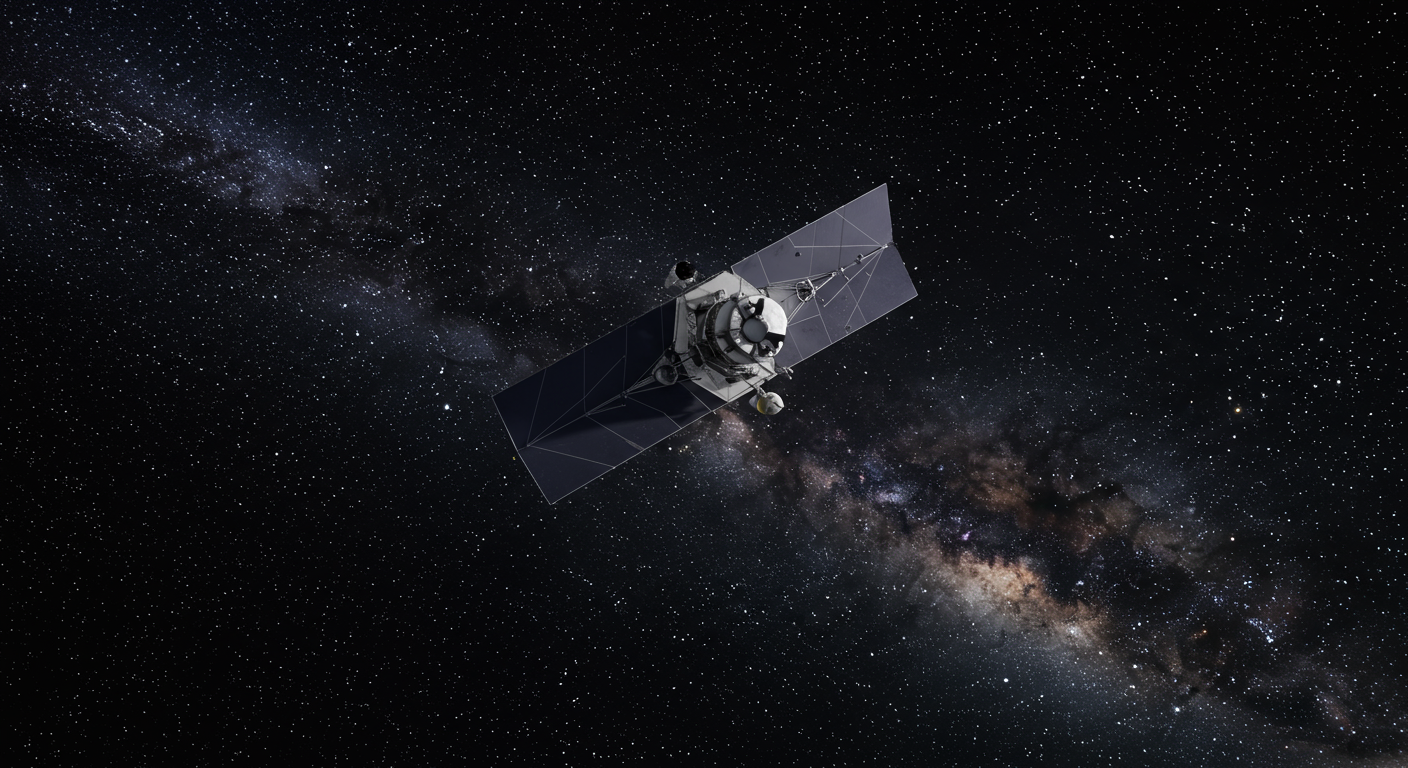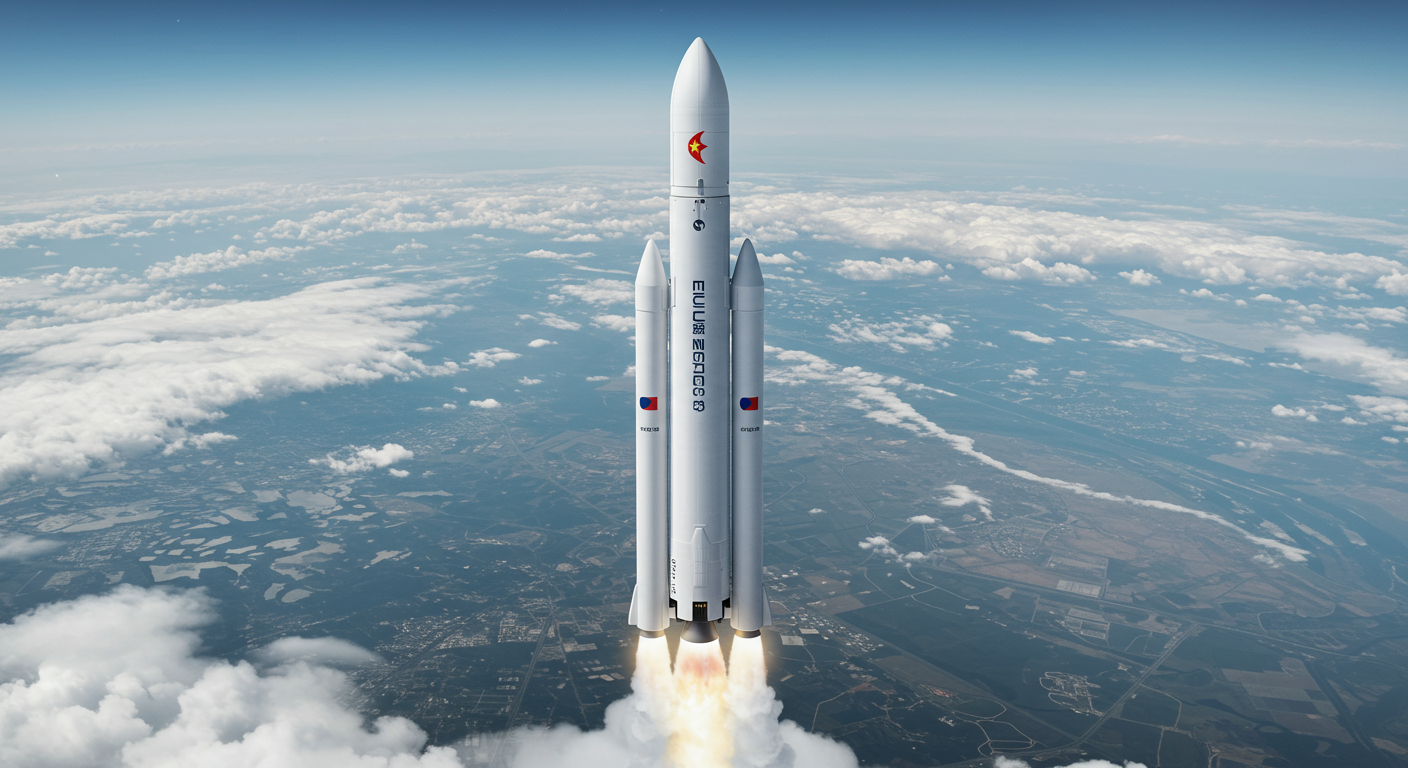
A Chinese reusable rocket prototype has successfully completed a major ground test, firing its engines while remaining anchored to the launch pad in a critical step toward its inaugural flight. The test, known as a static-fire test, was conducted by the private company LandSpace on its Zhuque-3 launcher, moving the vehicle closer to orbital operations expected to begin before the end of the year. This achievement marks a significant advance for China’s commercial space sector and its ambitions to develop low-cost, reusable launch systems.
The Zhuque-3 is designed to compete with established players in the global launch market, particularly SpaceX. Developed by LandSpace, a leading Chinese commercial space launch provider, the rocket is intended for large-scale satellite constellation deployment. The successful static-fire test is the final major ground-based trial before the rocket is prepared for its first orbital mission, which will include an attempt to recover and reuse its first stage, a key capability for reducing launch costs. The program aims to decrease launch expenses by as much as 90% through repeated use of the booster.
Successful Engine Ignition Test
The milestone event for the Zhuque-3 rocket was a static-fire test conducted on October 20, 2025, at the Dongfeng Commercial Space Innovation Pilot Zone in northwestern China. This standard prelaunch procedure involves firing the rocket’s nine Tianque-12A engines at full thrust while the vehicle is securely fixed to the launch pad. The test was the culmination of a three-day campaign that also included a complete fueling rehearsal. According to LandSpace, this phase represented the final large-scale ground test before the rocket is cleared for its maiden flight. Following the test, the technical team will analyze the collected data to refine procedures and contingency plans.
Vehicle Design and Specifications
The Zhuque-3 is a two-stage, vertical-launch vehicle constructed primarily from stainless steel, a design choice also used for SpaceX’s Starship. The rocket stands 66 meters (217 feet) tall, with both its first and second stages having a diameter of 4.5 meters. It is capable of carrying a payload of approximately 18,300 kilograms (40,350 pounds) to low Earth orbit. This capacity is comparable to that of the SpaceX Falcon 9, which can lift about 22,800 kg.
Propulsion System
A key feature of the Zhuque-3 is its use of methane and liquid oxygen as propellants for its Tianque-12A engines. This distinguishes it from the Falcon 9, which uses rocket-grade kerosene. The choice of methane offers advantages in engine reusability, as it burns cleaner and produces less soot, simplifying the refurbishment process between flights. The rocket’s first stage is powered by nine of these domestically developed engines, which together generate a takeoff thrust exceeding 750 tons to lift the vehicle’s total mass of about 570 tons.
Reusability and Cost Reduction Goals
The primary objective of the Zhuque-3 program is to achieve reliable and frequent reusability to dramatically lower the cost of space access. LandSpace aims to reuse the rocket’s first stage up to 20 times. To accomplish this, the booster is equipped with specialized recovery hardware, including a Reaction Control System (RCS) for attitude control in space, grid fins for aerodynamic steering during atmospheric reentry, and deployable landing legs for a soft touchdown. After completing its mission of launching the second stage and payload toward orbit, the first stage is designed to autonomously return to a designated recovery site with high precision. This “recovery-reuse” system is central to the company’s long-term engineering and business strategy.
Competitive Commercial Landscape
The development of the Zhuque-3 places LandSpace and China’s private space industry in direct competition with global leaders like SpaceX. The rocket’s design and capabilities are often compared to the Falcon 9, which has dominated the commercial launch market for years through its own successful implementation of first-stage reusability. The successful static-fire test is a critical step in demonstrating China’s growing capabilities in the private aerospace sector. This progress aligns with the Chinese government’s stated goal of becoming a top-tier global aerospace power by 2030, an ambition first revealed nearly a decade ago. LandSpace has already achieved significant milestones, including becoming the first company to reach Earth orbit with a methane-fueled rocket, the Zhuque-2, in July 2023.
Next Steps Toward Inaugural Launch
With the successful completion of the static-fire test, LandSpace will now move into the next phase of preparations for the Zhuque-3’s first flight. Company officials stated that the vehicle will undergo a vertical integration rehearsal. After this, it will be returned to the technical zone for final inspections and maintenance. The inaugural orbital flight is scheduled for late 2025, with the first landing attempt of the reusable booster anticipated in 2026. This methodical testing and preparation campaign is designed to ensure safety and quality as LandSpace advances toward the large-scale operational use of its reusable rocket technology.