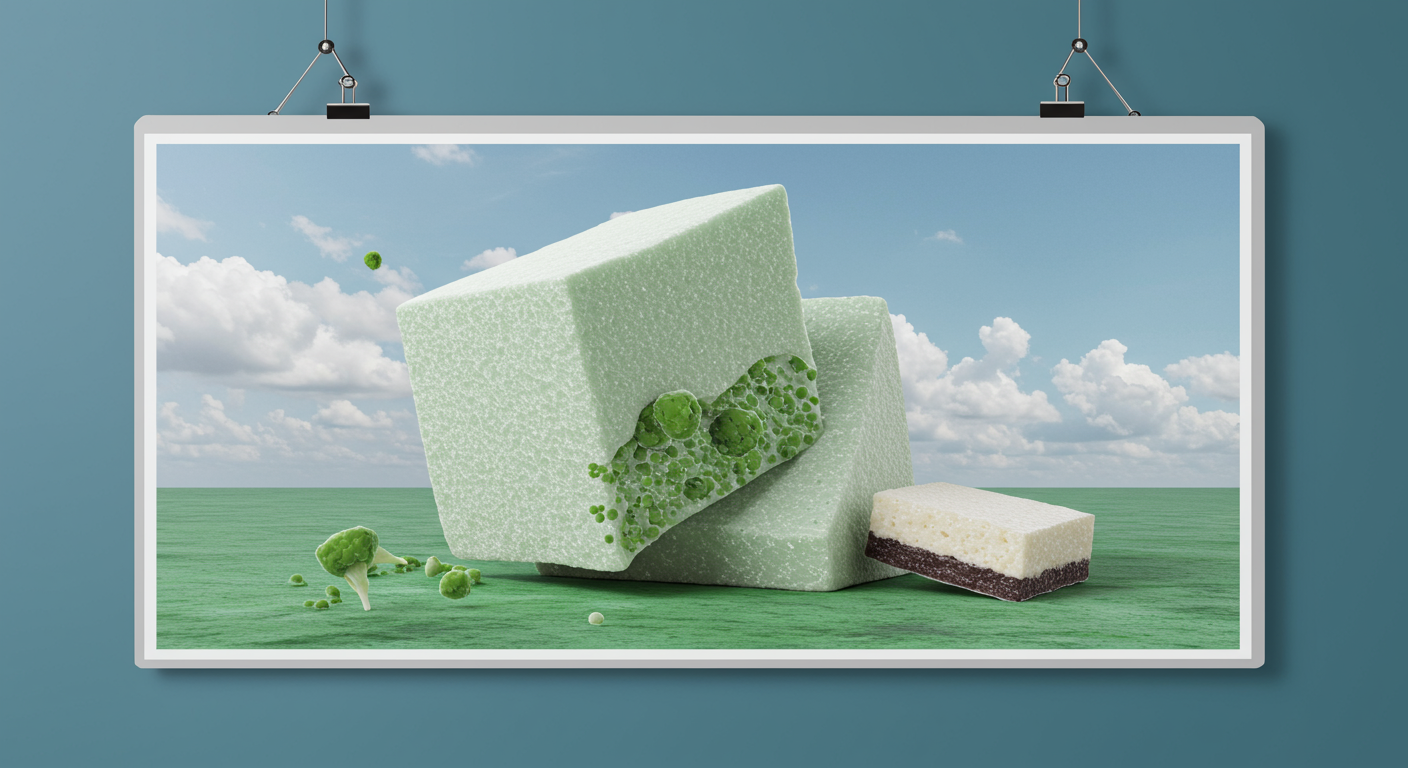
Scientists have engineered a novel enzyme using artificial intelligence that can efficiently break down polyurethane, a versatile and widely used plastic that has long resisted recycling efforts. The discovery represents a significant leap forward in the global fight against plastic pollution, offering a method to deconstruct the durable material into its original chemical components in a matter of hours, paving the way for a more sustainable, circular manufacturing process.
This breakthrough provides a potential solution for the millions of tons of polyurethane waste generated annually from discarded mattresses, insulation, footwear, and furniture. Unlike traditional recycling methods that are often energy-intensive and produce hazardous byproducts, this new enzymatic approach operates under milder conditions and yields reusable materials. By harnessing the predictive power of machine learning, researchers have created a powerful biocatalyst that can tackle a plastic waste stream that has historically been destined for landfills or incineration.
The stubborn challenge of polyurethane waste
Polyurethane is a uniquely challenging polymer for recycling due to its complex and robust chemical structure. Its defining feature is the urethane bond, which links nitrogen, carbon, and oxygen atoms into long, resilient chains. These chains are often cross-linked, creating a dense, three-dimensional network that is highly resistant to chemical and physical degradation. This durability makes polyurethane ideal for countless applications, from flexible foam cushioning to rigid insulation panels, but it also makes it exceptionally persistent in the environment.
Global production of polyurethane reached approximately 22 million metric tons in 2024, highlighting the immense scale of the potential waste problem. For decades, the primary disposal methods have been landfilling, where it occupies vast amounts of space and persists for centuries, or incineration. While incineration can recover energy, it releases carbon dioxide and other harmful pollutants. Existing chemical recycling methods do exist but typically require high temperatures and harsh solvents, which are both costly and environmentally damaging. Furthermore, these processes often yield a contaminated mixture of chemicals that cannot be repurposed to create new, high-quality polyurethane, classifying it as hazardous waste.
A computational key to a biological lock
The creation of this highly efficient enzyme was made possible by leveraging sophisticated artificial intelligence and protein design tools. Researchers turned to neural networks, a form of machine learning, to overcome the limitations of traditional enzyme discovery. Rather than relying on slow and laborious trial-and-error experiments in a laboratory, the scientists used AI models to simulate and analyze countless potential protein structures. This computational approach allowed them to predict how different enzyme variants would interact with polyurethane’s chemical bonds.
Advanced AI systems, including specialized neural networks named Pythia-Pocket and GRASE, were instrumental in the process. These tools can identify the ideal shape and chemical properties for an enzyme’s active site—the part of the protein that performs the chemical reaction—to specifically target the urethane linkages. By refining the enzyme’s structure computationally, the team pinpointed variants with greatly enhanced catalytic abilities, far exceeding the performance of any naturally occurring enzymes. This AI-driven design process dramatically accelerates the pace of discovery, enabling the development of specialized enzymes tailored to break down specific, resilient polymers that nature has not evolved to handle.
How the enzyme deconstructs the polymer
The newly engineered enzyme works by precisely targeting and cleaving the urethane bonds that form the backbone of the polyurethane polymer. It functions as a biocatalyst, using a mechanism similar to natural microbial processes but amplified through targeted engineering. The enzyme’s active site is perfectly shaped to latch onto the polymer chain at these specific points, severing them through hydrolysis—a chemical reaction involving water—to break the plastic down into its constituent monomers.
The results have proven to be remarkably efficient. In laboratory settings, the enzyme was able to degrade 98% of a polyurethane foam sample within just 12 hours. This rapid breakdown was achieved under optimized conditions, paired with a chemical called diethylene glycol at elevated temperatures, which helps to loosen the polymer’s dense structure and improve the enzyme’s access to the bonds. The enzyme also demonstrated high stability, allowing it to be reused multiple times without a significant loss of function. This combination of speed, specificity, and reusability makes it a promising candidate for real-world applications.
Paving the way for a circular economy
Perhaps the most significant implication of this discovery is its potential to create a closed-loop, circular economy for polyurethane products. By breaking the waste material down into its original chemical building blocks—such as adipic acid and diols—the process allows these valuable raw materials to be recovered and purified. Manufacturers could then use these components to synthesize new, virgin-quality polyurethane, reducing the need for fossil fuel-based feedstocks.
This model of “upcycling” stands in stark contrast to most current plastic recycling, which often results in lower-quality materials with limited applications. A successful enzymatic recycling system would transform polyurethane waste from an environmental liability into a valuable resource. It could incentivize the collection and processing of used foam products, diverting them from landfills and creating a more sustainable supply chain for industries ranging from automotive manufacturing to construction and bedding. This approach aligns with global efforts to minimize waste, conserve resources, and reduce the carbon footprint associated with plastic production.
From laboratory success to industrial reality
While the development of this AI-designed enzyme is a major scientific achievement, transitioning the technology from the laboratory to an industrial scale presents the next set of challenges. Researchers must ensure the enzyme can perform effectively on real-world waste, which is often mixed with other materials, additives, and contaminants. Optimizing the process to be cost-effective at a large scale will be crucial for commercial adoption. This includes refining the reaction conditions, such as temperature and pH, and developing efficient methods for separating the recovered monomers from the enzymatic solution.
Further research will also focus on enhancing the enzyme’s robustness and lifespan to withstand the rigors of continuous industrial operation. Integrating this biological process into existing recycling facilities will require new infrastructure and workflows. Despite these hurdles, the breakthrough validates the immense potential of combining artificial intelligence with synthetic biology to solve pressing environmental problems. It establishes a powerful new paradigm for designing bespoke enzymes capable of tackling the world’s most persistent forms of plastic pollution, offering a clear path toward a more sustainable future.

