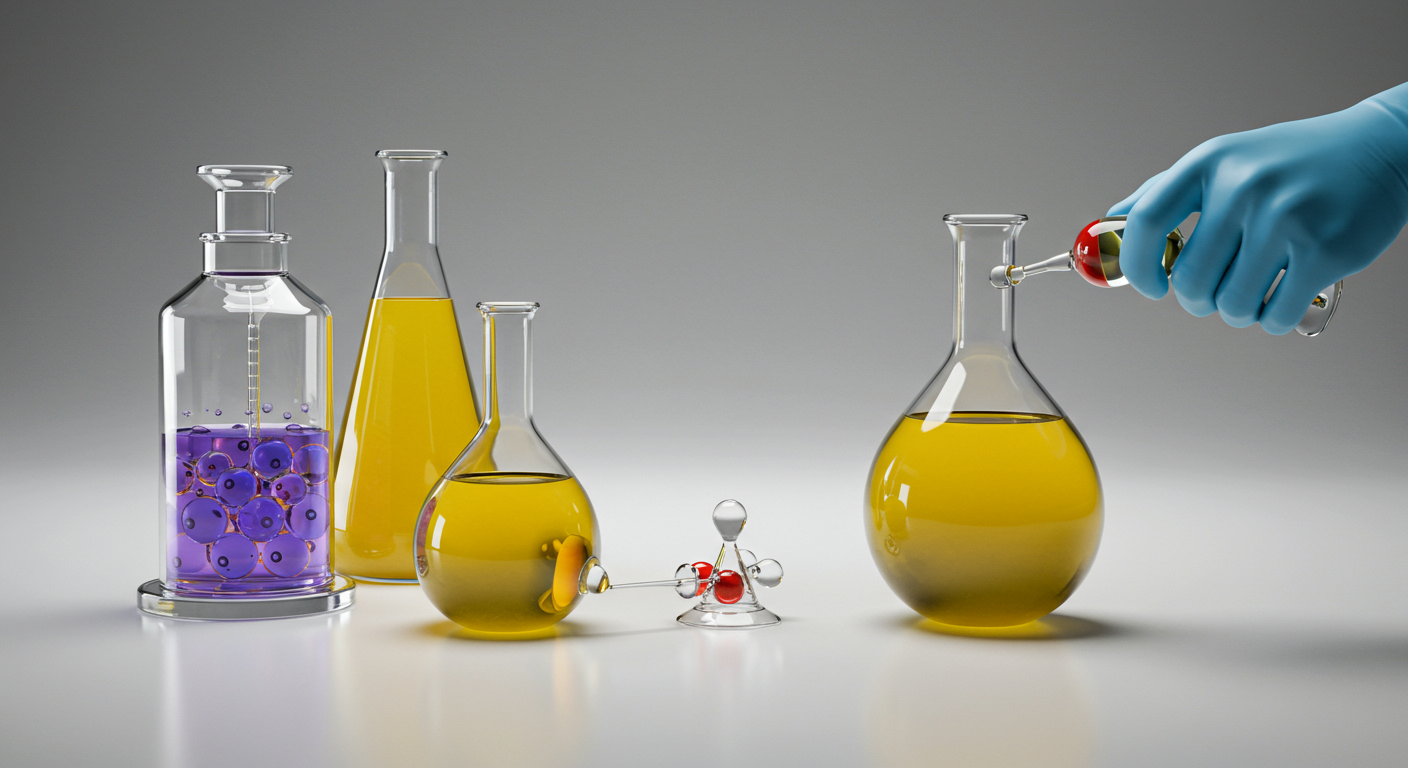
Researchers have developed a new catalytic process that uses individual silver atoms anchored in a carbon and nitrogen matrix to convert hazardous nitrogenous pollutants in wastewater into a valuable liquid fertilizer. The innovative method successfully targets low concentrations of nitrates and nitrites, which are pervasive in industrial and agricultural wastewater and have been historically difficult to treat and repurpose. This breakthrough provides a sustainable solution for cleaning contaminated water while simultaneously creating a marketable agricultural product.
The new technology offers a significant advancement over traditional wastewater remediation techniques. Most current methods focus on treating high concentrations of nitrogenous compounds by converting them into inert nitrogen gas, a substance with no economic value. The novel catalyst, however, transforms diluted but environmentally damaging nitrates into ammonium, a key component of commercial fertilizers. By closing the loop on the nitrogen cycle, this process not only mitigates a major source of pollution but also enhances a circular economy by turning a waste stream into a revenue stream, addressing both environmental and economic challenges.
Addressing a Persistent Pollutant
Nitrogenous waste, primarily in the form of nitrates and nitrites, represents a widespread and persistent environmental problem. These compounds leach into waterways from various sources, including agricultural runoff from fertilized fields, discharge from mining operations, and industrial wastewater. While high concentrations of this waste can be managed, the more common issue involves vast quantities of water contaminated with low concentrations of these pollutants. When these nitrates and nitrites enter rivers, lakes, and oceans, they can lead to eutrophication—a harmful process where excessive algae growth depletes oxygen in the water, creating dead zones that are inhospitable to fish and other aquatic life.
Furthermore, nitrogen oxides are recognized as harmful air pollutants that contribute to smog and acid rain. They can have severe impacts on human health and delicate ecosystems. Traditional methods for dealing with these pollutants are often energy-intensive or inefficient at lower concentrations, making the treatment of large volumes of contaminated water economically unfeasible. The challenge for scientists has been to develop a method that can efficiently target these diluted pollutants and convert them into something useful, a goal that has now been advanced by this new catalytic system.
The Architecture of a Single-Atom Catalyst
The success of the new process lies in its highly advanced catalyst, which was engineered at the atomic level for maximum efficiency. Researchers at the Center of Excellence for Carbon Science and Innovation and the University of New South Wales developed the material. The team devised a method to precisely integrate single, isolated silver atoms into a supportive matrix made of earth-abundant carbon and nitrogen. This structure prevents the silver atoms from clumping together, which is a common problem with traditional catalysts. By keeping the atoms separated, their entire surface area is available for chemical reactions, a key feature of so-called “single-atom” catalysts.
Engineering an Atomic-Scale Reaction Hub
This atomic-level precision is what gives the catalyst its power. The carbon and nitrogen structure is not merely a passive scaffold; it actively participates in the chemical reaction, working synergistically with the silver atom. This unique configuration creates an ideal environment for the transformation of nitrates. According to Dr. Rahman Daiyan, a chief investigator on the project, this engineered catalyst orchestrates a complex series of reactions that efficiently convert the polluting nitrates into ammonium. The design ensures that each silver atom is a highly active site for this chemical conversion, maximizing the catalyst’s effectiveness while using a minimal amount of the precious metal.
Transforming Waste into a Resource
The core function of the catalyst is to facilitate an electrochemical reaction that reconfigures the nitrogen and oxygen atoms in nitrate molecules. When wastewater containing nitrates is passed over the catalyst, the single silver atoms mediate the transfer of electrons, breaking the bonds within the nitrate (NO3-) and nitrite (NO2-) ions. This process effectively strips away the oxygen atoms while adding hydrogen to the nitrogen atom.
The end result of this carefully controlled reaction is ammonium (NH4+), a stable, water-soluble ion that is the primary active ingredient in many liquid fertilizers. The process is both highly selective and efficient, targeting the nitrogenous pollutants without requiring the high temperatures or pressures associated with other catalytic methods. By converting the waste directly into a usable form of fertilizer, the technology avoids the intermediate step of producing nitrogen gas, thereby preserving the value of the nitrogen atom for agricultural use.
A Circular Economy for Wastewater
The implications of this technology are significant, offering benefits that span environmental protection, public health, and economic development. By effectively removing nitrogenous pollutants from wastewater, the catalyst helps protect vulnerable aquatic ecosystems from the devastating effects of eutrophication. It also reduces the atmospheric emission of nitrogen oxides, which are potent greenhouse gases and contributors to air pollution. The removal of nitrates and nitrites from water sources is also critical for human health, as high levels of these compounds in drinking water can pose serious health risks.
From an economic standpoint, the process is equally promising. It transforms the cost of wastewater treatment into an opportunity for profit. The fertilizer produced through this method can be sold, creating a revenue stream that can offset the cost of the remediation process. This aligns with the principles of a circular economy, where waste products are repurposed into valuable new materials. The use of abundant carbon and a minimal amount of silver in the catalyst also ensures that the technology remains cost-effective and scalable for widespread industrial and agricultural applications, representing a major step forward in sustainable resource management.