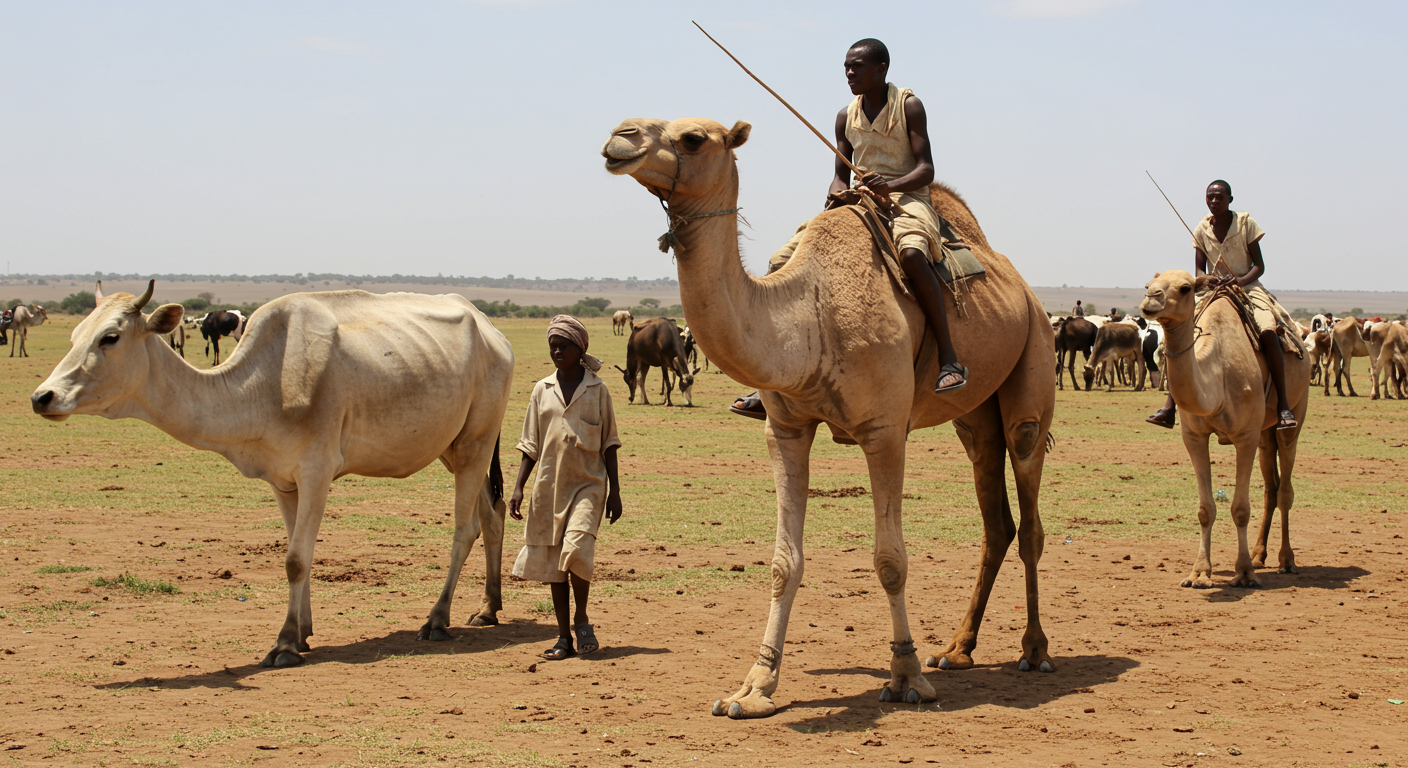
Pastoralists in Kenya’s arid and semi-arid northern regions are making a fundamental shift in their centuries-old herding traditions, replacing their vulnerable cattle with resilient camels to survive the most severe drought to grip the area in four decades. This adaptive measure comes after a devastating loss of livestock, with successive failed rainy seasons since 2021 wiping out millions of cattle and threatening the livelihoods of entire communities.
The transition to camel husbandry is not merely a temporary fix but a strategic pivot in response to escalating climate volatility. For communities like the semi-nomadic Samburu, camels, once a rare sight, have become a lifeline, offering a sustainable source of food and income where cattle can no longer survive. Supported by local government initiatives and driven by necessity, this quiet revolution is reshaping the economic and cultural landscape of the region, proving to be a critical adaptation for a future of increasing environmental uncertainty.
An Unprecedented Ecological Crisis
The recent drought in eastern Africa has been catastrophic for Kenya’s pastoralist communities, whose wealth and sustenance are traditionally tied to their cattle. Since 2021, a series of inadequate rainy seasons has led to widespread pasture degradation and the drying of essential water sources, leaving livestock with nothing to eat or drink. The crisis reached a tipping point where up to 2.6 million cattle perished, leaving families who once owned large herds with next to nothing. Herder Chapan Lolpusike, from the Samburu community, recounted how all his cows and oxen died, forcing a complete change in his way of life.
This environmental disaster has exacerbated food insecurity and deepened hunger across the region. With their primary source of livelihood gone, many families have faced destitution. The loss of cattle extends beyond economic value; it represents a cultural blow to communities where cattle are central to social status and traditions. The scale of the die-off has forced a reckoning with the realities of climate change, compelling herders and local leaders to seek more durable solutions.
The Rise of the Camel
In the face of this crisis, the camel has emerged as a symbol of survival. Camels are exceptionally well-suited to the harsh conditions that have become the new norm in northern Kenya. They can survive for more than a week without water and are browsers, meaning they can feed on the tough shrubs and acacia trees that remain even when grasslands have turned to dust. This adaptability makes them a far more reliable asset than cattle in a drought-stricken environment. Recognizing this, herders are increasingly investing in camels as their primary livestock.
To aid this transition, local authorities have stepped in. In Samburu county, a camel distribution program launched in 2015 has provided more than 5,000 Somali camels to families who lost their herds. The Somali breed is particularly valued for its resilience and high milk yield. In the last year alone, 1,000 of these camels were distributed, directly impacting the food security and nutritional health of the recipients. Officials report that the initiative has led to healthier children and a renewed sense of dignity within the communities.
Economic and Nutritional Benefits
A Reliable Source of Milk
One of the most significant advantages of camels is their consistent milk production. Unlike cows, which require green grass to be milked, camels can produce milk even during the driest seasons. Herder Naimalu Lentaka explained that this is the “whole difference” for families relying on livestock for daily sustenance. A single camel can produce up to six times more milk than a traditional cow, and this milk is rich in essential nutrients. Studies have shown that during droughts, camel milk can account for up to half of a family’s dietary intake, providing a critical buffer against malnutrition.
Building Economic Resilience
Beyond nutrition, camels offer a more stable economic foundation in a volatile climate. Their ability to thrive in arid conditions means they are a more secure investment for herders who have lost everything. The shift allows families to rebuild their livelihoods on an asset better matched to their changing environment. This has reduced dependency on emergency aid and empowered communities to forge a self-sufficient path forward, even as they continue to face environmental challenges.
Cultural Shifts and Future Outlook
The growing importance of camels is also influencing local culture. The animal’s endurance and its role in securing peace are now celebrated at events like the annual Maralal International Camel Derby. At this festival, camels race over long distances, symbolizing not only their physical prowess but also their role in fostering unity among communities that once competed fiercely over scarce grazing land and water for their cattle. This shift from conflict to cooperation is a testament to the camel’s transformative impact.
Despite the success of this adaptation, the future remains uncertain. The underlying threat of climate change has not abated, and pastoralists remain acutely aware of their vulnerability. Village administrator James Lolpusike voiced a sentiment shared by many, stating that they continue to pray for rain and hope the situation does not worsen. The turn to camels is a powerful act of human adaptability, but it is one that unfolds against a backdrop of persistent environmental pressure. For Kenya’s herders, each camel born and every drop of rain that falls represents a small victory in an ongoing struggle for survival.
