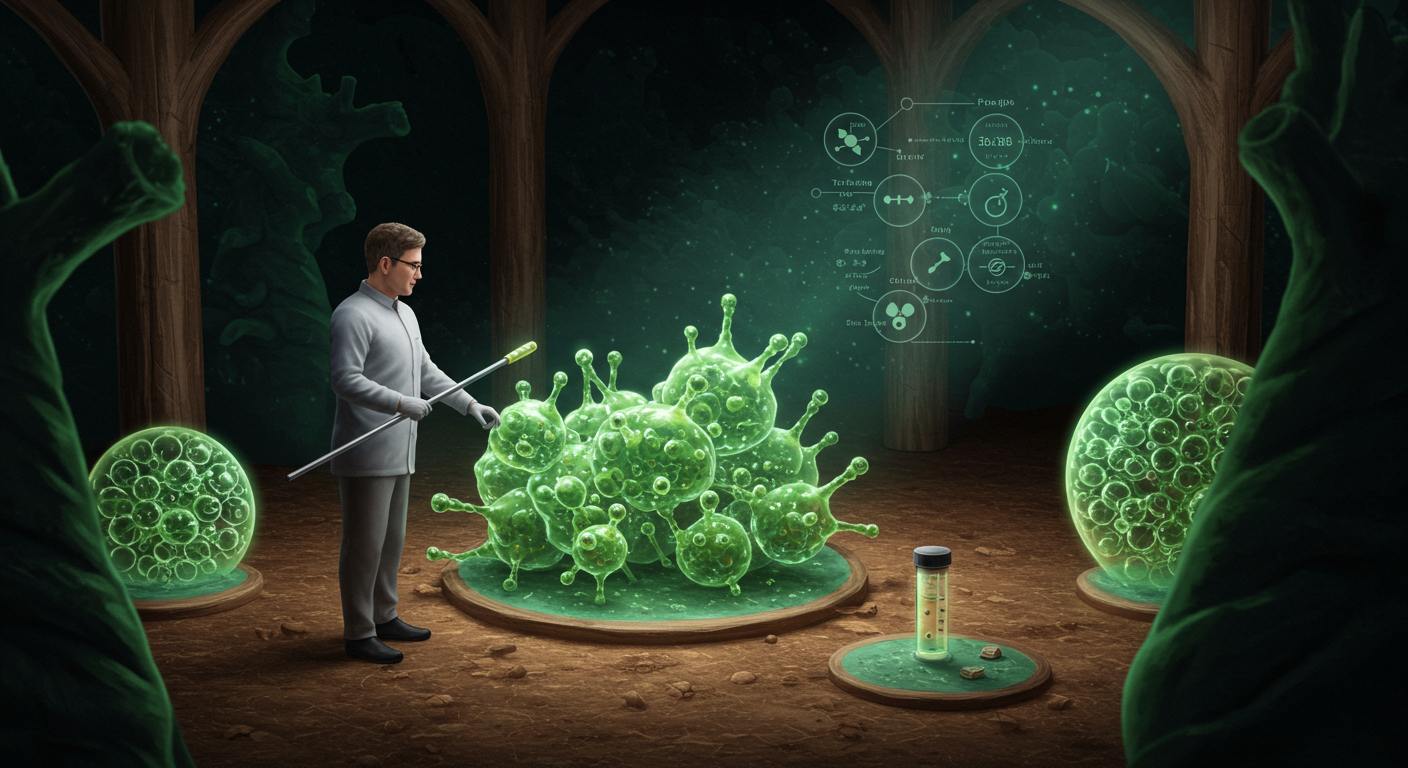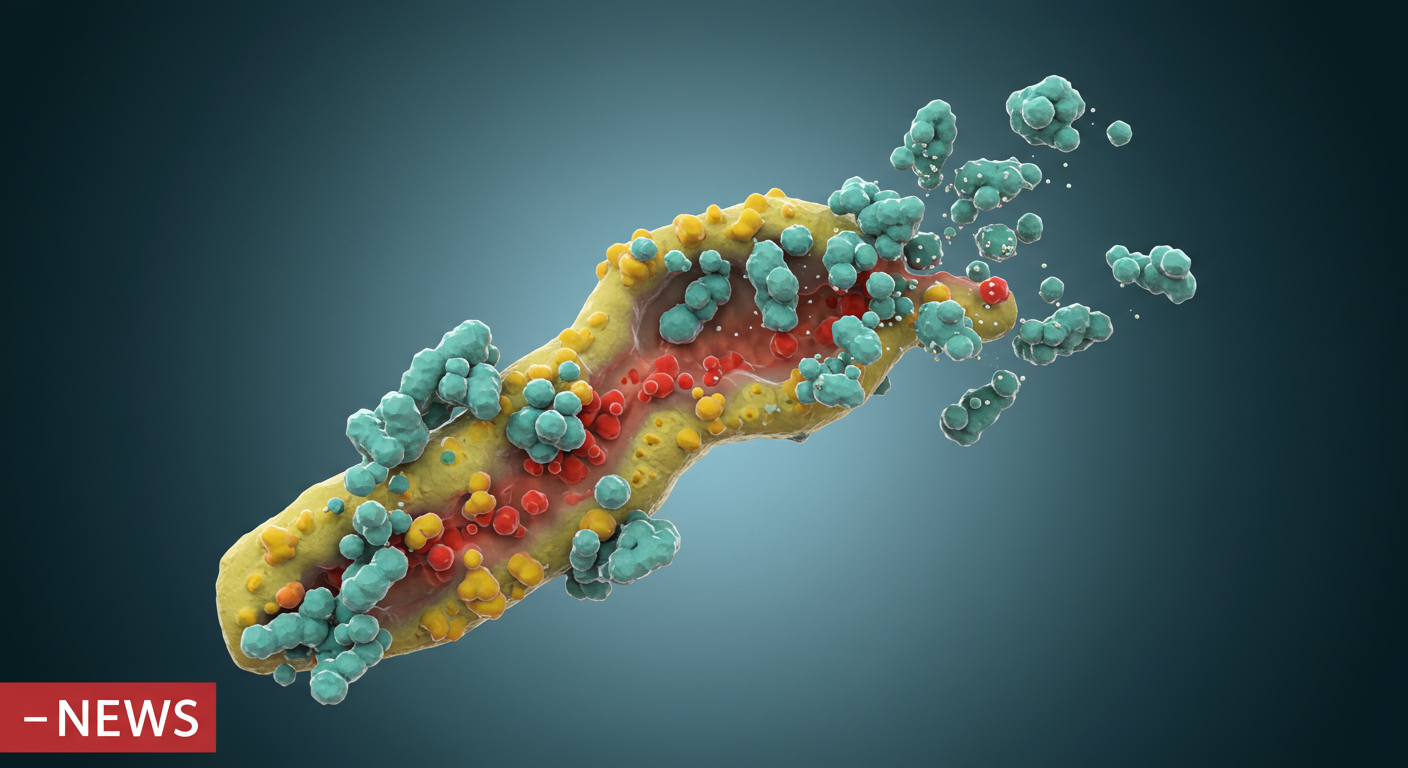
Scientists have resurrected ancient versions of a microbial enzyme, revealing an evolutionary path that could lead to the sustainable production of ethylene, a crucial industrial chemical. By computationally reconstructing and then synthesizing proteins that existed hundreds of millions of years ago, a research team from Michigan State University has uncovered the origins of the enzyme’s unique dual functions. The findings provide a roadmap for engineering future enzymes optimized for green chemical manufacturing.
The research focused on the ethylene-forming enzyme (EFE), a biological catalyst that performs two main reactions simultaneously. It converts a substrate called 2-oxoglutarate into ethylene, while also performing a modification on the amino acid l-arginine. This dual activity has been a long-standing evolutionary puzzle. The study, published in the journal Biochemistry, demonstrates that the earliest versions of this enzyme were already bifunctional, refuting the theory that it evolved from a single-tasking ancestor. This insight into the enzyme’s natural history is critical for adapting it for industrial use, potentially replacing the carbon-intensive steam cracking of fossil fuels currently used to produce ethylene.
Rebuilding an Evolutionary Timeline
To understand the enzyme’s history, researchers employed a technique called ancestral sequence reconstruction (ASR). This computational method acts as a form of molecular time travel, allowing scientists to infer the genetic sequences of proteins from long-extinct organisms by analyzing the sequences of their modern-day descendants. The team collected hundreds of EFE-related gene sequences from diverse modern bacteria and fungi to build a detailed evolutionary tree.
Computational Resurrection
Using two independent software approaches, MEGA X and AP-LASR, the researchers identified the most probable protein sequences for key ancestors at various “nodes” along the EFE family tree. They selected 11 of these ancient sequences for physical study, representing different evolutionary time points. The genes for these resurrected proteins were synthesized and inserted into E. coli, turning the modern bacteria into factories for producing ancient enzymes that have not existed in nature for eons. This allowed the team to directly test the properties and functions of these molecular fossils in the laboratory.
Characterizing Modern Relatives
In addition to resurrecting extinct enzymes, the team investigated two distantly related modern enzymes with structural similarities to EFE but unknown functions. One was an enzyme from the bacterium Pseudomonas aeruginosa (PaIPNS) and the other a plant enzyme from Arabidopsis thaliana (Din11). When tested, both were found to produce trace amounts of ethylene, suggesting they shared a common, multifunctional ancestor with today’s highly efficient EFEs. This discovery provided further evidence that the dual-reaction capability was an ancient feature of the enzyme family.
From Ancient Genes to Modern Catalysts
The resurrected ancestral enzymes displayed a wide range of behaviors when their activities were measured. Some of the more “recent” ancestors, such as the one designated Node 10, showed catalytic activity and product ratios very similar to modern bacterial EFEs. This confirmed the accuracy of the reconstruction methods and showed that the enzyme’s core functions have been maintained for a long evolutionary period.
More ancient ancestors, however, showed diminished activity. Three of the oldest resurrected proteins (Anc124, Anc317, and Anc357) produced only trace amounts of ethylene and were essentially inactive in the l-arginine hydroxylation reaction. Despite their low ethylene output, they readily performed a different side reaction—the oxidative decarboxylation of 2-oxoglutarate to produce succinate. This suggests that the ancestral enzyme may have served a different primary role in the cell, possibly related to regulating metabolic levels, with ethylene production being a minor byproduct that later became more specialized.
Unlocking Enzyme Structure and Function
An Atomic-Level View
To understand why the different ancestors had such varied activities, the researchers needed to see their three-dimensional structures. They successfully determined the crystal structure of one of the least active ancestors, Anc357, using X-ray crystallography. This provided a high-resolution atomic map of the enzyme. For the other 10 ancestral proteins, the team used the powerful AI-based software AlphaFold2 to generate highly accurate structural models.
The Importance of the Active Site
By comparing the structures, the scientists identified key differences in the enzyme’s active site—the pocket where the chemical reactions occur. They found that the ability to form ethylene efficiently requires a hydrophobic (water-repelling) environment in the pocket that binds 2-oxoglutarate. The analysis also revealed that major changes in the area where l-arginine binds had the most significant effects on the enzyme’s function. The structure of Anc357 showed that large differences in this l-arginine binding site, compared to modern EFEs, were the likely cause of its inability to perform its dual functions efficiently.
Implications for Sustainable Chemistry
Ethylene is a foundational chemical for the global economy, used to make everything from plastics like polyethylene to polyester and antifreeze. Its conventional production is one of the most energy- and CO2-intensive processes in the chemical industry. Developing a biological alternative using enzymes could significantly reduce the environmental impact by allowing for production from renewable feedstocks under mild conditions.
This research provides crucial insights for protein engineers seeking to create a super-efficient EFE. The study revealed that all active ancestors retained both ethylene-forming and l-arginine-modifying capabilities, suggesting the two reactions are intrinsically linked. However, the balance between these reactions, known as the partition ratio, varied. One ancient protein, Node 384, was particularly interesting because it showed a strong preference for producing ethylene over the competing reaction. This ancestor could serve as a valuable template for designing an enzyme tailored specifically for industrial ethylene synthesis.
A Precursor for Bioplastics
A surprising and potentially valuable finding was the consistent production of 3-hydroxypropionate (3HP) by all the ancestral enzymes. 3HP is a valuable platform chemical that can be used to create a range of biodegradable plastics and other compounds. The fact that the most ancient ancestors generated the highest relative levels of 3HP raises the possibility that this might have been a more important function for the primordial enzyme. This discovery opens up another avenue for bio-manufacturing, suggesting that a redesigned EFE could be engineered to produce not just ethylene but also precursors for bioplastics.