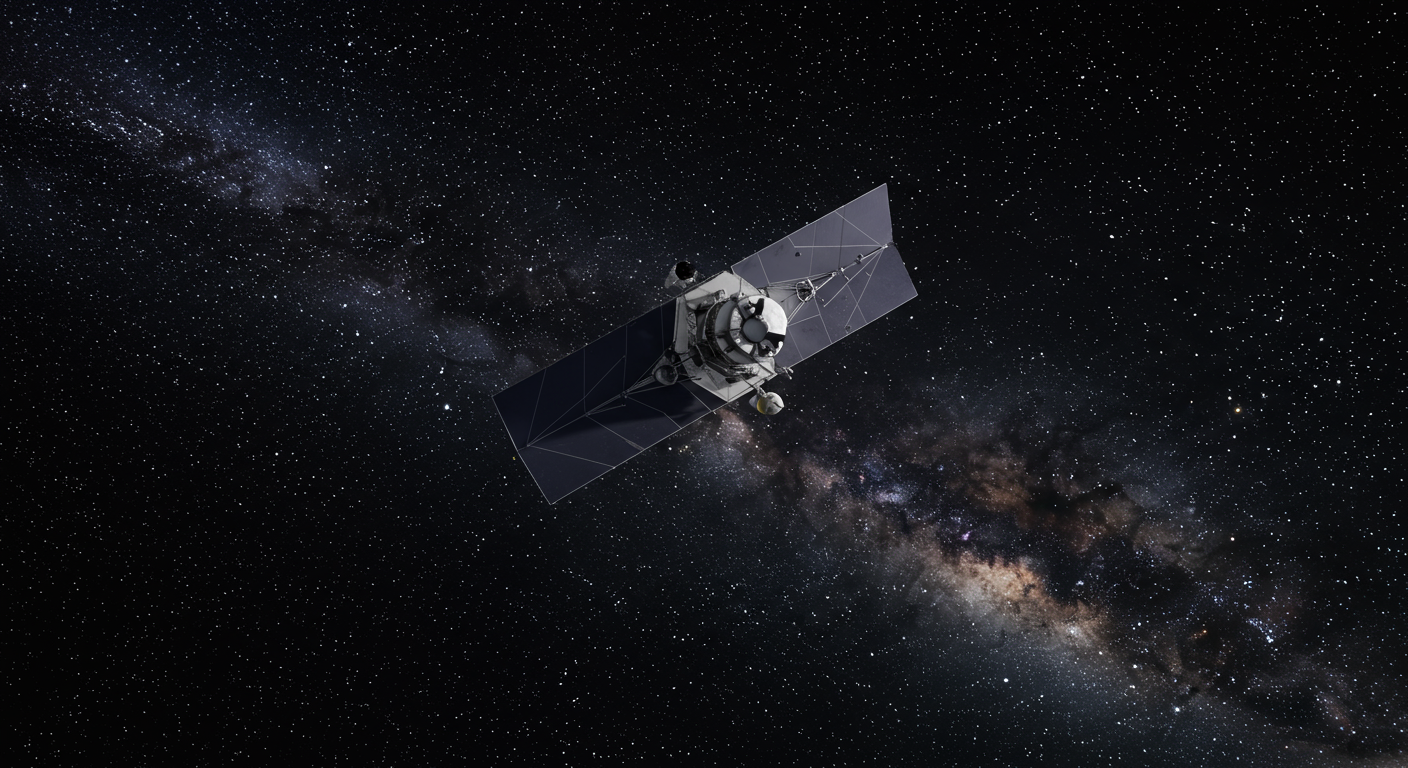
Astronomers using the James Webb Space Telescope have detected a substantial debris disk around a nearby M dwarf star, a finding that provides a rare glimpse into the late stages of planet formation around the most common type of star in our galaxy. The discovery, centered on the young star TWA 20, offers new insights into the architectural evolution of planetary systems and showcases the unparalleled capabilities of the JWST in observing these faint, dusty structures. The observations confirm the presence of a vast ring of leftover material from the star’s formation, a celestial feature analogous to our own solar system’s Kuiper Belt.
This finding is particularly significant because M dwarf stars, also known as red dwarfs, are much smaller and cooler than our sun. While debris disks have been studied around other types of stars, observing them around these dim, low-mass stars has been challenging. The presence of such a large disk at this stage of the star’s life helps scientists better understand the timeline and process of planet formation. The data gathered by the JWST’s sensitive instruments are already helping to constrain the possible presence of massive planets orbiting the star, providing a more complete picture of this nearby stellar neighborhood. This research marks a critical step in exploring the diversity of planetary systems and the conditions that might lead to the formation of rocky, Earth-like planets.
A Closer Look at a Young Stellar System
The subject of this new research is TWA 20, a faint M dwarf star located approximately 261 light-years from Earth. TWA 20 is a relatively young star, with an estimated age of just 10 million years. This makes it an ideal candidate for studying the remnants of planet formation, as the processes that build planets are thought to be concluding around this time, leaving behind a disk of residual dust and debris. An international team of astronomers, led by researchers from the University of California, Santa Barbara, utilized the Near-Infrared Camera (NIRCam) aboard the James Webb Space Telescope for these observations, which took place in June 2024. The powerful capabilities of the JWST allowed the team to capture a clear image of the faint, cold dust that makes up the debris disk, something that would be extremely difficult to achieve with ground-based telescopes. The telescope’s ability to observe in the infrared part of the spectrum is crucial for detecting the faint thermal glow of such cool material.
Characterizing the Debris Disk
The observations revealed a debris disk with a radius of 64.7 astronomical units (AU), where one AU is the distance from the Earth to the sun. The disk is also inclined at an angle of 70.1 degrees from our perspective. The size and brightness of this disk are comparable to those found around other red dwarf stars, suggesting that the processes of planet formation and the subsequent creation of debris disks are similar across these common stellar types. Debris disks are the remnants of the protoplanetary disks that give rise to planets. As a star system matures, the gas in the protoplanetary disk dissipates, leaving behind a collection of dust, planetesimals, asteroids, and comets. Collisions between these objects constantly replenish the dust in the disk, which is what the JWST observed. The study of these disks provides a window into the “fossil record” of planet formation, offering clues about the composition and dynamics of the nascent planetary system.
The Hunt for Hidden Planets
One of the key objectives of studying debris disks is to search for the gravitational influence of unseen planets. A massive planet orbiting within or near the disk can create noticeable structures, such as gaps, clumps, or asymmetries in the dust. These disturbances can be a tell-tale sign of a planet’s presence, even if the planet itself cannot be directly imaged. In the case of TWA 20, the research team carefully analyzed the structure of the debris disk for any such irregularities. However, their search did not reveal any clear evidence of massive companions.
While no planets were directly detected, the JWST data were still incredibly valuable. The observations were sensitive enough to rule out the presence of any Jupiter-mass objects at a distance greater than 48 AU from the star. This ability to set upper limits on the mass and location of potential planets is a crucial aspect of exoplanet research. By understanding what isn’t there, astronomers can refine their models of planet formation and migration. It is still possible that smaller planets, closer to the star, exist within the TWA 20 system. Future observations with the JWST or other powerful telescopes may be able to detect these smaller bodies, providing a more complete census of this young stellar system.
Webb’s Unique Observational Power
The successful detection of the debris disk around TWA 20 highlights the transformative impact of the James Webb Space Telescope on stellar and planetary astronomy. Debris disks are inherently faint and cool, making them challenging targets for all but the most sensitive telescopes. The dust in these disks does not generate its own light but rather reflects the light of its host star or emits a faint thermal glow in the infrared. The JWST, with its large primary mirror and advanced infrared instruments, is perfectly suited to capturing this faint radiation. Its location in space, far from the obscuring effects of Earth’s atmosphere, provides an exceptionally clear view of the cosmos.
Prior to the launch of the JWST, only a handful of debris disks around M dwarfs had been successfully resolved. The telescope’s capabilities are now opening up a new frontier in the study of these systems, allowing astronomers to conduct more comprehensive surveys and to study the properties of these disks in greater detail. This will undoubtedly lead to a better understanding of the frequency and diversity of planetary systems around the most numerous stars in the Milky Way. The ability to characterize these nearby systems is a critical step in the broader search for habitable worlds beyond our own.
Debris Disks in a Broader Context
While the discovery at TWA 20 is significant, it is part of a larger effort to understand the life cycle of planetary systems. Debris disks are not unique to young M dwarf stars; they are found around a wide variety of stars, including those much older and more evolved than our sun. For example, the JWST has also been used to study debris disks around white dwarfs, the dense remnants of sun-like stars that have exhausted their nuclear fuel. In these systems, the debris disks are thought to be formed from the shattered remains of asteroids and planets that survived the star’s evolution into a red giant and were subsequently torn apart by the white dwarf’s intense gravity. The study of these “zombie” planetary systems provides clues about the ultimate fate of our own solar system.
By comparing the properties of debris disks around different types of stars at various stages of their evolution, astronomers can piece together a more complete narrative of how planetary systems form, evolve, and eventually die. The composition of the dust in these disks, which can be determined through spectroscopy, can reveal information about the chemical makeup of the objects that formed there. This includes the presence of silicates, carbonates, and even the building blocks of life. Each new observation of a debris disk, whether around a young M dwarf or an ancient white dwarf, adds another piece to the puzzle of our place in the universe.