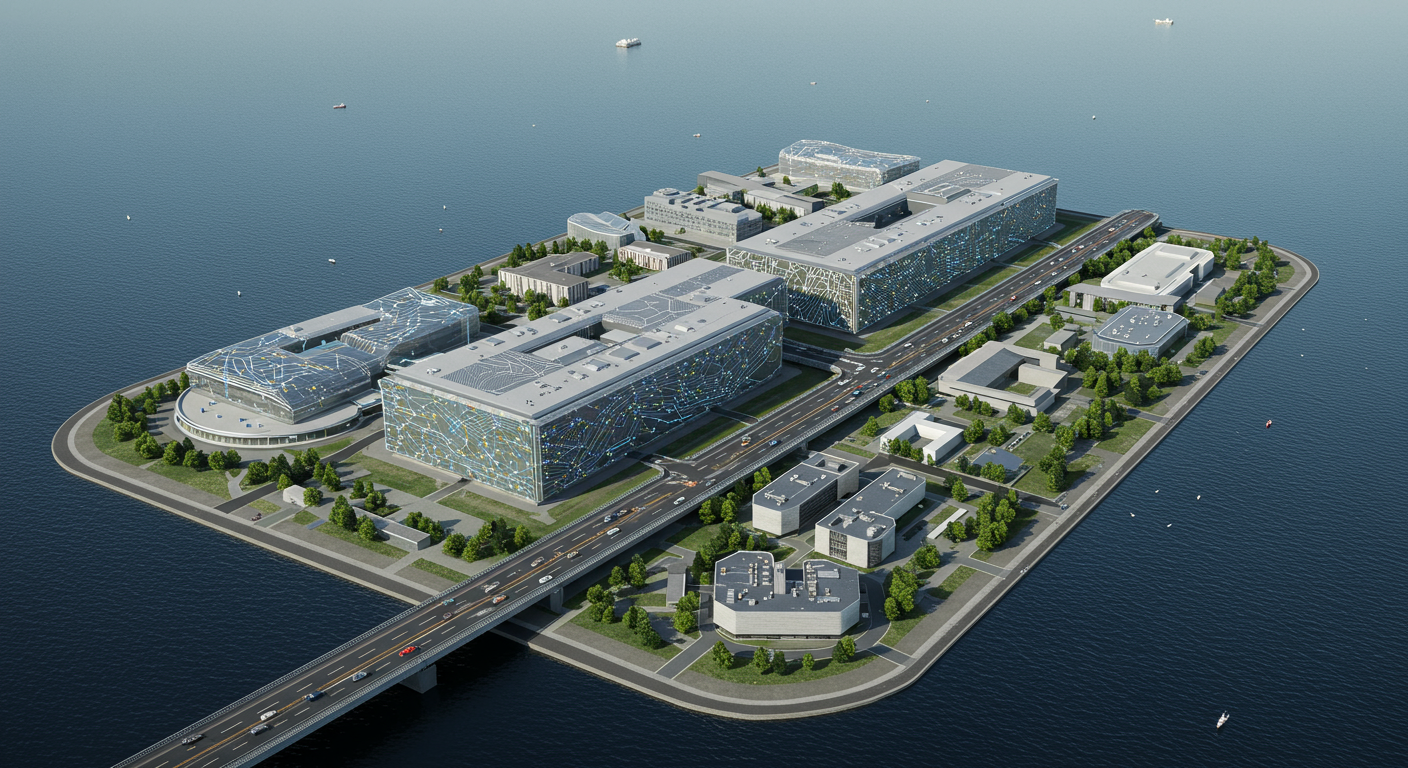
A sprawling, gigawatt-scale artificial intelligence campus is planned for Port Washington, Wisconsin, a lakeside town of 12,000. The project, a collaboration between OpenAI, Oracle, and Vantage Data Centers, represents a massive bet on the future of AI infrastructure and a significant test of whether the immense energy demands of AI can be met sustainably. The development, known as the Lighthouse campus, aims to deliver nearly one gigawatt of AI computing capacity by 2028, housed within four hyperscale data centers.
This massive undertaking addresses a critical logistics problem in the AI industry: the need for vast tracts of land, reliable and substantial power, and communities willing to host energy-intensive data centers. The US$15 billion campus is poised to reshape the local economy while pioneering a model for green-aligned industrial-scale AI. It is part of OpenAI’s broader “Stargate” initiative, a multi-site infrastructure project launched with SoftBank and Oracle to diversify computing capacity beyond traditional tech hubs where resources like land and power are increasingly scarce.
Sustainable Energy and Community Integration
A key feature of the Lighthouse campus is its commitment to renewable energy and community benefits. The project includes a partnership with WEC Energy Group to co-develop nearly two gigawatts of new clean energy infrastructure, primarily through solar, wind, and battery storage. In a unique arrangement, 70% of the new renewable energy generated will power the Lighthouse campus, while the remaining 30% will be directed to Wisconsin’s public grid for residential and business consumers. This strategy is designed to spread the benefits of the development beyond the data centers themselves.
To ensure it meets its 100% zero-emission target, Vantage will also utilize renewable energy credits. This practice, common in the industry, involves purchasing renewable energy from other locations to offset the use of fossil fuels from the local grid. WEC Energy Group has also guaranteed that the massive energy requirements of the data centers will not lead to rate increases for its other customers, a direct response to concerns that have arisen in other communities where similar projects have been built. Scott Lauber, President and CEO of WEC Energy Group, stated that this approach will deliver growth without raising rates for other customers, aligning with a shared commitment to reliability and sustainability.
Advanced Infrastructure and Environmental Design
The campus will feature state-of-the-art technology to manage the immense heat generated by AI processors. Closed-loop liquid cooling systems, which are more efficient than traditional air conditioning, will be employed to maintain optimal operating temperatures for the AI chips. This technology is essential for handling the high thermal output of modern AI hardware. Vantage has also pledged that the campus will be “water-positive,” a goal to be achieved through local restoration projects, though specific details about the volume of water and timelines have not yet been released.
The development will occupy 500 acres of a 672-acre site, with the remaining 172 acres preserved. Environmental mitigation efforts include planting over 2,000 native trees, constructing an eight-foot sound-dampening berm, and protecting existing wetlands. The company is seeking LEED certification to formalize its environmental commitments. Dana Adams, President of North America at Vantage Data Centers, emphasized the company’s dedication to being a good neighbor by investing in sustainable energy and minimizing local impact.
Economic Impact and Local Development
The Lighthouse campus is expected to have a significant economic impact on Port Washington and the surrounding region. The construction phase is projected to create over 4,000 union jobs. Once operational, Vantage and Oracle will add more than 1,000 permanent positions. The project is estimated to contribute US$2.7 billion to the GDP, though the methodology for this calculation has not been disclosed.
In addition to job creation, Vantage has committed US$175 million to local infrastructure upgrades. These funds will be used for improvements to water treatment facilities, sewer lines, and the construction of a new water tower, benefiting all residents of Port Washington. The town’s mayor, Ted Neitzke IV, praised the investment, highlighting the creation of high-paying jobs and the long-term economic ripple effects for the region.
Strategic Importance for Tech Giants
For the companies involved, the Wisconsin campus represents a strategic move in the competitive AI landscape. For OpenAI, it is a crucial expansion of its Stargate initiative, reducing its reliance on a single geographic area for its computing needs. Peter Hoeschele, OpenAI’s Vice President of Industrial Compute, described the project as a major step toward building the infrastructure necessary to ensure broad access to the benefits of AI.
Oracle, in its race to compete with cloud giants like Amazon Web Services, Microsoft Azure, and Google Cloud, gains a significant foothold in the AI infrastructure market through this partnership. The collaboration with OpenAI enhances its credibility and capacity to serve customers deploying large language models. Mahesh Thiagarajan, Executive Vice President of software development at Oracle Cloud Infrastructure, noted that the expansion is driven by the growing demand for AI and will fortify American leadership in the field.
