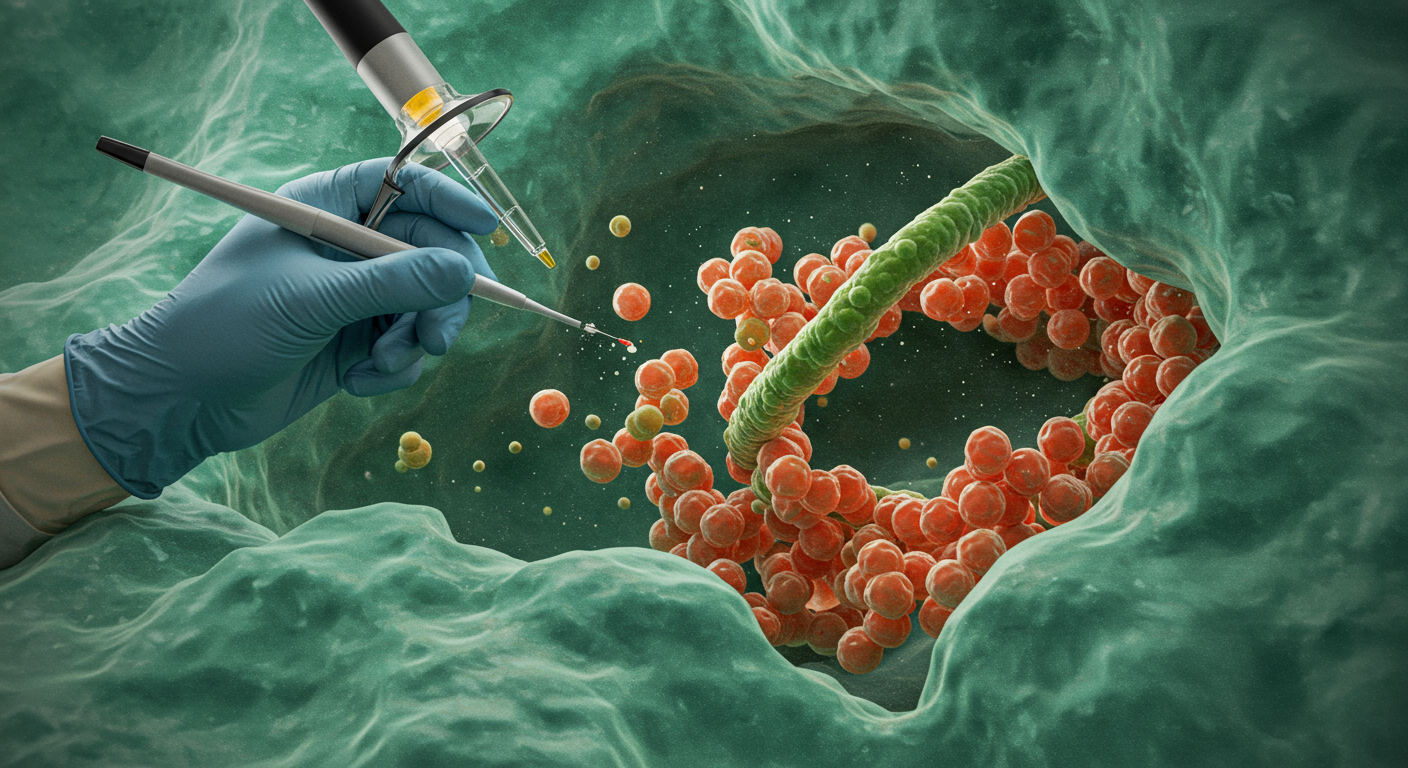
In a significant breakthrough against the growing threat of antimicrobial resistance, chemists have uncovered a potent new antibiotic from a well-studied bacterium. The compound, found as a previously overlooked intermediate in a decades-old biosynthetic pathway, has demonstrated remarkable efficacy against some of the most dangerous drug-resistant pathogens, including MRSA and VRE. This discovery opens a new avenue in the search for effective antibiotics, a field that has seen diminishing returns in recent years.
The newly identified antibiotic, named pre-methylenomycin C lactone, was found to be more than 100 times more active against a range of Gram-positive bacteria than the known antibiotic produced by the same bacterium. Researchers from the Monash Warwick Alliance Combatting Emerging Superbug Threats Initiative reported the discovery in the Journal of the American Chemical Society, highlighting its potential to address the urgent global health crisis of antimicrobial resistance (AMR). The World Health Organization has repeatedly warned about the lack of new antibiotics in the development pipeline, making this discovery particularly timely.
A Fortuitous Find in a Familiar Bacterium
The discovery of pre-methylenomycin C lactone is a story of finding a treasure that was, in a sense, hiding in plain sight. The antibiotic is an intermediate in the natural process that produces methylenomycin A, a well-known antibiotic discovered 50 years ago. For half a century, scientists had studied the bacterium Streptomyces coelicolor, a model organism for antibiotic production since the 1950s, and had synthesized methylenomycin A on multiple occasions. However, no one had previously tested the antimicrobial activity of the intermediate compounds in its production pathway.
Professor Greg Challis, a co-lead author of the study from the University of Warwick and Monash University, noted the surprising oversight. “Methylenomycin A was originally discovered 50 years ago and while it has been synthesised several times, no-one appears to have tested the synthetic intermediates for antimicrobial activity,” he stated. This oversight has now proven to be a critical missed opportunity, as the intermediate is significantly more potent than the final product. It appears that S. coelicolor evolved to produce the more powerful pre-methylenomycin C lactone, but over time, transformed it into the weaker methylenomycin A.
Exceptional Potency Against Superbugs
The newly discovered antibiotic has demonstrated impressive efficacy against several high-priority pathogens. Pre-methylenomycin C lactone was shown to be highly effective against Staphylococcus aureus and Enterococcus faecium, the bacterial species responsible for MRSA and VRE, respectively. These “superbugs” are a major cause of hospital-acquired infections and are notoriously difficult to treat due to their resistance to multiple antibiotics.
The finding is particularly significant for VRE, which is listed by the WHO as a “High Priority Pathogen.” The potency of pre-methylenomycin C lactone, being over 100 times greater than that of methylenomycin A, offers a promising new weapon in the arsenal against these formidable bacteria. The simple structure of the new antibiotic, combined with its potent activity, makes it a strong candidate for further development.
A New Strategy for Antibiotic Discovery
This discovery may usher in a new paradigm for antibiotic research. By identifying and testing the intermediates in the biosynthetic pathways of known natural compounds, scientists may uncover other potent antibiotics that have been overlooked. This approach could revitalize the field of antibiotic discovery, which has been hampered by the fact that the most easily discoverable antibiotics have already been found.
The Power of Gene Deletion
To uncover the hidden antibiotic, the research team employed a technique involving gene deletion. By deleting biosynthetic genes in S. coelicolor, they were able to halt the production of methylenomycin A at an intermediate stage. This allowed them to isolate and study two previously unknown biosynthetic intermediates, both of which turned out to be more potent antibiotics than methylenomycin A itself. This method provides a systematic way to explore the full therapeutic potential of antibiotic-producing organisms.
Promising Resilience to Resistance
One of the most encouraging findings of the study is the apparent resilience of pre-methylenomycin C lactone to the development of resistance. In laboratory tests, researchers did not detect any emergence of resistance to the new antibiotic in Enterococcus bacteria under conditions where resistance to vancomycin, a “last line” antibiotic, is commonly observed. This suggests that pre-methylenomycin C lactone may have a more durable profile against the evolution of resistance, a critical attribute for any new antibiotic.
The Road Ahead to Clinical Application
While the discovery of pre-methylenomycin C lactone is a major step forward, further research is needed to bring it to clinical use. The next phase of research will involve pre-clinical testing to evaluate the new antibiotic’s safety and efficacy in animal models. This is a crucial step in the long and costly process of drug development.
Fostering Collaboration and Innovation
The research was conducted under the Monash Warwick Alliance Combatting Emerging Superbug Threats Initiative, a collaboration established in 2012. This partnership between Monash University in Australia and the University of Warwick in the UK has been instrumental in advancing this research. A team led by Professor David Lupton at Monash University has already developed a scalable synthesis method for pre-methylenomycin C lactone, which will be essential for producing the quantities of the antibiotic needed for further testing. This synthesis route will also allow researchers to create various analogues of the antibiotic to explore its structure-activity relationship and mechanism of action more fully.
Implications for Global Health
The discovery of pre-methylenomycin C lactone comes at a critical time in the fight against antimicrobial resistance. AMR is one of the most serious threats to global health, with an estimated 1.1 million people worldwide dying each year as a direct result of drug-resistant infections. The limited financial incentives for pharmaceutical companies to invest in antibiotic research have led to a dangerously thin pipeline of new drugs.
This breakthrough offers a glimmer of hope. By demonstrating a novel and effective way to discover new antibiotics, this research could inspire further investment and innovation in the field. The potent activity and resistance-resistant profile of pre-methylenomycin C lactone make it a promising candidate that could one day save countless lives.