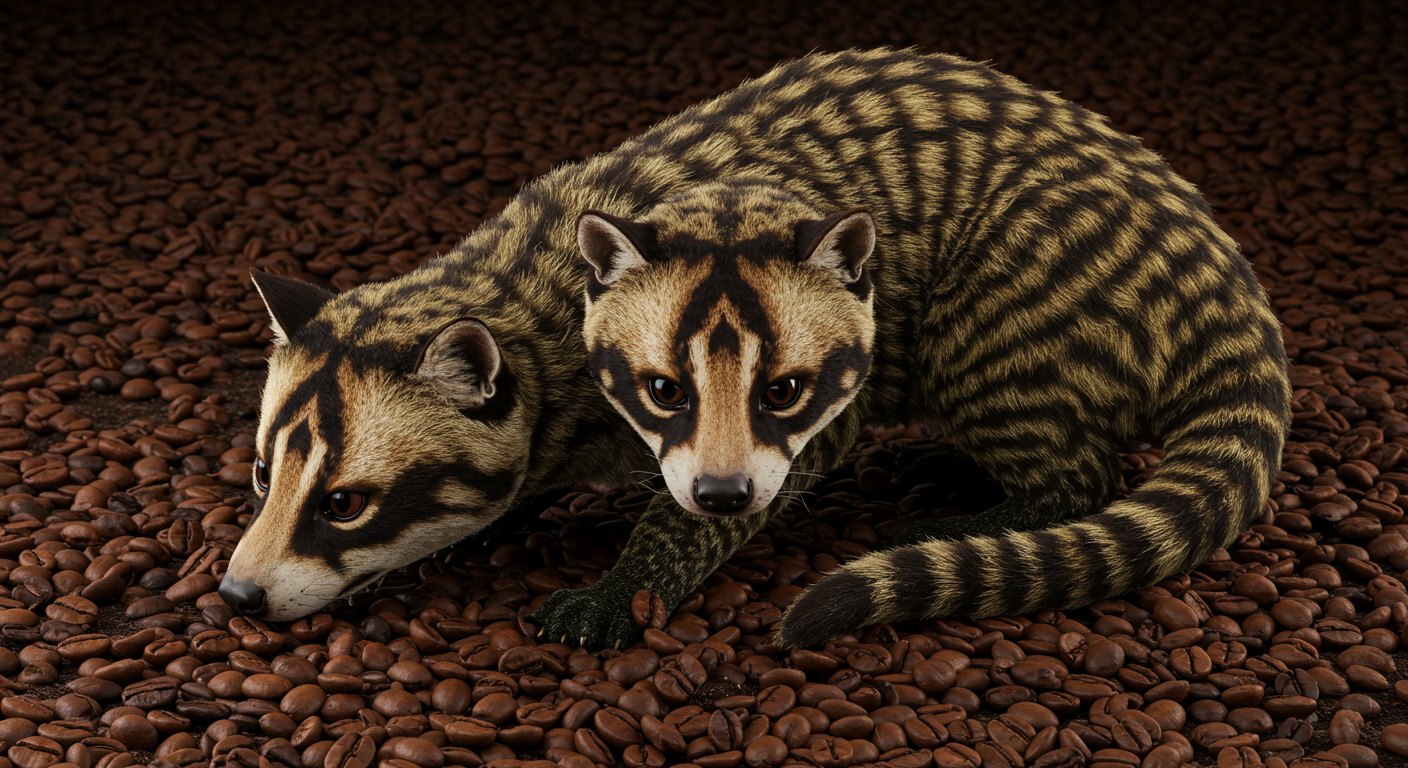
Scientists have pinpointed the specific chemical changes that give civet coffee, one of the world’s most expensive and unusual beverages, its distinctive flavor profile. A recent study reveals that the journey through the Asian palm civet’s digestive system significantly alters the coffee bean’s composition, increasing its fat content and enriching it with specific compounds associated with a creamy, dairy-like aroma. These findings provide the first clear biochemical explanation for the unique taste of kopi luwak, as the coffee is known in its native Indonesia.
The research, conducted on Robusta beans collected from the wild in southern India, confirms what connoisseurs have long suspected: digestion and fermentation by the civet (Paradoxurus hermaphroditus) are not just passive processes but active chemical reactors that transform the beans. By comparing beans excreted by the animals to those harvested directly from the same plants, investigators from the Central University of Kerala identified a unique chemical signature. This new understanding opens the door to potentially replicating the civet’s effects through industrial techniques, which could help address the serious animal welfare concerns associated with the coffee’s production.
The Digestive Transformation
The unique character of civet coffee begins after a wild Asian palm civet consumes the ripe coffee cherries. These cat-like mammals are adept at selecting the best quality fruit. While the soft pulp of the cherry is digested for nourishment, the hard inner bean passes through the animal’s gastrointestinal tract largely intact. During this transit, which can last up to a day and a half, the beans are exposed to a complex mixture of digestive enzymes, gastric juices, and native gut microbes. This environment triggers a natural fermentation process that profoundly alters the bean’s internal chemistry.
The key to this transformation lies in the enzymatic and microbial activity within the civet’s gut. Digestive enzymes permeate the outer layers of the bean, breaking down complex proteins into smaller peptides and amino acids. This process is thought to reduce the coffee’s eventual bitterness, as large proteins are often responsible for harsh flavors after roasting. Furthermore, scientists have previously identified specific bacteria, such as Gluconobacter, in the civet’s microbiome that are not found in other animals. These microbes are believed to play a crucial role in the fermentation, contributing to the development of unique flavor precursors not present in traditionally processed beans. The entire digestive journey modifies the bean from the inside out, preparing it for the collection and roasting that follows.
A Distinct Chemical Fingerprint
The study published in Scientific Reports provides a detailed map of the chemical changes civet digestion imparts to Robusta coffee beans. Researchers used advanced analytical techniques to compare the molecular makeup of beans that had passed through civets with beans from the same estate that were harvested conventionally. The results show a clear and significant divergence in key chemical components directly linked to taste and aroma.
Elevated Fat Content
One of the most significant findings was a marked increase in the total fat content of the civet-processed beans. Lipids play a critical role in the sensory experience of coffee, influencing its mouthfeel, body, and the retention of aromatic compounds. A higher fat concentration can contribute to a fuller, more luxurious texture and a more nuanced and complex sensory experience. The researchers hypothesize that the digestive process either adds fatty acids to the beans or, more likely, transforms existing compounds in a way that increases the measurable lipid profile. This enhanced fat content is a primary reason for the smoother, richer quality often attributed to the final brewed coffee.
Key Aromatic Compounds
Beyond the overall fat content, the analysis identified substantially higher concentrations of two specific fatty acid methyl esters: caprylic acid methyl ester and capric acid methyl ester. These medium-chain fatty acid derivatives are known flavor-enhancing compounds that often impart dairy-like or creamy aromas and flavors to food products. Their elevated presence in the civet coffee samples provides a direct biochemical link to the creamy, buttery notes that connoisseurs often describe when tasting kopi luwak. The study suggests that the fermentation and enzymatic activity in the civet’s gut likely induce chemical reactions, such as methylation, that create these desirable aromatic molecules.
Reduced Bitterness Factors
The research also noted that the civet-processed beans had lower levels of protein compared to their uneaten counterparts. Since proteins are often precursors to bitter compounds that form during the roasting process, their reduction could explain why civet coffee is widely reported to be less bitter and smoother than other coffees. While caffeine levels were found to be largely unchanged, the alteration of the protein structure is a key part of the flavor modification, leading to a cup that is prized for its low bitterness and clean finish.
Research in Southern India
The investigation was led by zoologist Palatty Allesh Sinu at the Central University of Kerala and centered on the coffee-producing district of Kodagu in southern India. This region is home to both Robusta coffee plantations and wild populations of the Asian palm civet, providing an ideal natural laboratory. The research team collected 68 samples of fecal matter from wild civets on these estates to carefully extract the partially digested coffee beans. For a direct comparison, they also hand-picked ripe, uneaten coffee cherries from the very same coffee plants the civets were feeding on.
A crucial decision in their methodology was to analyze the beans in their unroasted, or “green,” state. The roasting process itself creates thousands of aromatic compounds through complex chemical reactions, which can mask the subtle but important differences imparted by the civet’s digestion. By studying the raw beans, the scientists could isolate the specific chemical changes that occurred solely as a result of the digestive fermentation, providing a clear and unadulterated view of the civet’s contribution to the coffee’s final chemistry.
Implications for the Coffee Industry
These findings have significant implications beyond simply explaining a flavor mystery. The detailed chemical understanding of civet coffee’s unique properties could pave the way for producing coffee with a similar taste profile without involving animals. By identifying the key compounds and the likely mechanisms that create them, it may be possible to develop controlled industrial fermentation techniques that simulate the civet’s digestive process. This could involve using specific microbial cultures, including bacteria similar to those found in the civet gut, or applying enzymes to green coffee beans to replicate the breakdown of proteins and the synthesis of the desired fatty acid methyl esters.
Such an innovation would not only make the desirable flavor profile more accessible but would also provide a crucial solution to the ethical problems plaguing the industry. Creating a high-quality, “civet-style” coffee in a laboratory or factory setting would offer a sustainable and cruelty-free alternative. This would allow consumers to enjoy the creamy, low-bitterness characteristics of the coffee while ensuring that no animals are harmed in the process, fundamentally changing the market for this luxury product.
Ethical and Market Context
Kopi luwak is one of the most expensive coffees in the world, with prices reaching over $1,000 per pound for beans collected from wild civets. This high price tag has unfortunately driven a troubling trend in production. The traditional method of collecting feces from wild animals has been increasingly replaced by intensive farming, where civets are captured and kept in small, unsanitary battery cages. These captive animals are often force-fed a restrictive diet of only coffee cherries, leading to malnutrition, stress, injury, and high mortality rates. Animal welfare organizations have widely condemned these practices.
The ethical concerns surrounding kopi luwak production have led many consumers and specialty coffee associations to shun the product. The Specialty Coffee Association of America, for instance, has noted that the consensus within the industry is that the coffee often tastes bad and is more of a gimmick than a truly high-quality beverage. By providing a scientific path toward replicating the flavor without the animal, this research offers a potential future where the unique chemistry of this coffee can be appreciated without the ethical cost.