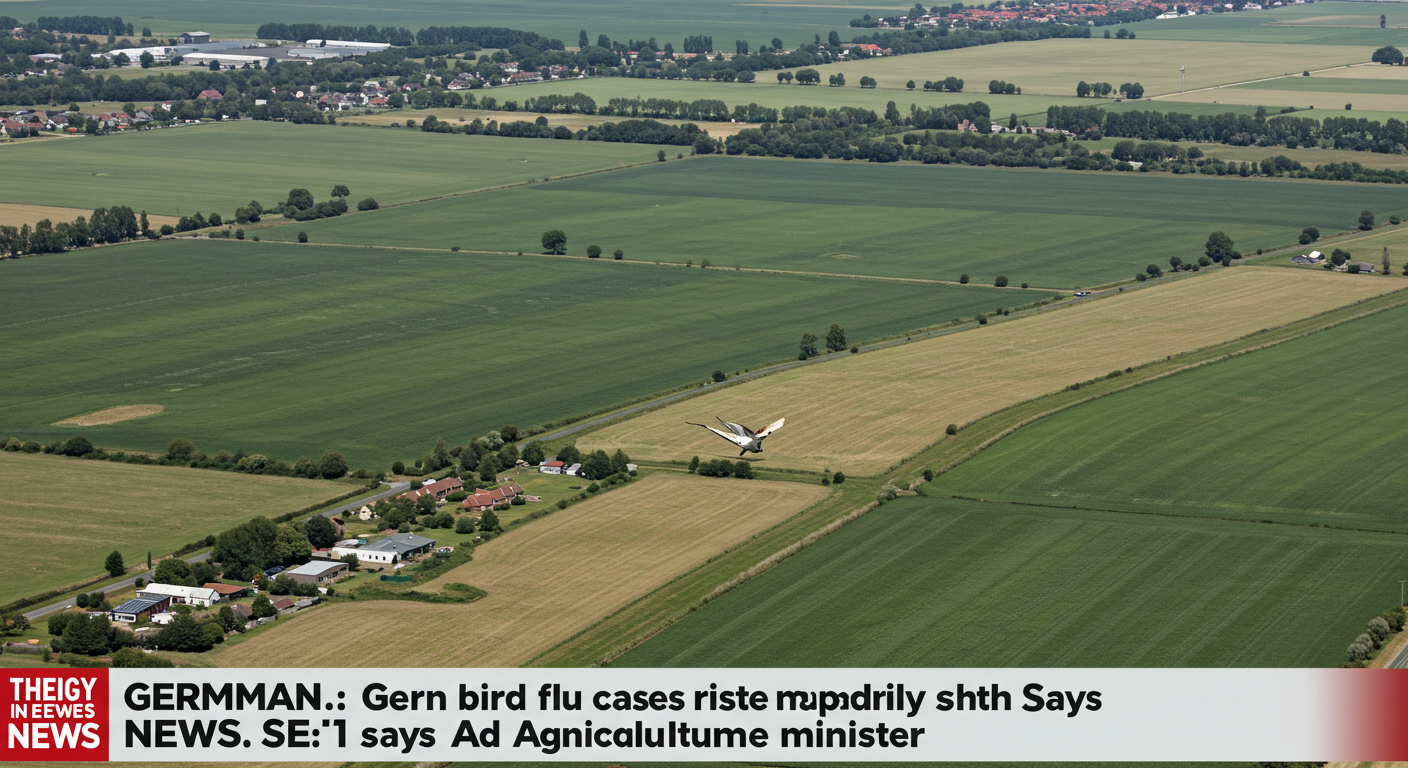
An unusually rapid surge in avian influenza cases has swept across Germany in the past two weeks, prompting mass culls of poultry and urgent warnings from federal authorities. Agriculture Minister Alois Rainer confirmed the sharp increase in infections, affecting both wild birds and commercial poultry farms and signaling a serious escalation of the seasonal outbreak. The highly contagious H5N1 subtype has been identified as the primary variant, raising concerns about its dynamic spread ahead of the peak bird migration season.
The current situation represents a significant challenge for Germany’s agricultural sector, which is still mindful of the devastating outbreak in 2020 that led to the culling of over 2 million birds. While the risk to human health is currently considered low, the scale of the outbreak has necessitated drastic measures, including the killing of hundreds of thousands of birds to prevent further transmission. Federal and state authorities are coordinating a response that includes enhanced biosecurity protocols, surveillance zones, and financial support for affected farmers, as the economic and ecological stakes continue to climb.
Scale and Speed of Outbreak
Federal officials have expressed alarm at the intensity of the latest bird flu wave. Agriculture Minister Alois Rainer stated that while some outbreaks are expected at this time of year, the “very rapid increase in infections over the past 14 days” underscores the gravity of the situation. This accelerated spread has been observed nationwide, with the Friedrich Loeffler Institute (FLI), Germany’s national animal disease research center, confirming the presence of the H5N1 virus in wild birds across 15 of the country’s 16 federal states. The FLI has assessed the risk level as “high,” warning that widespread transmission is likely to continue, particularly as migratory bird activity has not yet peaked.
The dynamic nature of the infections is a key concern for health authorities. The pattern of spread suggests the virus is moving efficiently through wild bird populations and repeatedly spilling over into domestic poultry stocks. This differs from previous years, where outbreaks were often more localized. The current crisis is part of a broader, troubling trend across Europe, which has seen the virulent H5N1 strain become endemic in wild bird and mammal populations since 2021, leading to millions of animal deaths.
Impact on Poultry Farms
Commercial poultry operations have been hit hard, with culling orders affecting hundreds of thousands of birds to contain the virus. In the Maerkisch-Oderland district near Berlin, authorities mandated the culling of approximately 130,000 birds after the disease was detected on two separate farms—one housing 80,000 ducks and another with 50,000 broiler chickens. In the southwestern state of Baden-Württemberg, an outbreak led to the planned culling of around 15,000 birds at a poultry farm, a decision confirmed by the FLI. Another significant cull occurred in the western town of Rees, near the Dutch border, where 19,000 animals were killed.
Economic and Logistical Challenges
These culls represent a substantial economic loss for farmers and a logistical challenge for veterinary authorities. Minister Rainer has acknowledged the financial strain on the agricultural sector and announced that his ministry has petitioned the European Union to increase the cap on compensation payments for culled animals. The proposal seeks to raise the limit from 50 euros to 110 euros per animal to better reflect the market value and support affected producers. The FLI estimates that over the last several weeks, more than 200,000 chickens, geese, ducks, and turkeys have been culled across Germany in efforts to halt the disease’s progression.
Devastation in Wild Bird Populations
The outbreak’s impact extends deep into wild bird populations, with mass mortality events signaling a severe ecological toll. A particularly stark discovery was made by conservationists near Berlin, where more than 1,000 dead cranes were found, believed to be victims of a major bird flu event. The FLI noted that cranes are among the species affected for the first time in this manner, highlighting the unusual and dynamic infection pattern currently at play. The institute has confirmed that the virus is not limited to cranes but is affecting a wide range of bird species.
The spread among wild birds, particularly migratory species, is a primary driver of the outbreak’s expansion. These birds can carry the virus over long distances, introducing it to new regions and increasing the risk of transmission to domestic poultry. Authorities have urged the public to avoid all contact with sick or dead wild animals to prevent any potential, though unlikely, transmission to humans. The high mortality rate among wild birds serves as a visible and tragic indicator of the virus’s virulence.
Government and Agency Response
In response to the escalating crisis, German authorities have implemented a multi-faceted strategy focused on containment and mitigation. Several states have established surveillance zones around outbreak sites and have issued orders requiring poultry to be kept indoors to prevent contact with wild birds. Minister Rainer has emphasized that the “top priority” is preventing the virus from spreading further to protect animals and avert severe damage to the nation’s agricultural and food industries. He stressed the importance of “joint and coordinated action” to manage the situation effectively.
Expert Warnings and Public Health
The Friedrich Loeffler Institute is providing critical scientific guidance, warning that further transmission is expected. The institute’s experts are monitoring the H5N1 strain closely. While the FLI has advised that bird-to-human transmission is theoretically possible, the actual danger is believed to be low. This assessment is echoed by the World Health Organization, which notes that most human infections globally have occurred after close contact with infected animals. Nonetheless, the potential for the virus to evolve remains a background concern, necessitating vigilant monitoring.
European Context and Outlook
Germany’s struggle with avian influenza is not occurring in isolation. The rapid spread of the virus is part of a wider European phenomenon that has raised concerns of a crisis comparable to previous years, which led to the culling of tens of millions of birds and subsequent impacts on food prices. From August to mid-October 2025, 56 outbreaks were recorded across 10 EU countries and the United Kingdom, with Poland, Spain, and Germany among the most affected. This marks the highest number of countries reporting early-season outbreaks in at least a decade.
Other major poultry-producing nations are also taking action. France has ordered that birds be confined, citing the rising number of outbreaks in neighboring Spain and Germany. Belgium and Slovakia have also reported their first cases of the season, prompting similar containment measures. The continent-wide spread highlights the challenge posed by a virus that does not respect national borders, carried by migratory birds across vast distances and requiring a coordinated international response to protect both animal and human health.