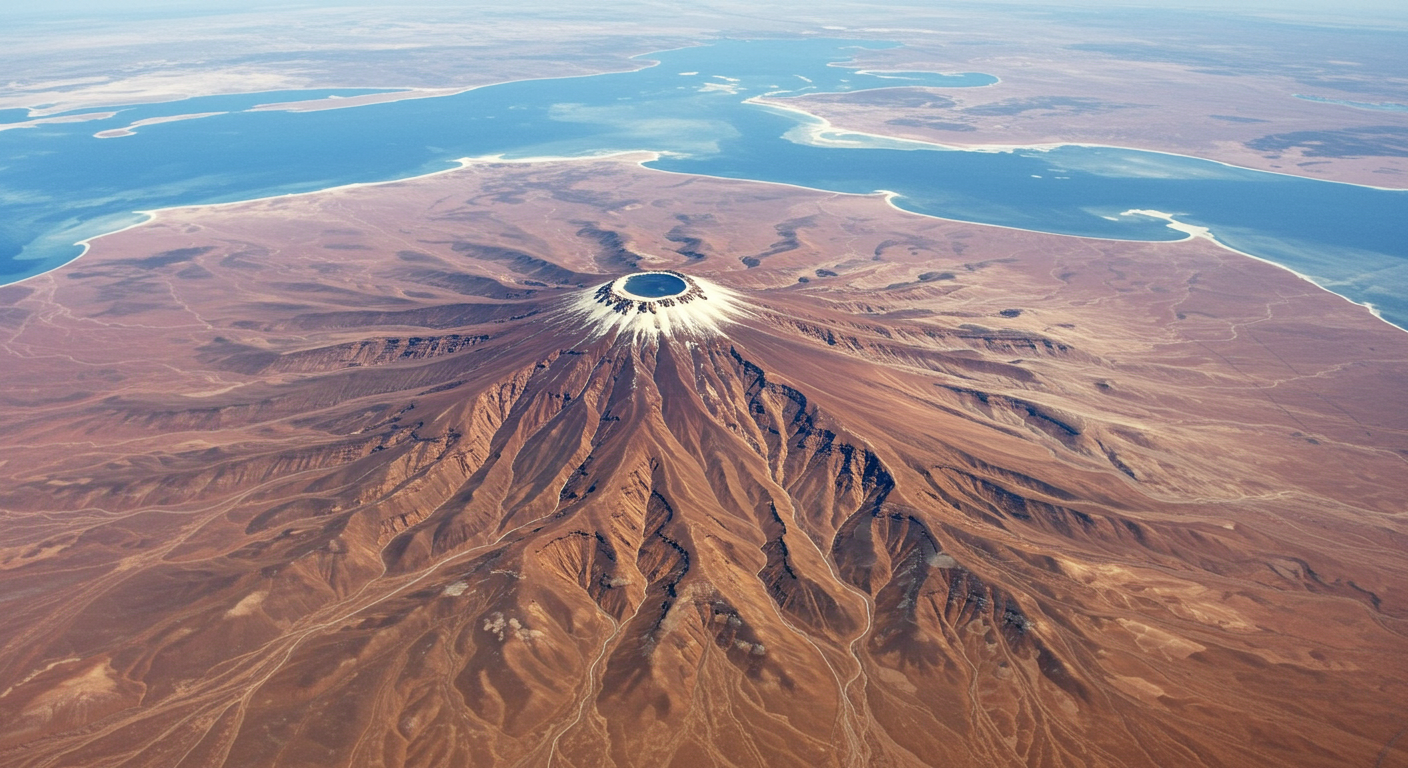
Massive mountains of salt that rose from the seabed in ancient southern Australia created sheltered environments that may have been critical for the survival and evolution of Earth’s earliest complex life. New research indicates these geological structures, formed from vast, buried salt deposits, actively shaped the seafloor and provided stable habitats for primitive reef-building organisms to flourish during a period of intense global climate change hundreds of millions of years ago.
The findings, published in the Geological Society of America Bulletin, center on a period around 640 million years ago, a critical juncture in Earth’s history when life was beginning to become more complex. By studying rock formations in the Flinders Ranges, scientists have uncovered evidence that these rising salt domes, known as diapirs, created the ideal topography for ecosystems to develop. During eras of extreme environmental stress, such as global ice ages, these specialized habitats may have acted as vital refuges, protecting early life from a world that was otherwise inhospitable and allowing it to persist through catastrophic events.
Geology of a Slow-Motion Lava Lamp
Salt diapirs form in a process that resembles a slow-motion lava lamp. The process begins with ancient seas that evaporate over millions of years, leaving behind extremely thick layers of salt minerals. Over geological time, these layers are buried by other sediments, which compact into denser and heavier rock. Because the buried rock salt is more buoyant and flexible than the rock layers pressing down on it, the salt begins to push slowly upward, a process that can take millions of years.
As the salt rises, it deforms the surrounding rock layers, creating a massive, dome-like structure that can be many kilometers wide and tall. This upward movement of the salt pierces through the overlying rock, eventually creating elevated features on the surface, or in this case, on the bottom of a shallow sea. These structures are found worldwide, both on land and under the ocean, and their formation has a profound impact on the surrounding geology and environment.
An Ancient Undersea Landscape
The research focused on a specific, well-preserved example of one of these structures in South Australia’s Ikara-Flinders Ranges National Park, a region known for its spectacular geological history dating back to the Neoproterozoic era.
The Enorama Diapir
Geologists centered their investigation on a formation known as the Enorama diapir. This ancient salt structure began rising beneath a shallow sea during the Precambrian period. The evidence preserved in the rock record shows that the diapir was not a static feature but was actively moving and growing while marine ecosystems were developing in the waters directly above it. The study provides a direct link between the dynamic movement of the salt mountain and the simultaneous flourishing of life.
Evidence in the Rock Record
By analyzing the layers of rock surrounding the diapir, scientists could reconstruct the ancient environment. They found that the upward movement of the salt created a unique topography on the seafloor. This elevated and varied landscape provided the stable, shallow-water conditions necessary for primitive life to gain a foothold. The formation of the underwater mountain provided exactly the right physical setting for biological communities to establish themselves and thrive in an otherwise challenging world.
A Sanctuary for Developing Life
During the Neoproterozoic era, life on Earth faced extreme challenges, including periods of global glaciation often referred to as “Snowball Earth,” as well as major shifts in the chemistry of the oceans. In this hostile global environment, small pockets of stability could have been essential for the persistence of life. The ecosystems that developed on the flanks of the salt diapirs appear to be one such example of a biological refuge.
These specialized environments may have provided shelter when the wider world was inhospitable, preserving life through periods of global stress. When conditions improved across the planet, the life forms that survived in these refuges could have spread out and repopulated the oceans. This dynamic suggests that such geological havens may have played a critical role in ensuring life’s survival through mass extinction events.
The First Reef Builders
The reefs of the Precambrian were not built by corals as modern reefs are. Instead, they were constructed by stromatolites, which are layered structures formed by colonies of cyanobacteria. These simple, photosynthetic microbes were among Earth’s oldest life forms, and they created ecosystems by trapping and cementing sediment particles in shallow waters. The research suggests that the topography created by the Enorama diapir was instrumental in the development and success of these early stromatolite reefs. They laid the foundation for the more complex marine ecosystems that would evolve millions of years later.
Wider Implications for Life’s Survival
The conclusion that geological structures actively fostered biodiversity during the Precambrian offers a deeper understanding of the intricate links between life and the planet itself. It suggests that the evolution of life is not solely a biological process but is closely intertwined with the dynamic geological forces that shape Earth’s surface. These unassuming salt structures may have been silent heroes in the story of life, providing the stability and opportunity needed for organisms to survive and increase in complexity.
Today, the study of salt diapirs has modern applications. Understanding how these structures deform rock is essential for managing resources, including water, minerals, and petroleum. Furthermore, the stable rock formations around salt domes are being investigated for their potential to store hydrogen, a key component of future sustainable energy strategies. This research into ancient worlds is therefore not only a window into the distant past but also a source of knowledge that can help address modern challenges, connecting the survival of Earth’s earliest life to the sustainability of its future.
