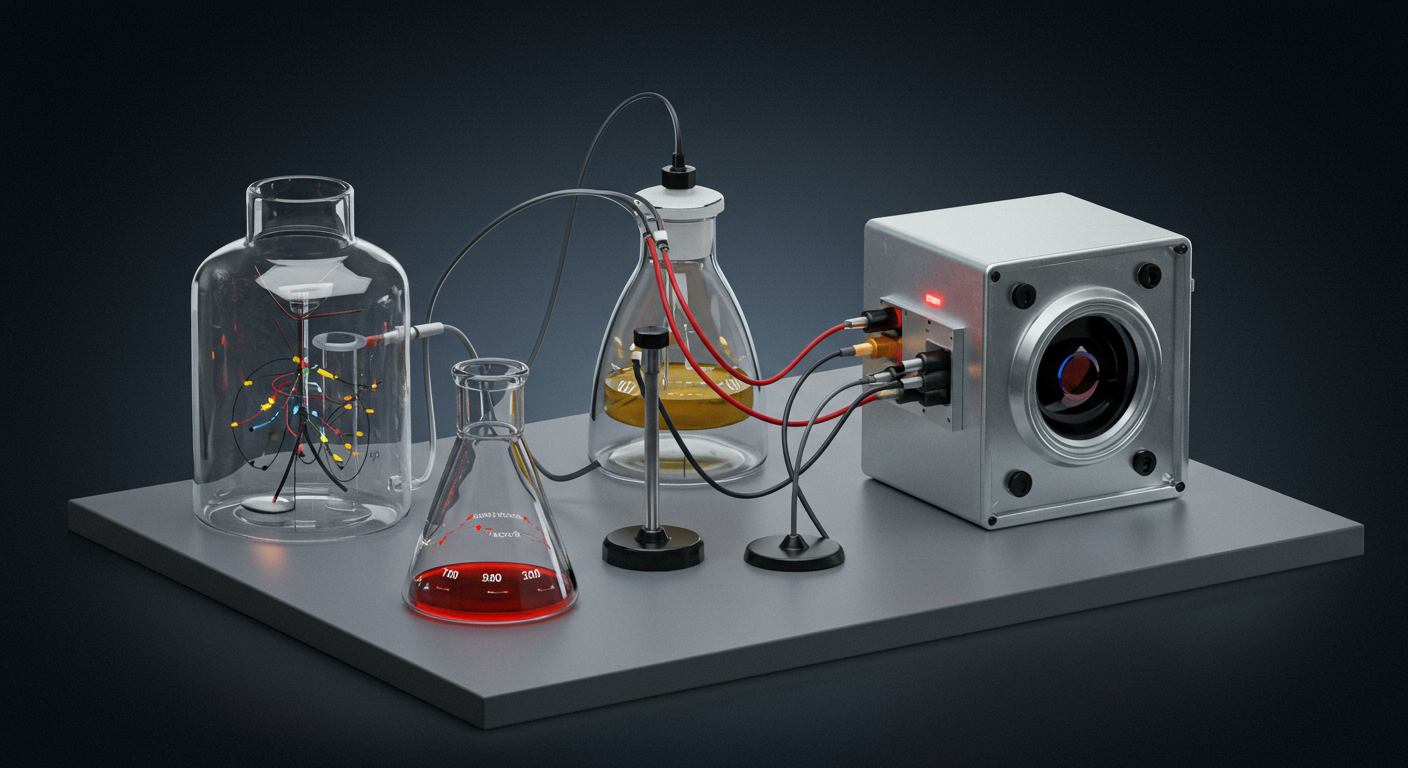
Researchers have developed a novel catalyst using double-shelled carbon spheres that efficiently and selectively converts harmful nitrate in water into harmless nitrogen gas. This breakthrough in electrocatalytic denitrification, led by a team at Jiangnan University, offers a promising solution to the widespread problem of nitrate contamination, which poses significant risks to ecosystems and human health. The new catalyst, with its unique dual-atomic-site design, overcomes a major hurdle in existing water treatment technologies by preventing the formation of ammonia, a toxic byproduct.
Nitrate pollution of waterways is a growing global concern, primarily driven by agricultural runoff containing nitrogen-based fertilizers, as well as industrial and municipal wastewater discharge. When excess nitrate accumulates in water bodies, it can lead to eutrophication, a process where algal blooms deplete oxygen, creating dead zones that are inhospitable to aquatic life. In drinking water, high levels of nitrate can cause methemoglobinemia, or “blue baby syndrome,” a serious condition in infants. The newly developed catalyst, with its high efficiency and selectivity for nitrogen gas, represents a significant advancement in addressing this pressing environmental challenge.
The Challenge of Nitrate Remediation
For decades, scientists and engineers have sought effective methods to remove nitrate from contaminated water. Traditional approaches have included biological denitrification, membrane filtration (such as reverse osmosis), and adsorption onto various materials. While each of these methods has its merits, they also come with significant drawbacks. Biological processes, which rely on microorganisms to convert nitrate to nitrogen gas, can be slow and require careful control of environmental conditions. Membrane technologies, though effective, are often energy-intensive and produce a concentrated nitrate brine that requires further disposal, adding to the overall cost and complexity of treatment. Adsorption methods can be limited by the capacity of the adsorbent material and the need for regeneration.
In recent years, electrocatalytic reduction has emerged as a promising alternative for nitrate remediation. This process uses an electric current and a catalyst to drive the chemical reaction that converts nitrate to other nitrogen compounds. However, a major challenge in this field has been controlling the reaction pathway. Many catalysts tend to favor the production of ammonia (NH₃) rather than the desired nitrogen gas (N₂). Ammonia is also a pollutant and its presence in treated water would necessitate additional, costly removal steps. The development of a catalyst that is both highly active and highly selective for the conversion of nitrate to nitrogen gas has been a key goal for researchers in the field.
A Novel Catalyst with a Unique Architecture
The research team from Jiangnan University has addressed this challenge with an innovative catalyst design. They have engineered double-shelled mesoporous carbon spheres containing dual single-atomic catalytic sites. This intricate structure, named FeNC@MgNC-DMCS, is at the heart of the new technology’s success. The catalyst’s architecture is hierarchical, with distinct roles for the inner and outer shells, which work in concert to achieve the desired chemical transformation.
The core of the catalyst consists of an inner carbon shell that is decorated with iron-nitrogen (Fe-N₄) centers. These iron sites are where the crucial step of nitrogen-nitrogen bond formation takes place. Surrounding this inner shell is an outer shell that contains magnesium-nitrogen (Mg-N₄) sites. The mesoporous nature of the carbon spheres provides a large surface area for the reaction to occur, enhancing the efficiency of the process. This dual-site, double-shelled design is a significant departure from conventional catalysts and is the key to the system’s high selectivity.
The “Proton Fence” Mechanism
The exceptional selectivity of the FeNC@MgNC-DMCS catalyst is attributed to a phenomenon the researchers have termed the “proton fence.” The outer shell, with its magnesium-nitrogen sites, modulates the concentration of protons (positively charged hydrogen ions) in the immediate vicinity of the catalyst’s surface. This is a critical function, as the availability of protons plays a decisive role in determining the end product of the nitrate reduction reaction. An excess of protons can lead to the over-hydrogenation of nitrate, resulting in the formation of ammonia. By creating this “proton fence,” the outer shell effectively limits the supply of protons to the inner shell, thereby suppressing the ammonia production pathway.
This clever mechanism allows the iron-nitrogen sites in the inner shell to do their work of coupling nitrogen atoms to form N₂ gas, without being “interfered” with by an overabundance of protons. The spatial separation of the two types of catalytic sites within the double-shelled structure is therefore essential for the catalyst’s performance. The inner shell focuses on the nitrogen-nitrogen bond formation, while the outer shell acts as a gatekeeper for protons, ensuring that the reaction proceeds along the desired pathway to produce clean nitrogen gas.
Demonstrated High Performance and Efficiency
The FeNC@MgNC-DMCS catalyst has demonstrated remarkable performance in laboratory tests. It achieved a nitrate conversion rate of approximately 92.8%, meaning it successfully transformed nearly all of the nitrate it was exposed to. Even more impressively, the catalyst exhibited a nitrogen selectivity of 95.2%. This high selectivity is a major breakthrough, as it confirms that the vast majority of the converted nitrate was turned into harmless nitrogen gas, with minimal production of ammonia. These performance metrics are a significant improvement over those of conventional single-shelled or monometallic catalysts, highlighting the synergistic effect of the dual-site, double-shelled design.
The high efficiency and selectivity of this new catalyst suggest that it could be a viable and sustainable solution for treating nitrate-contaminated water. By avoiding the production of ammonia, this technology could lead to simpler and more cost-effective water treatment systems. The robust nature of the carbon-based catalyst also suggests it may have a long operational lifespan, which is an important consideration for real-world applications.
Implications for Water Treatment and Environmental Health
The development of this advanced electrocatalytic system has significant implications for the future of water treatment. It offers a potential pathway to a more sustainable and environmentally friendly method for tackling nitrate pollution. The ability to convert a harmful pollutant into a benign substance like nitrogen gas, which is the main component of our atmosphere, is a highly desirable outcome in any remediation technology. This process not only removes a threat to human and ecological health but does so without creating new environmental problems.
Further research will be needed to scale up this technology from the laboratory to industrial applications. This will involve optimizing the catalyst synthesis process, designing efficient electrochemical reactors, and conducting pilot studies to evaluate the catalyst’s performance under real-world conditions with varying water chemistries. However, the principles demonstrated in this study provide a strong foundation for the development of next-generation water treatment systems. As the world continues to grapple with the challenges of water scarcity and pollution, innovations like the double-shelled carbon sphere catalyst will be crucial in ensuring access to clean and safe water for all.
Future Research and Development
Looking ahead, the researchers plan to further investigate the long-term stability and durability of the FeNC@MgNC-DMCS catalyst. They will also explore its performance with real-world water samples, which may contain other ions and organic matter that could potentially interfere with the catalytic process. Economic analysis will also be crucial to determine the cost-effectiveness of this technology compared to existing methods. The potential for regenerating and reusing the catalyst will be a key factor in its economic viability.
Furthermore, the fundamental principles of the dual-atomic-site and “proton fence” design could be applied to other catalytic systems for a variety of environmental applications. For example, similar catalyst architectures could be developed for the conversion of other pollutants or for the synthesis of valuable chemicals. This research not only provides a practical solution to a specific environmental problem but also opens up new avenues for the rational design of advanced catalytic materials. The work by the team at Jiangnan University is a testament to the power of materials science and electrochemistry in addressing some of the most pressing environmental challenges of our time.