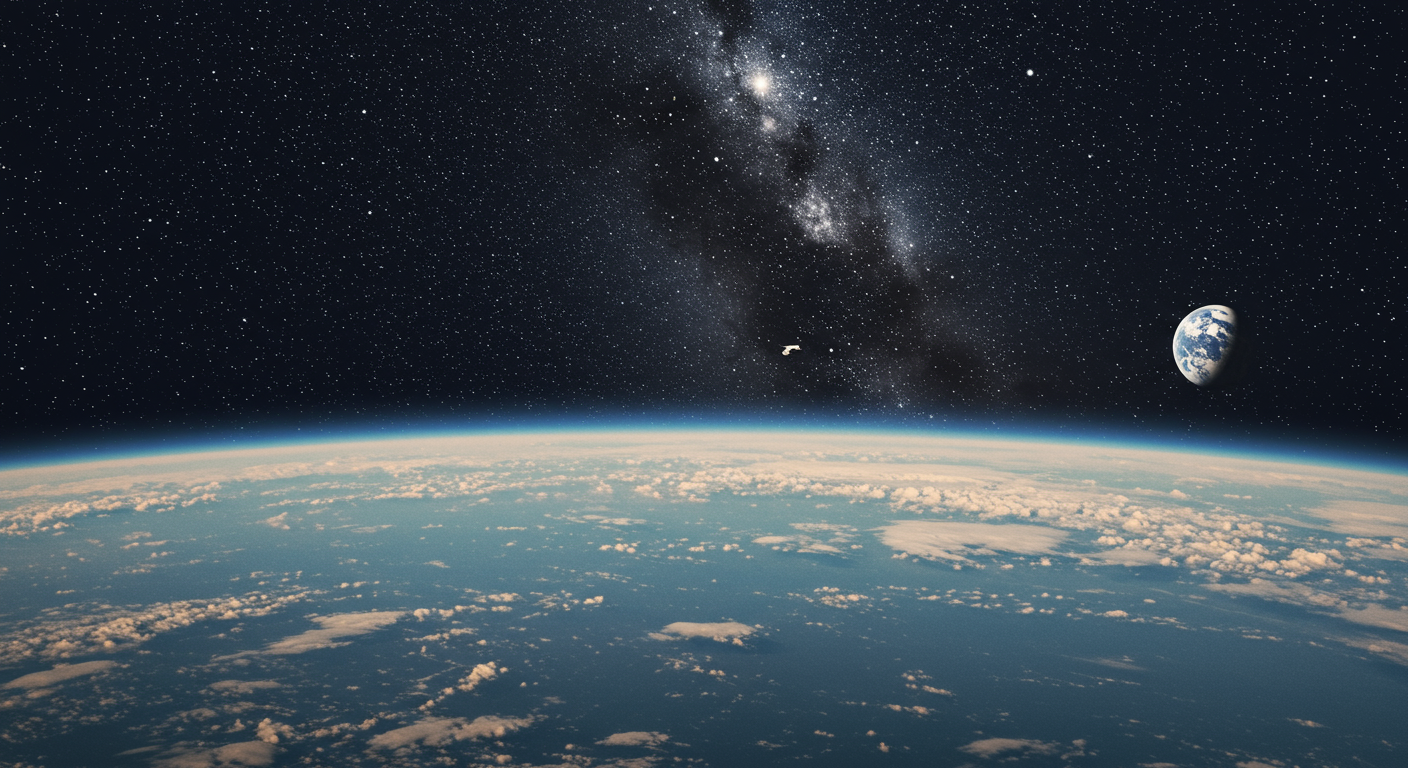
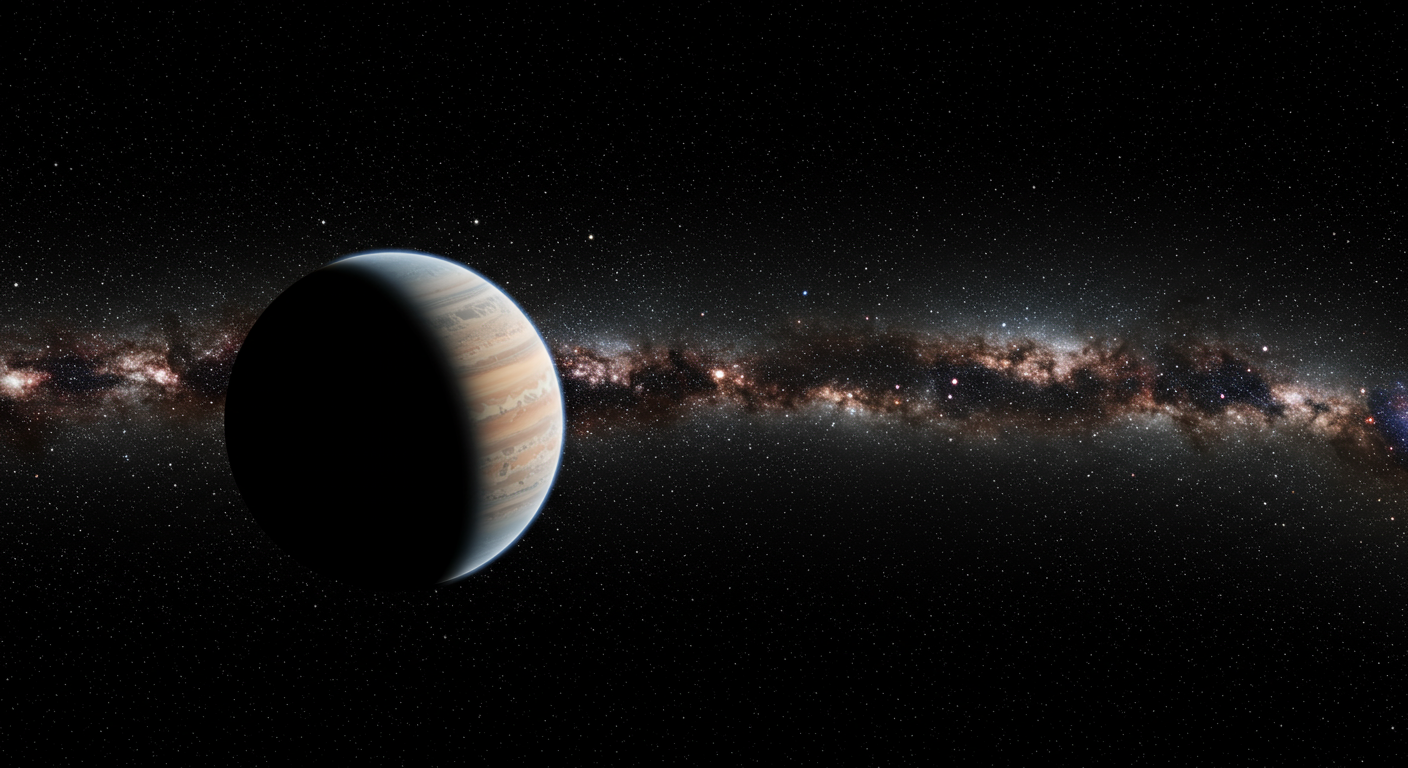
A team of astrophysicists has proposed a groundbreaking method for discovering intelligent alien life, one that would turn our own sun into a colossal magnifying glass to create images of distant planets with enough detail to spot cities, industrial pollution, and continents. The proposed technique, relying on a phenomenon predicted by Albert Einstein, would use the sun’s immense gravity to bend and focus light from an exoplanet, offering a way to see alien worlds with a resolution previously thought impossible.
This new approach represents a major leap beyond the traditional search for extraterrestrial intelligence (SETI), which has historically focused on listening for radio signals. Instead of waiting for a message, scientists could proactively search for tangible evidence of civilization, or “technosignatures.” If successful, a mission utilizing this method could provide the first direct observational evidence that humanity is not alone in the universe by capturing detailed pictures of a planet dozens of light-years away. The concept relies on dispatching a modest, meter-sized telescope to a precise location in deep space where the sun’s gravity could serve as a powerful cosmic lens.
The Sun as a Gravitational Lens
The mission concept is built on the principle of the solar gravitational lens (SGL), a natural telescope with immense power. As predicted by Einstein’s theory of general relativity, the powerful gravity of a massive object like the sun can warp spacetime, causing light rays passing near it to bend. When light from a distant exoplanet passes the sun, its gravity forces the rays to converge at a focal point, similar to how a conventional lens works. This focal area, however, doesn’t begin at a single point, but rather along a line that starts approximately 550 astronomical units (AU) from the sun—more than 12 times the distance of Pluto.
A spacecraft positioned on this focal line could witness an extraordinary effect. The light from the target exoplanet would be amplified by a factor of up to 100 billion, providing an unprecedented ability to see faint objects. More importantly, the SGL offers a theoretical angular resolution of astonishing precision, thousands of times greater than any telescope built or currently planned. This power would allow scientists to reconstruct a multi-pixel image of a planet up to 100 light-years away with a surface resolution of just 25 kilometers. At that level of detail, researchers could distinguish oceans from landmasses, observe weather patterns, and potentially identify direct evidence of a technological civilization.
A New Hunt for Technosignatures
The incredible resolution offered by a solar gravitational lens telescope would fundamentally change the search for intelligent life. Instead of passively listening for radio broadcasts, astronomers could actively look for a wide array of technosignatures—measurable evidence of technology. Such a mission could move beyond biosignatures, which are signs of any life, to specifically target indicators that could only be produced by an industrial or post-industrial society.
Atmospheric Evidence of Industry
One of the most compelling targets would be the exoplanet’s atmosphere. The SGL imaging system would be sensitive enough to conduct detailed spectroscopy, analyzing the chemical composition of the planet’s air. Scientists could search for artificial pollutants that have low potential for being created by natural processes. These could include industrial chemicals like nitrogen dioxide or chlorofluorocarbons (CFCs), which on Earth are byproducts of industrial activity. The presence of such compounds could signal a civilization with similar industrial processes to our own.
Researchers also suggest that a civilization might use technology to alter its own climate. An advanced society could, for example, be releasing powerful, artificial greenhouse gases like perfluorocarbons or sulfur hexafluoride into its atmosphere to prevent an ice age or to terraform a nearby planet. Detecting these specific, long-lived chemicals would be a strong indicator of deliberate planetary engineering.
Illuminating Alien Cities
A second category of compelling evidence would be the detection of artificial light. An SGL-based telescope could resolve the night side of an exoplanet, searching for the telltale glow of city lights. The spectral signature of artificial lighting, such as that produced by sodium-vapor lamps, is distinct from natural light sources like lightning or auroras. Observing a persistent, structured grid of light on a planet’s dark side would be unambiguous evidence of a widespread, energy-intensive civilization. This method provides a direct way to map the footprint of a global society.
The ‘Cosmic Eye’ Mission Profile
To make this search a reality, researchers have outlined a mission concept, often metaphorically dubbed a “Cosmic Eye,” which would send a probe to the solar gravitational lens focal region. The mission would require overcoming the immense challenge of reaching a target area more than 550 AU from the sun. For context, the Voyager 1 spacecraft, launched in 1977, is currently only about 160 AU away.
A Decades-Long Journey
Reaching the destination in a reasonable timeframe is a major engineering hurdle. The current leading proposal, developed by NASA physicist Slava Turyshev for the NASA Institute for Advanced Concepts, suggests using a swarm of small spacecraft equipped with solar sails. These sails would use the pressure of sunlight to accelerate the probes, allowing them to perform a close flyby of the sun to achieve a velocity of around 150 km/sec. Even at this incredible speed, the journey to the focal line would take approximately 17 to 20 years.
Reconstructing an Image
Once in position, the telescope would not see a simple, direct image of the exoplanet. Instead, the planet’s light would be smeared into a structure called an Einstein ring around the sun. The spacecraft would carry a meter-class telescope and a coronagraph to block out the direct glare of the sun. By flying laterally within the focal region and taking thousands of photometric measurements of this ring, the probe would gather data that can be computationally reconstructed back on Earth. Over an integration period of about six months, these data points would be assembled into a clear, megapixel image of the target world.
Challenges and Future Prospects
While the potential of an SGL mission is extraordinary, the technical and logistical challenges are immense. The primary obstacle is the vast distance involved, which demands new propulsion technologies capable of achieving high speeds and operating autonomously for decades. Precise navigation and station-keeping are also critical; the spacecraft must remain perfectly aligned with the target exoplanet and the sun.
Another significant issue is the sun’s corona, the hot, turbulent plasma surrounding the star. Light from the exoplanet must pass through this plasma, which creates a significant source of noise that can corrupt the signal. Sophisticated image processing algorithms will be required to filter out this coronal interference and produce a clean image. Despite these hurdles, proponents argue that the foundational technology needed for such a mission already exists or is in active development. The scientific payoff—an actual photograph of an alien world detailed enough to see its surface—would be one of the most profound discoveries in human history, forever answering the question of whether we are alone.