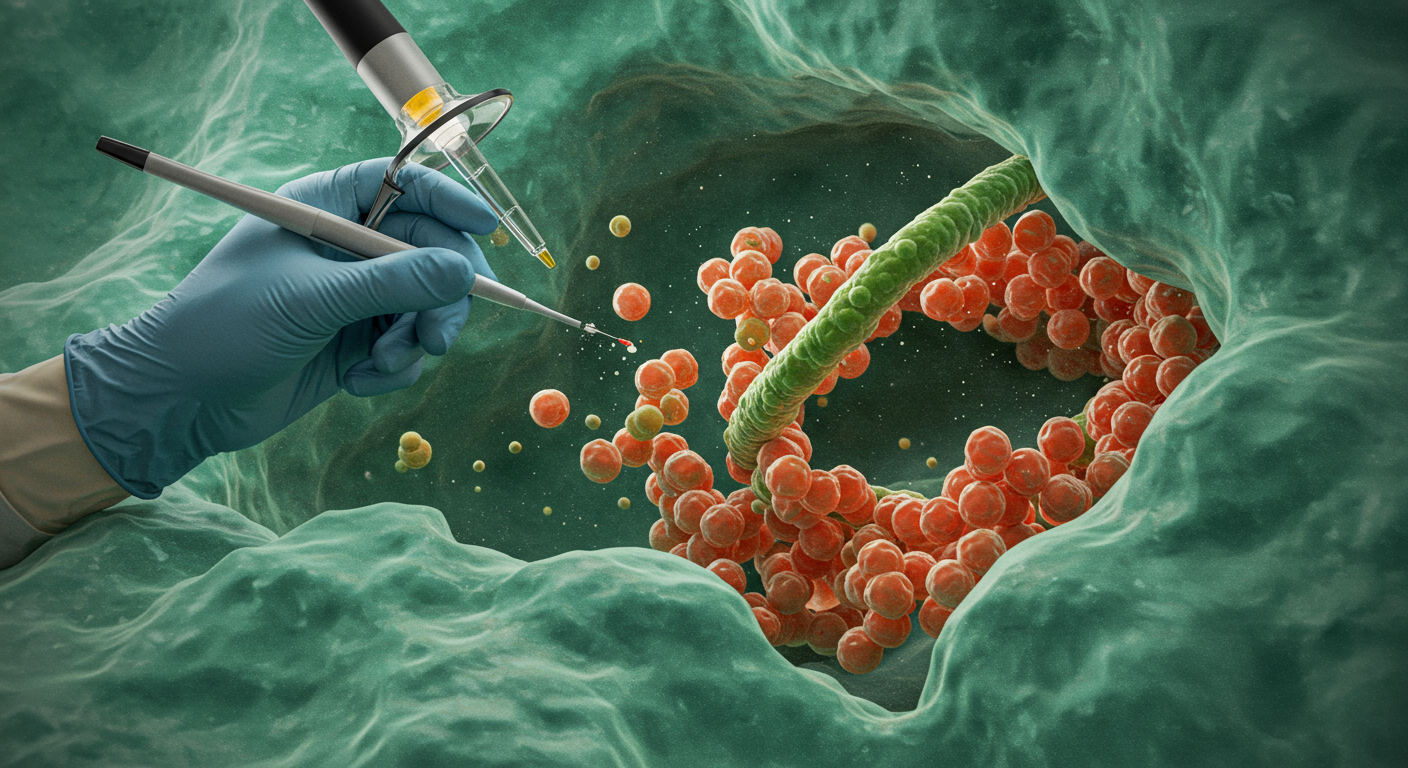
Researchers have developed a new, more sustainable method for breaking down plastics using a mechanochemical process. This technique, which involves milling polymer samples with specific liquid additives, avoids the high temperatures and harsh solvents typically required in plastics recycling. The process relies on precisely controlled collisions within a milling machine to selectively break the chemical bonds of polymers, resulting in smaller molecules that can be repurposed.
This innovative ball-milling technique offers a greener alternative to current recycling methods by operating at room temperature and minimizing the use of hazardous chemicals. The research, led by scientists at the University of Birmingham, has demonstrated the ability to deconstruct common plastics like PET and PLA. The findings, published in Nature Communications, could pave the way for a circular economy for plastics, where waste materials are efficiently converted back into valuable starting materials for new products.
Mechanochemical Principles at Play
The core of the new method lies in mechanochemistry, a field that studies how mechanical force can induce chemical reactions. In this application, researchers used a planetary ball mill, a device that contains polymers and small metal balls in a rotating chamber. As the chamber spins, the balls collide with the polymer material at high speeds, transferring kinetic energy directly to the chemical bonds holding the plastic together. This energy input is sufficient to break the long polymer chains into their constituent monomers or other small molecules.
A key innovation in this study was the addition of a small amount of a liquid grinding agent. The researchers discovered that certain liquids could dramatically enhance the efficiency of the bond-breaking process. The liquid serves multiple purposes: it helps to disperse the polymer material, prevents it from overheating, and interacts with the freshly broken chemical bonds to stabilize the resulting smaller molecules. This stabilization prevents the polymers from simply re-forming, a common problem in other mechanical recycling methods. The team systematically tested various additives to find the most effective ones for different types of plastic, tailoring the process to the specific polymer being recycled.
Targeting Different Polymer Types
The versatility of this mechanochemical approach was demonstrated on several types of plastics, showcasing its potential for broad application. The researchers focused their initial efforts on two widely used polyesters: polyethylene terephthalate (PET), commonly used for beverage bottles, and polylactic acid (PLA), a biodegradable plastic derived from renewable resources.
Deconstructing PET Plastics
For PET, the milling process successfully broke the ester bonds that form the backbone of the polymer. The result was the recovery of terephthalic acid and ethylene glycol, the two primary building blocks of PET. These monomers can then be purified and used to synthesize new, virgin-quality PET without the need for fossil fuels. This represents a significant step toward a closed-loop recycling system for one of the world’s most common plastics.
Breaking Down Bioplastics
The method also proved highly effective for PLA. When subjected to the same ball-milling process with an appropriate liquid agent, PLA was broken down into its monomer, lactic acid. Lactic acid is a valuable chemical intermediate used in the food, pharmaceutical, and cosmetic industries. This demonstrates that the technique is not only applicable to traditional petroleum-based plastics but can also enhance the sustainability of bioplastics by providing an efficient end-of-life processing route.
Advantages Over Traditional Recycling
Current plastics recycling technologies present numerous challenges that the new mechanochemical method aims to overcome. Traditional mechanical recycling, which involves melting and reforming plastic, often leads to a degradation of material quality. This “downcycling” limits the number of times a plastic item can be recycled. Chemical recycling methods, while capable of producing high-quality monomers, typically rely on high temperatures, high pressures, and large quantities of solvents, making them energy-intensive and environmentally taxing.
The ball-milling technique, by contrast, operates at ambient temperature and pressure, drastically reducing energy consumption. The use of only small amounts of liquid additives also minimizes the environmental footprint associated with solvent use. Furthermore, the process is highly selective, targeting specific chemical bonds within the polymer structure. This precision allows for the clean breakdown of the plastic into its original monomers, which can then be used to create new plastics of equal quality to the original material.
Path to Commercialization
While the laboratory results are promising, the researchers acknowledge that scaling the technology for industrial use will require further development. The current experiments were conducted on a small scale, and the process will need to be optimized for much larger volumes of plastic waste. The team is now working on designing and testing larger ball mills that can handle several kilograms of material at a time. They are also exploring the economic feasibility of the process, including the costs of the equipment, the liquid additives, and the energy required for milling.
Another area of focus is the application of this method to more complex plastic waste streams. Most plastic waste is a mixture of different types of polymers, often with various additives and contaminants. The researchers are investigating whether the mechanochemical process can be adapted to selectively break down specific plastics within these mixed streams, which would significantly simplify the sorting and pre-treatment steps in the recycling workflow. The ultimate goal is to create a robust and versatile technology that can be integrated into existing recycling infrastructure to improve efficiency and sustainability.
Broader Implications for a Circular Economy
The development of this mechanochemical recycling method has significant implications for the transition to a circular economy. By providing an energy-efficient way to convert plastic waste back into high-value chemical feedstocks, the technology could help to reduce society’s reliance on fossil fuels for plastic production. This would not only conserve natural resources but also mitigate the greenhouse gas emissions associated with both plastic manufacturing and incineration.
The ability to handle a variety of polymers, including both conventional plastics and bioplastics, makes this approach particularly valuable. As the world moves toward more sustainable materials, it is crucial to have effective recycling strategies for all types of polymers. This research contributes a powerful new tool to the arsenal of technologies aimed at closing the loop on plastics, turning what is currently a persistent environmental pollutant into a valuable resource for a more sustainable future.