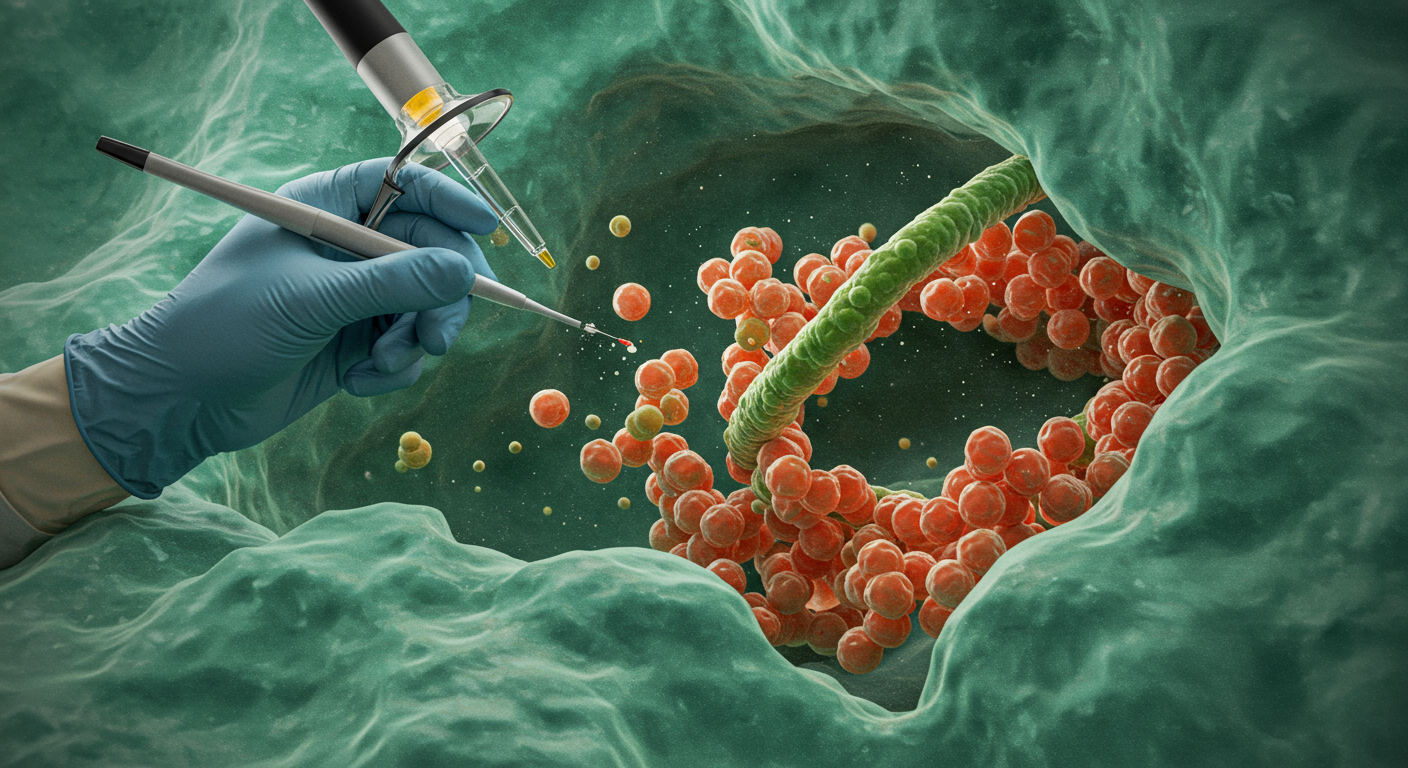
Researchers have developed a novel catalyst that efficiently converts harmful nitrate pollutants in water into ammonia, a valuable chemical essential for fertilizers and other industrial products. The new method addresses two significant global challenges simultaneously: the high energy cost of ammonia production and the widespread issue of water contamination. This breakthrough offers a promising pathway to more sustainable manufacturing and environmental remediation.
The current industrial method for producing ammonia, known as the Haber-Bosch process, is notoriously energy-intensive, consuming an estimated 1-2% of the world’s total annual energy supply and contributing significantly to carbon dioxide emissions. A team at Tohoku University’s Advanced Institute for Materials Research (WPI-AIMR) has engineered an electrocatalytic process that provides a much-needed, energy-efficient alternative. By using a specially designed catalyst made of nickel, copper, and iron, the researchers have achieved a nearly 95% efficiency in converting aqueous nitrate into ammonia, effectively turning a hazardous pollutant into a useful resource.
An Alternative to a Century-Old Process
For more than a century, the Haber-Bosch process has been the cornerstone of industrial chemical production. Developed in the early 20th century, it combines atmospheric nitrogen with hydrogen under extremely high pressures and temperatures to synthesize ammonia. This innovation was revolutionary, enabling the mass production of synthetic fertilizers that have since supported global food security for billions of people. Ammonia is also a critical feedstock for pharmaceuticals, textiles, and other chemical manufacturing processes.
Despite its profound benefits, the Haber-Bosch process carries a heavy environmental burden. Its operation depends on immense energy inputs, typically derived from fossil fuels, making it a major source of greenhouse gas emissions. The process is responsible for a substantial portion of the carbon dioxide released by the global chemical industry. As the world confronts the urgent need to decarbonize and transition to more sustainable systems, finding a less intensive method for ammonia synthesis has become a paramount goal for scientists and engineers worldwide.
Designing the Catalyst’s Architecture
The success of the new method lies in its highly specialized catalyst, which is composed of NiCuFe-layered double hydroxide (LDH) nanosheets. Layered double hydroxides are a class of materials with a unique, clay-like structure consisting of positively charged layers and an interlayer region containing anions and water molecules. This structure is highly tunable, allowing scientists to precisely arrange different metal atoms within the layers to optimize their chemical reactivity.
In this case, the research team at Tohoku University created a sophisticated architecture by integrating nickel (Ni), copper (Cu), and iron (Fe) into the LDH framework. Their computational and theoretical analyses revealed that the nickel and copper sites play the most critical roles in the catalyst’s high performance. These specific metallic sites work in concert to facilitate the electroreduction of nitrate. The careful arrangement of these atoms creates an ideal electronic and physical environment for the reaction to occur with high selectivity and speed, overcoming previous limitations that made similar electrocatalytic methods impractical.
The Electrochemical Conversion Reaction
The new process, known as the electrocatalytic nitrate reduction reaction (NitRR), offers a fundamentally different approach from the high-temperature, high-pressure conditions of Haber-Bosch. Instead of using gaseous nitrogen, the NitRR process starts with nitrate ions (NO3−), a common and problematic pollutant found in industrial wastewater and agricultural runoff. The LDH catalyst is used as an electrode in an electrochemical cell filled with the nitrate-contaminated water.
When an electrical voltage is applied, the catalyst activates the nitrate ions, breaking their chemical bonds and driving a series of reactions that ultimately form ammonia (NH3). A key metric for success in this type of process is Faradaic efficiency, which measures how effectively the electrical energy supplied to the system is used to create the desired product. The Tohoku University team reported an exceptional Faradaic efficiency of 94.8%. This high figure indicates that almost all the electrical current is channeled directly into producing ammonia, with very little energy wasted on unwanted side reactions. This level of efficiency represents a major leap forward for the technology, making it a viable and attractive alternative to traditional methods.
Dual Benefits for Environment and Industry
The most compelling aspect of this innovation is its ability to provide a dual benefit: cleaning polluted water while simultaneously producing a valuable industrial chemical. Nitrate pollution is a serious environmental concern, leading to the eutrophication of lakes and coastal waters, which creates oxygen-depleted “dead zones” that harm aquatic ecosystems. It can also contaminate drinking water, posing risks to public health.
This new catalyst-driven system offers a way to remediate nitrate-contaminated water sources and, in the process, generate ammonia for use in agriculture or other industries. This creates a closed-loop system for nitrogen management, where a waste product from one sector becomes a valuable input for another. Such an integrated approach supports global sustainability goals by promoting cleaner water, reducing reliance on the energy-intensive Haber-Bosch process, and creating a more circular economy for essential chemical resources.
The Path Toward Industrial-Scale Application
While the laboratory results are highly promising, the researchers acknowledge that further work is required to transition this technology from the lab to large-scale industrial applications. Scaling up the production of the NiCuFe-LDH catalyst and designing efficient electrochemical reactors that can handle large volumes of water are key challenges that must be addressed. Engineers will need to ensure the catalyst remains durable and stable over long periods of operation in real-world conditions, which may involve complex water chemistries.
The potential applications are extensive. This technology could be integrated into wastewater treatment plants, allowing them to convert removed nitrates directly into ammonia on-site. It could also enable the development of decentralized, smaller-scale ammonia production facilities powered by renewable energy sources like solar or wind. This would reduce the transportation costs and carbon footprint associated with the current centralized production model and provide a more resilient supply of fertilizer for agriculture.
Expert Perspective
According to Professor Hao Li of WPI-AIMR, the strategic design of the catalyst was the key to overcoming the previous inefficiencies that plagued the electrocatalytic nitrate reduction reaction. “We created NiCuFe-LDH nanosheets with Ni and Cu sites to help with electroreduction,” Li explained. He noted that this transformation took the NitRR process from being an interesting but impractical concept to a highly efficient method with a Faradaic efficiency of 94.8%. This breakthrough highlights the power of materials science to develop innovative solutions for pressing global challenges and provides a clear demonstration that cleaner, more efficient chemical manufacturing is within reach.